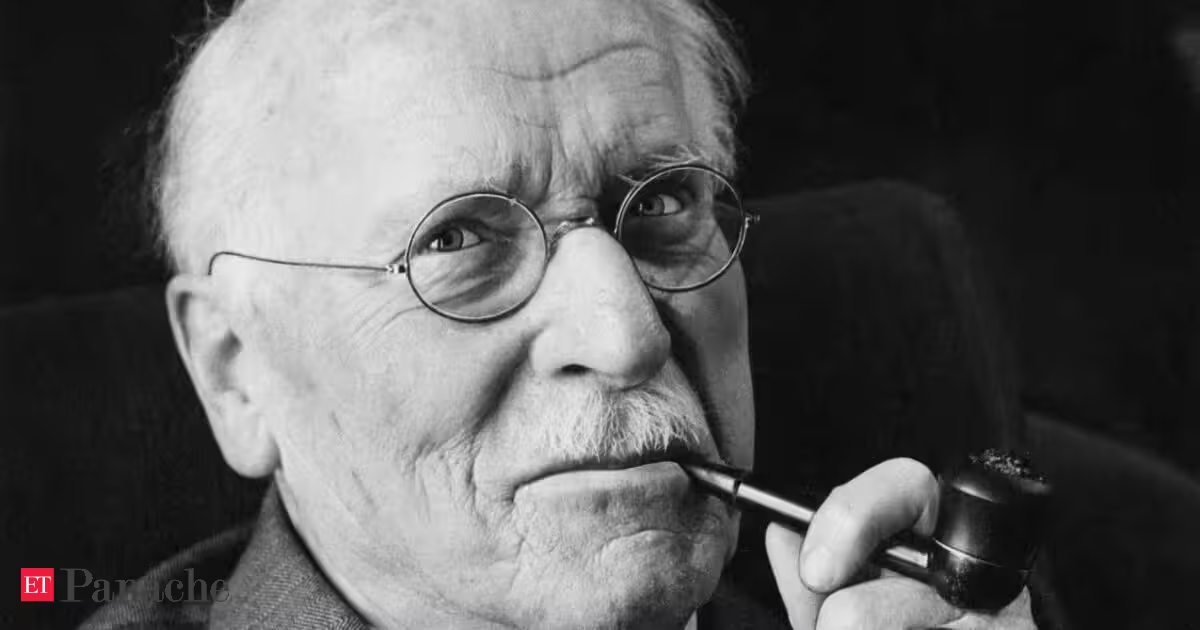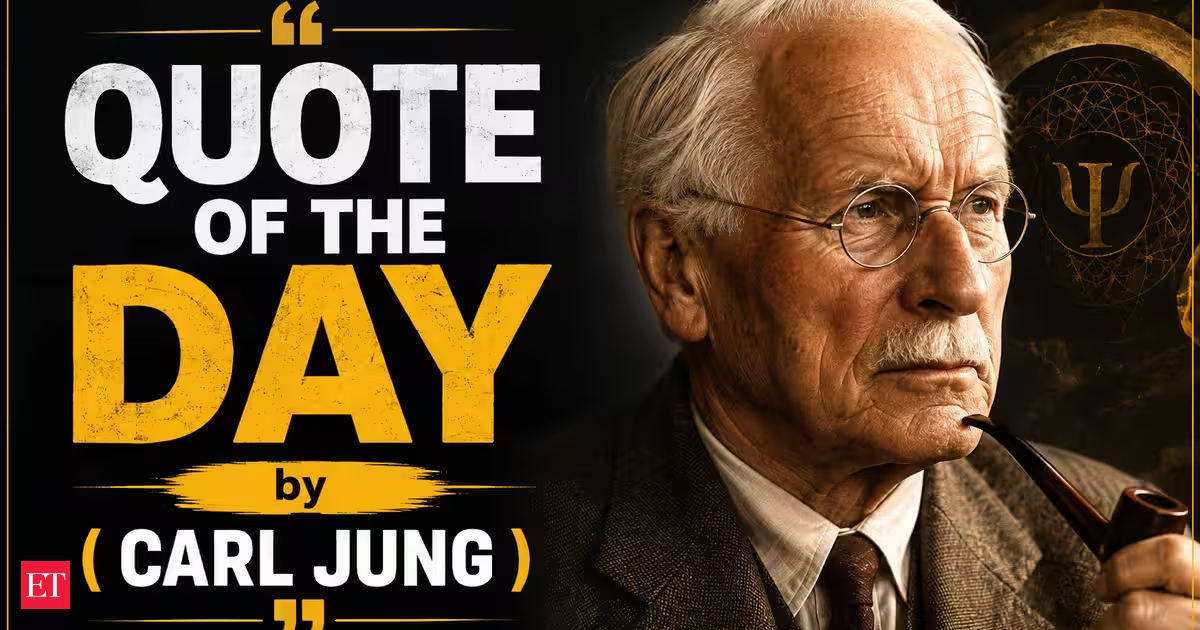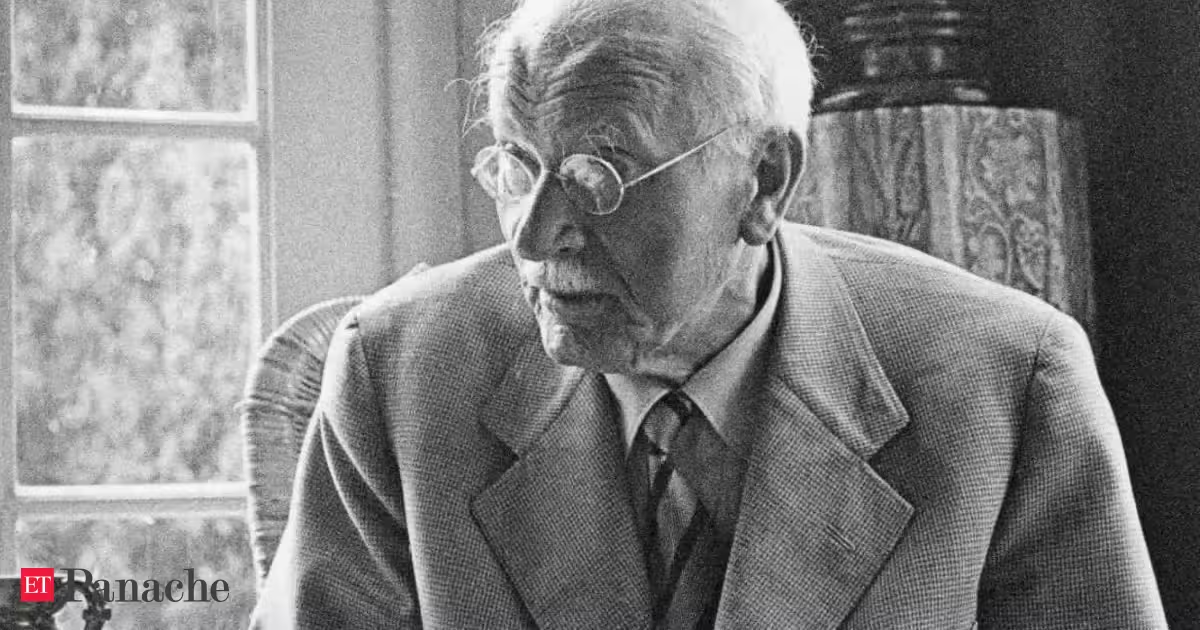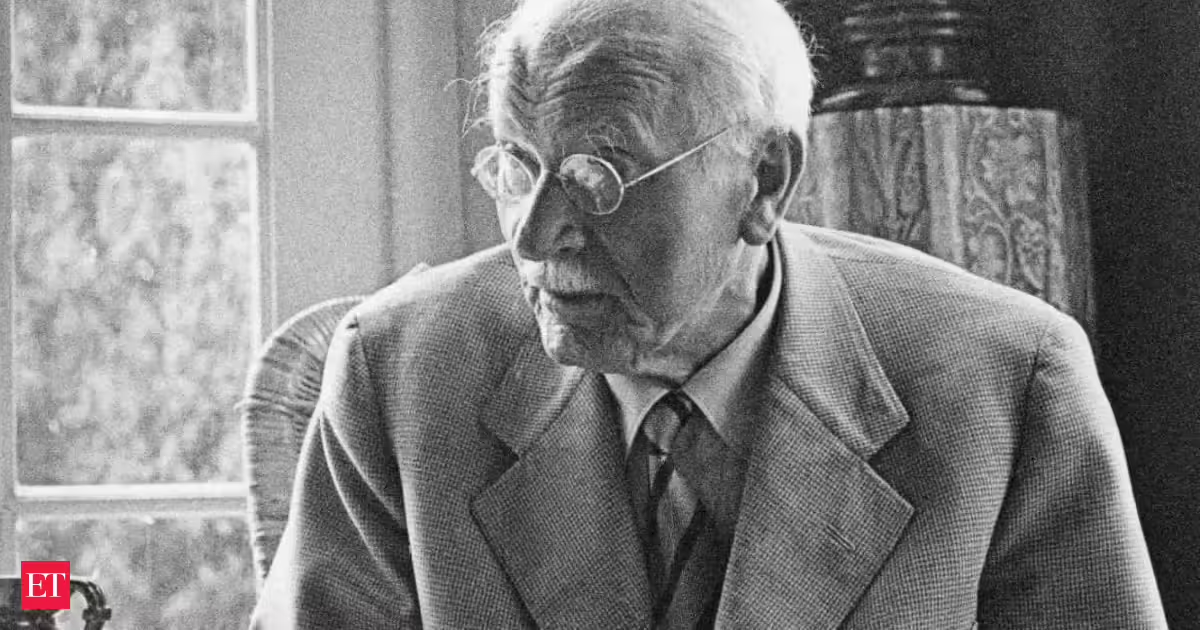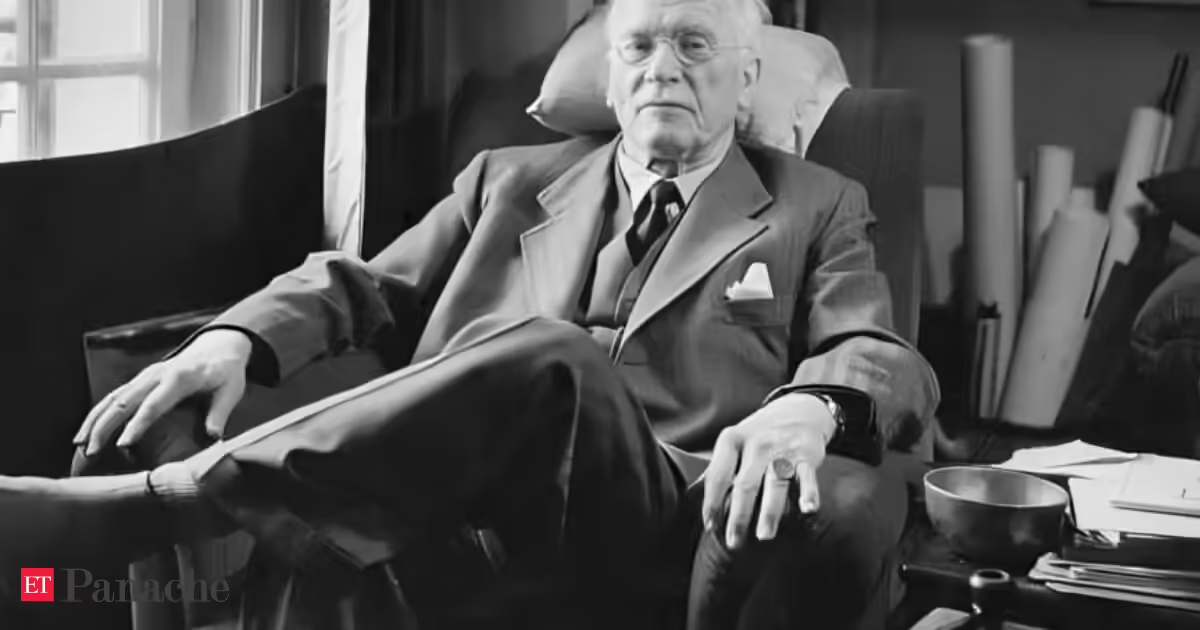
Quote of the day from psychologist Carl Jung on parenting mistakes: ‘The greatest burden a child must bear is the unlived life of its parents.’ Founder of analytical psychology on the dangers of expectations on childrenSynopsisPsychologist Carl Jung's profound insight reveals how parents can unconsciously burden children with their own unfulfilled dreams and regrets. This 'unlived life' creates immense pressure, forcing kids to sacrifice their individuality to meet parental expectations. In today's competitive world, this pattern is amplified, leading to anxiety and identity crises. Jung's work underscores the importance of parents living their own lives fully to truly benefit their children.Carl Jung's quote of the day is a powerful take on parenting. (Image - Getty Images)Some parents unconsciously tend to burden their children with their own missed opportunities. It is a subtle, heartbreaking trap many well-meaning parents fall into. Every unfinished dream, unfulfilled career, and unspoken regret is left on the tiny shoulders of children, who bear the responsibility of fulfilling their parents’ incomplete passions. But such high expectations slowly start taking a toll on the kids, as the silent longing of parents eventually becomes the heaviest baggage they are forced to carry. In today’s quote of the day, we explore a profound, eye-opening observation through the lens of acclaimed psychologist Carl Jung.Quote of the day by Carl Jung: ContextCarl Jung’s thoughtful quote of the day goes like this: ‘The greatest burden a child must bear is the unlived life of its parents’. This concept was extensively articulated in The Significance of the Constitution and Heredity in Psychology (1929), which was published in Volume 8 of his Collected Works (Structure & Dynamics of the Psyche).Carl Jung believed that when parents repress their own psychological growth, abandon their dreams, or ignore their own unresolved emotional conflicts, that "unlived" psychological energy doesn't just vanish. Instead, it is unconsciously passed down to the next generation. The child inherently senses this unfulfilled vacuum and feels an intense, unspoken pressure to live it out for them—sacrificing their own true identity (individuation) in the process.Carl Jung quote of the day: Deeper meaning and modern relevanceAt its core, Carl Jung’s thoughts expose a silent, generational transfer of emotional baggage. When parents abandon their own passions, repress their desires, or leave their own emotional traumas unresolved, that unlived life doesn't simply disappear. Instead, it hovers as an invisible, heavy expectation. Children, who are naturally empathetic and desperate for approval, instinctively absorb this vacuum. They subconsciously sacrifice their own true identity—a process Jung called individuation—to fulfill the dreams their parents dropped. The child stops living their own life and begins acting out a script written by their parents' regrets.Even today, this burden is amplified by a hyper-competitive culture and the curated perfection of social media. We see it in ‘helicopter parenting’ and the relentless push for children to excel in specific sports, elite colleges, or high-paying careers that the parents secretly coveted for themselves. Modern parents often disguise their own unfulfilled ambitions as ‘doing what is best’ for the child. However, forcing a child to carry the weight of a parent's ego leads to burnout, severe anxiety, and a profound identity crisis. Jung’s insight reminds us that the best gift we can give our children is living our own lives fully.More about Carl JungCarl Jung, born on July 26, 1875, in Kesswil, Switzerland, remains one of the most influential figures in the history of psychology. He studied at the University of Basel before pursuing his medical education in Zürich. During his training, Jung developed an interest in mental illness and psychological research, working at the Burghölzli Psychiatric Hospital in Zürich, carrying out experiments that explored how hidden emotions influenced responses. Jung also worked with Sigmund Freud, dubbed the father of psychoanalysis, sharing several ideas about the unconscious mind.Carl Jung and Sigmund Freud’s relationship broke down eventually because of major differences in theory. Freud strongly linked psychological conflicts to sexuality, while Jung believed the human mind was far more complex and influenced by broader emotional and spiritual forces. Jung later founded analytical psychology, introducing the concepts of introversion and extroversion. Another major idea developed by Jung was the collective unconscious.Carl Jung believed that beyond personal memories, humans also shared deeper symbolic patterns inherited across cultures and generations. According to him, these shared symbols appeared in myths, dreams, religion and art. Among his well-known works are Psychological Types, Modern Man in Search of a Soul, Psychology and Religion and Memories, Dreams, Reflections. His personal writings later appeared in The Red Book, which documented his inner struggles, visions and reflections. Jung died in 1961 at the age of 85.Read More News on...morelessRead More News on...moreless
Quote of the day from psychologist Carl Jung on parenting mistakes: ‘The greatest burden a child must bear is the unlived life of its parents.’ Founder of analytical psychology on the dangers of expectations on children
Psychologist Carl Jung's profound insight reveals how parents can unconsciously burden children with their own unfulfilled dreams and regrets. This 'unlived life' creates immense pressure, forcing kids to sacrifice their individuality to meet parental expectations. In today's competitive world, this pattern is amplified, leading to anxiety and identity crises. Jung's work underscores the importance of parents living their own lives fully to truly benefit their children.
773 words~4 min read