(Image credit: Shutterstock)
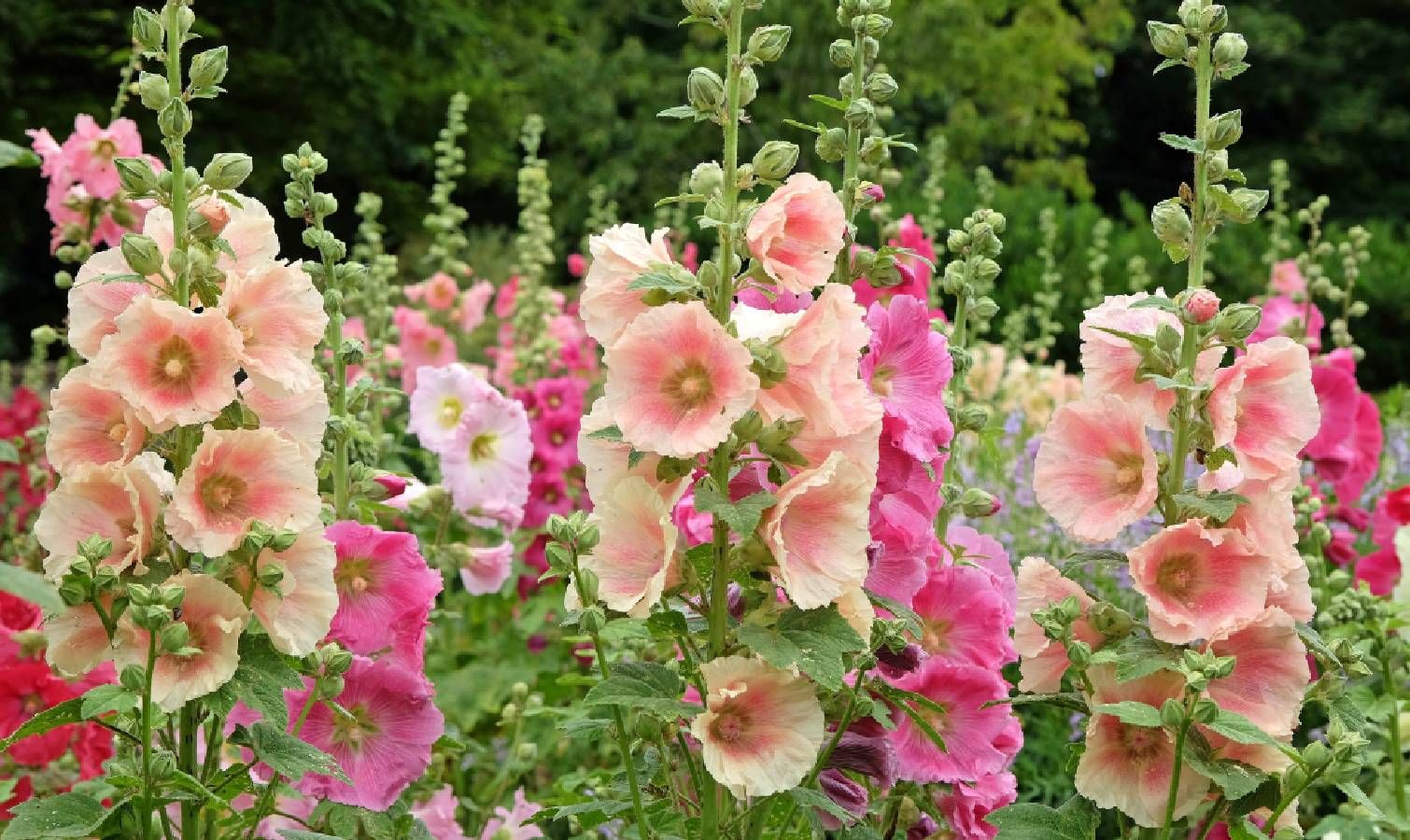
Hollyhocks are my absolute favorite flowers, ever, and I'm lucky enough to have a few of these beauties in my own garden. They are the ultimate cottage garden classic: tall with large, gorgeous blooms, the kind of plant that just commands attention. But they can also be incredibly frustrating.It’s a classic gardening letdown, isn't it? You spend all summer admiring those towering stalks, only for them to vanish, leaving you wondering if you did something wrong. The trick to a reliable yearly display, however, is simply working with their natural two-year lifecycle.By spending just a minute at the end of the season to guide their seeding process, you can easily establish a permanent, self-sustaining patch that comes back every summer.
Understanding their lifespan
Unlike true perennials like peonies, which grow from a permanent root system that returns every spring, hollyhocks are biennials with a strict two-year lifespan. In their first year, hollyhocks focus entirely underground, driving a massive, carrot-like taproot deep into the earth and growing a low rosette of leaves on the surface. They do not produce flowers during this initial season. In their second year, the plant uses that stored energy to shoot up its massive flowering stalks, bloom magnificently from mid-to-late summer, drop its seeds, and completely die. To get a permanent wall of hollyhocks year after year, you simply need to ensure that the dying second-year plants successfully drop their seeds to establish a new generation of first-year seedlings every August.