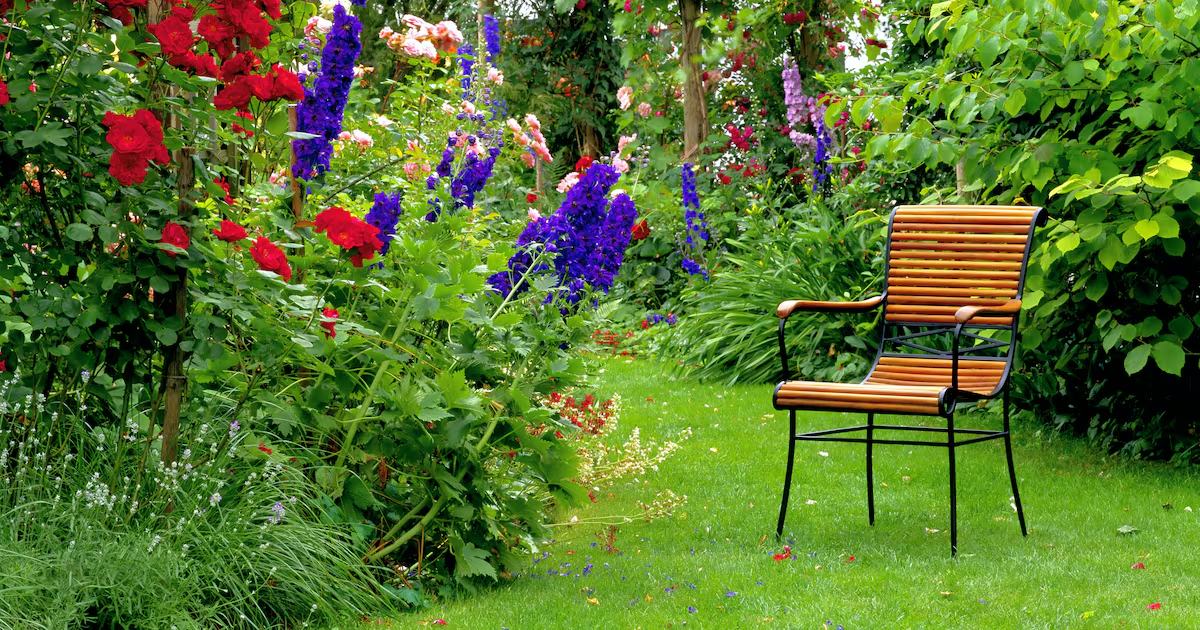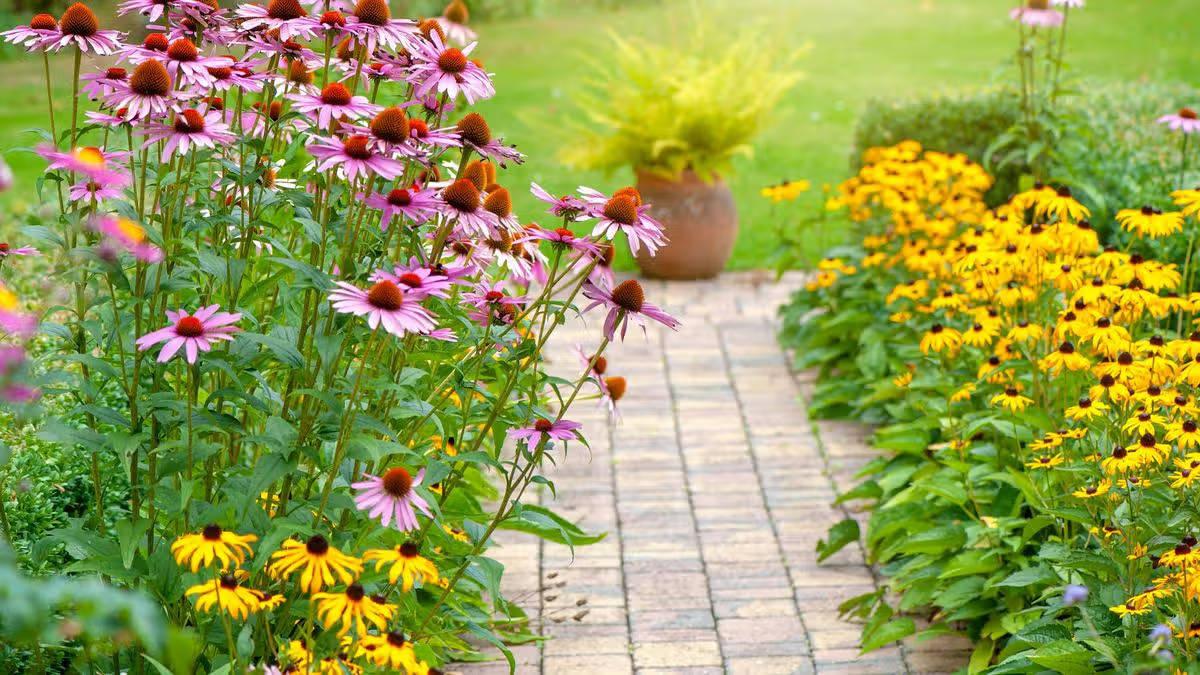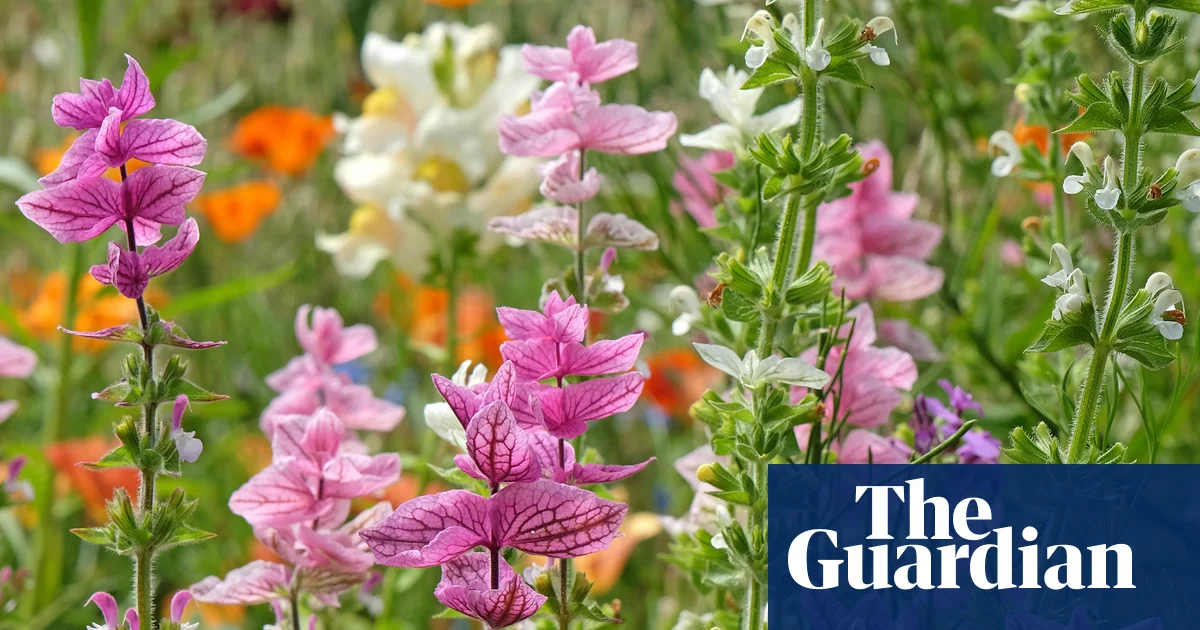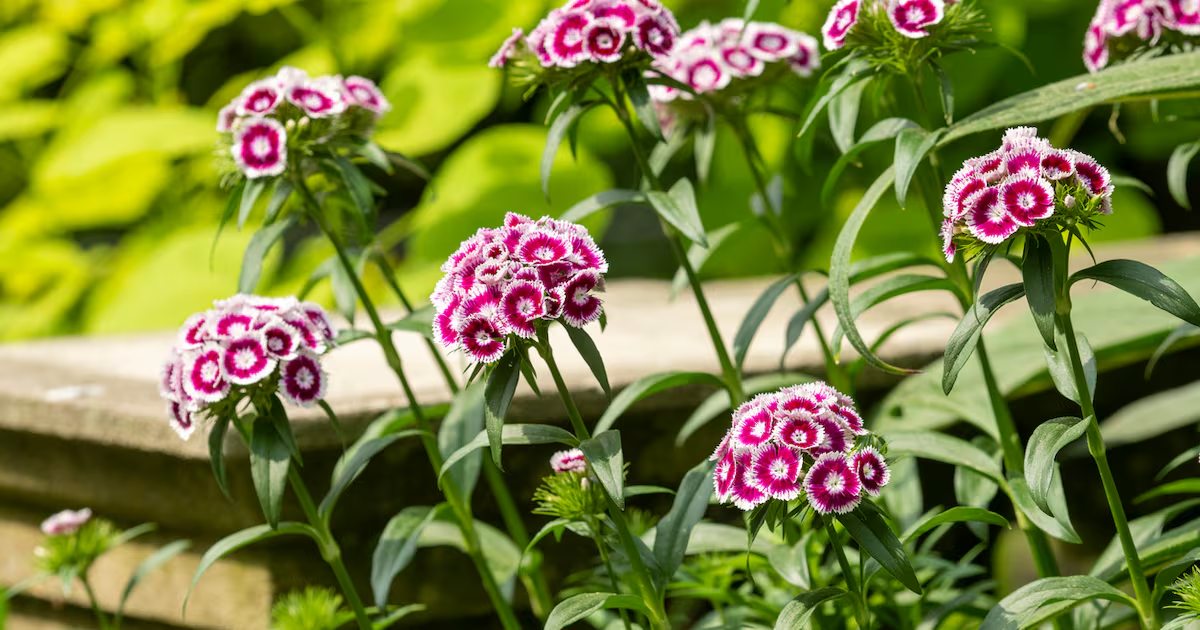
At the risk of sounding horribly smug, can I just say how utterly magnificent my garden’s Sweet William have been this year. Blooming in a multitude of different shades from almost black to vermilion, candy pink, blush, scarlet-red and white, the plants have been in flower since late May, their rich, spicy scent wafting through the air on sunny days. Might I also mention how astonishingly beautiful my garden’s foxgloves were last month? The sight of their tall, stately flower spires in shades of apricot and cream made me so ludicrously proud that if there were an award for comically self-satisfied plant parent, I reckon I’d surely get it.As for the drop-dead gorgeous daucus I’m growing under cover of a polytunnel, I’d like to take a moment to shamelessly bask (some would say wallow) in their reflected glory. An ode to the beauty of the Fibonacci sequence, each dusky pink flower, is, I kid you not, the size of a saucer. More properly known as a compound umbel, the blooms of this ornamental carrot are made up of numerous tiny starry florets arranged in a series of clockwise and anticlockwise spirals whose complex symmetry is transfixing. Whenever I find myself gazing at one – and it’s hard not to – it’s like looking at a galaxy in miniature.I say all the above not just to very loudly sing my praises as a gardener, but also because this is the time of year to sow seed of these and many other garden-worthy plants classed as biennials. With a life cycle of just two years, after which they’re past their best, this valuable group of short-lived decorative species spends its first year making vegetative growth before bursting into flower in the following spring or summer. But – and this is the important bit – the plants won’t do the latter properly unless they’ve been sowed early enough in the previous summer to give them time to bulk up and develop a strong, resilient root system. Time it well, however, and you can either sow them outside into a well-prepared seedbed or into pots for pricking out into a seed bed or modules, before planting them out into their final growing positions in autumn. The advantage of the former is that you don’t have to worry so much about their tiny root systems drying out during a hot spell, as they might if grown in a pot or modules. It’s also cheaper and less time-consuming, with no need for seed compost, or the pernickety business of pricking out. On the other hand, the advantage of the latter is that it’s much easier to protect those same baby seedlings from slug and snail damage, as well as from being overwhelmed by competition from weeds. For these reasons, my own preference is for the latter, which allows me to very generously stock my garden for the price of just a few packets of seed and some compost.Along with the aforementioned sweet william, foxgloves (both the white flowering Digitalis purpurea f. abliflora and the pale peachy-pink Digitalis ‘Sutton’s Apricot’) and the ornamental carrot (Daucus carota ‘Dara’), other well-known examples of classic ornamental biennials include sweet rocket (Hesperis matronalis), whose tall stems of intensely perfumed, edible, white or pale lilac flowers appear in May-June; Icelandic poppies (Papaver nudicaule), an aristocratic species famed for the delicate beauty of its slender-stemmed flowers; forget-me-not (Myosotis sylvatica) whose sprays of blue, pink or white flowers provide the perfect foil to spring-flowering bulbs such as tulips; wallflowers (Erysimum), whose intensely scented spring flowers come in a wide variety of both pastel and primary shades that mingle beautifully with spring bulbs; and honesty (Lunaria annua), whose tall stems of pollinator friendly white, pink or purple spring flowers are followed by silvery, disc-shaped seed heads beloved of flower arrangers.Purple and white foxgloves in bloom. Photograph: Getty Images Lesser-known but equally garden-worthy examples include the majestic Salvia sclarea var. turkestaniana ‘Vatican Pink’, a biennial, sun-loving form of clary sage with tall silver-pink-lilac flower spikes in summer. Like many biennials, this sun-loving plant often behaves like a short-lived perennial but flowers best when young.That’s also true of the handsome ornamental biennial thistle known as Eryngium giganteum ‘Silver Ghost’. A refined form of the ornamental thistle famously known as Miss Wilmott’s Ghost after the British plantswoman who liked to scatter seed of it wherever she went, it’s prized for its striking silvery-blue leaves and architectural, steely-white flowers which appear in profusion throughout the summer months. [ Is it my fault if hedge that has grown on to neighbour’s property causes damage?Opens in new window ]But be warned that its seed needs a period of cold stratification to successfully germinate, something best done by spreading it out between folded sheets of damp kitchen paper sealed in a freezer bag and placed in the salad drawer of the fridge for several weeks until you spot early signs of germination. Like daucus, it’s a tap-rooted species that likes sharp drainage and dislikes disturbance so the chitted seed is best sowed into root trainers or seed snails to give it growing room.Canterbury bells (Campanula medium) is yet another stately, early summer-flowering biennial that enjoys a free-draining soil, and a spot in full sun. Excellent for cutting, its tall flower stems are covered in large, very pretty bell-shaped flowers in shades of dark violet-blue, pink and white depending on the particular variety. Just like the foxglove, the seed is minuscule so take care not to sow it outdoors on a windy day. But when it’s happy, this plant may do the job for you. In my own warm, bright, very free-draining front garden, self-sown seedlings sometimes appear as if by magic in the most unexpected but delightful of spots, proving that nature, as always, knows best.This week:This is a good time to take softwood and semi-ripe cuttings of many kinds of ornamental trees, shrubs, climbers and herbs including trachelospermum, hydrangea, forsythia, solanum, passion flower, escallonia, Portuguese laurel, rosemary, bay, thyme – a brilliant way to propagate plants for free.Feed container-grown displays of summer bedding and flowering annuals with a good quality potash-rich liquid plant feed to support plant health and encourage the continued production of flowers, making sure to also keep them regularly deadheaded.Dates for your diary Sunday, July 12th, (10am-4pm) Johnstown Castle Estate, Co Wexford, Y35 HP22, Johnstown Castle Garden Fair 2026 takes place, with a mix of specialist plant nurseries, guest speakers and local food producers in attendance. On site parking available, see johnstowncastle.ie for details. Monday, July 20th (2pm) at Tilled Earth, Achill Sound, Co Mayo, the new organic education centre established by Klaus Laitenberger and his wife Joanna, a garden afternoon tour with supper, €80, pre-booking essential, see greenvegetableseeds.com
Want a glorious flower garden next summer? Now is the time to sow seeds
The time is ripe for preening and planting
1,121 words~5 min read