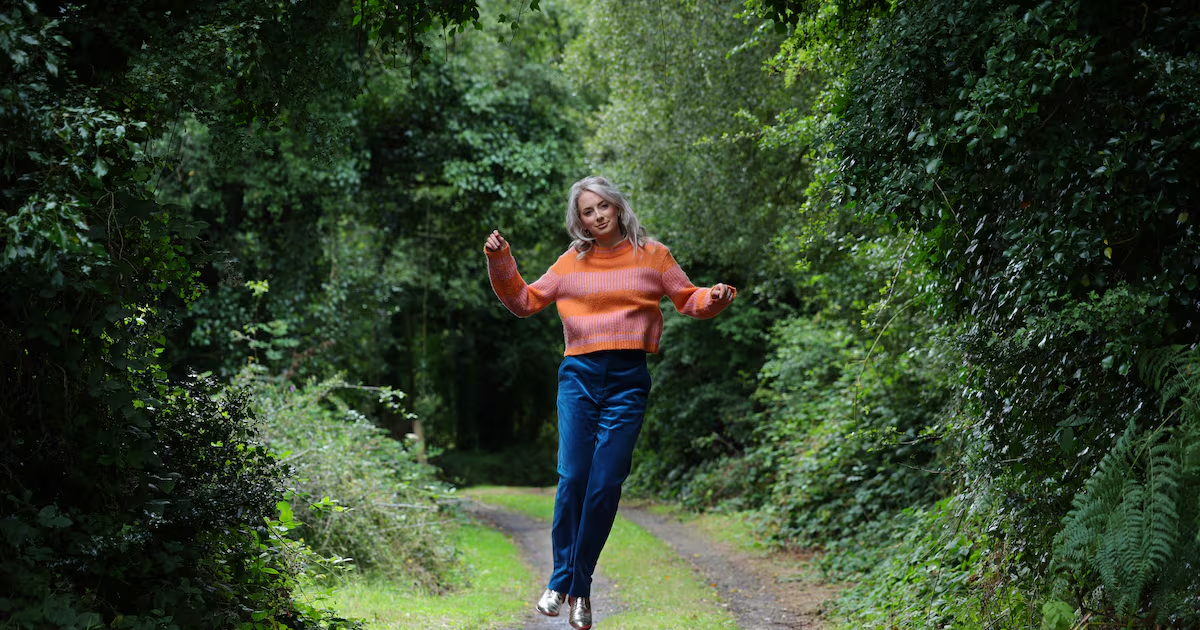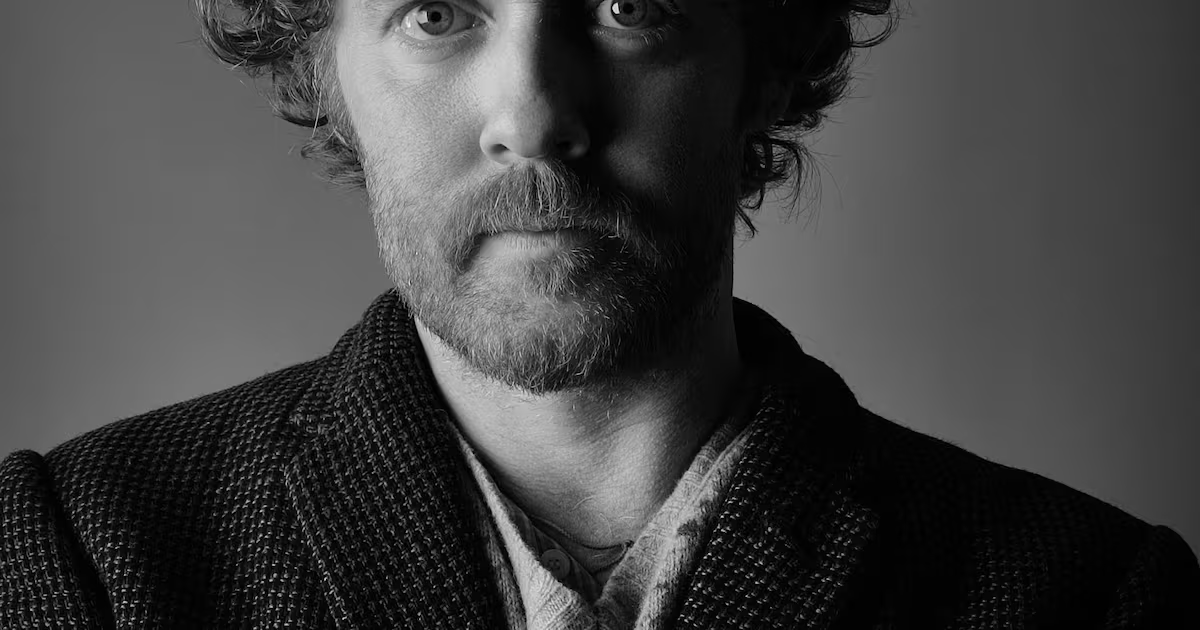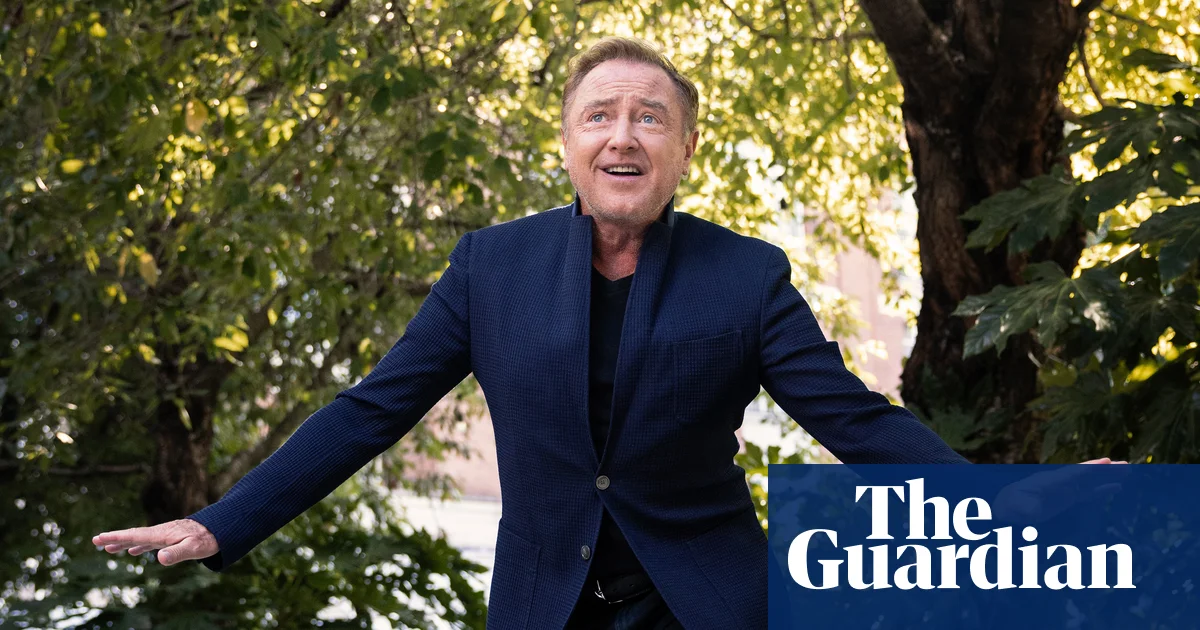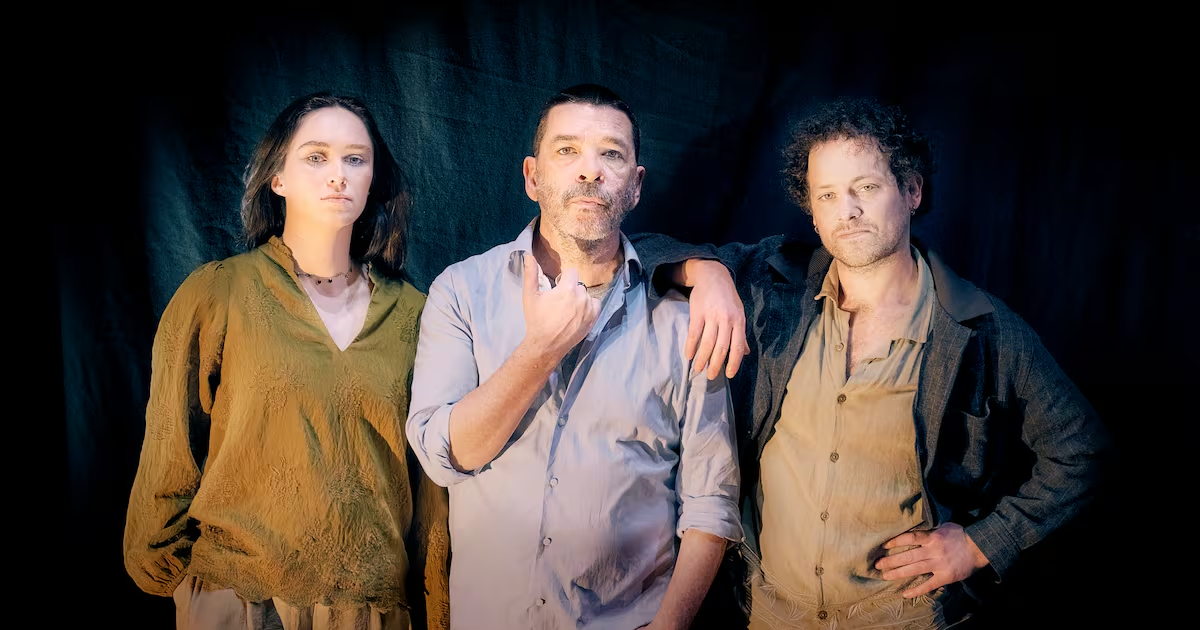
Colin Dunne was the male lead in Riverdance, has performed in works by contemporary choreographers such as Yoshiko Chuma and Michael-Keegan Dolan, and has created considered and provocative dance-theatre solos. But before all that he danced as part of traditional-music gigs with bands such as De Dannan and The Chieftains, and it is this format he’s returning to in his latest creation, For the Record.It unites him with the concertina player and dancer Becky Ní Éallaithe and the fiddler and violist Ultan O’Brien in a collaboration that combines the immediacy of a trad session with considerable aesthetic ballast born of rigorous conversations and experimentation around music and dance.“I really understand the framework of the traditional-music concert,” Dunne says. “It is so familiar to me, and so the conversation I can have with Becky and Ultan is really direct.”Dunne’s previous solo shows have investigated the rhythms and movements of Irish step dance. Out of Time, from 2008, had barely any music; instead, a long central passage where his taps were amplified and electronically manipulated provided the score.“I suppose that was me really pulling away from music and needing a break from it,” he says. “I was really exploring the dance form both as a movement form and as a sound-making form.”In Concert, from 2017, he tackled the notoriously “undanceable” album The Liffey Banks, by Tommie Potts. Here was a deep and direct engagement with music, as Dunne had to work out Potts’s unpredictably irregular phrasing and then embody these in his movement and steps.“Now I’m taking some of the performance modes, and work that I’ve done with sound in those solo shows, and placing them into a different format for an audience that might not usually come to see dance,” he says. For the Record: Ultan O’Brien. Photograph: Maurice Gunning It also sees Dunne celebrate the immediacy of music and dance rather than drill down into more conceptual artistic questions. Although a distinguished choreographer, he says he’s most comfortable when dancing.“I see myself more as a performer than a maker. My life seems to make sense when I’m performing. But I have to create in order to perform, and it’s the making that I slightly dread.”The dread is lessened by working within the format of the traditional-music concert rather than the theatre production.“For the Record feels, I don’t mean lighter as in flimsier, but just the whole atmosphere around it feels a little bit less weighted.”Dunne initially met Ní Éallaithe when she applied to take part in one of his dance workshops at Dance Limerick. She got injured beforehand, but Dunne invited her anyway to play concertina for the workshop.“There was just something about the way that she played,” he says. “Probably because she was a dancer playing for dancers.” For the Record: Becky Ní Éallaithe. Photograph: Maurice Gunning He knew the O’Brien’s music in particular through O’Brien’s collaborations with the step dancer Nic Gareiss. “I initially just worked with Becky alone, and then Ultan came in, and we would spend three days or so and afterwards ask if we would like to keep going. Then we’d meet again a few months later, so we were allowing time for the work to develop and for our relationship to form.”There was another presence in the rehearsal studio. Dunne has used sound-manipulation technology for years; more recently he invested in a deeper integration in his creative toolbox: the music-processing software Ableton.“I have spent a lot of time learning it,” Dunne says. “All of the sound manipulation in the previous shows has been done through Ableton, but always in collaboration with a sound engineer or sound designer. I wanted to have a more direct relationship with the technology rather than having to go through a second person.”Becoming fluent with this kind of software can be like learning an instrument. Dunne applied for and received a bursary so he could learn how to programme and even improvise with it.“That has really opened up the technology side of what I’ve been working with, in terms of being able to write scenes for myself.” This means he can programme Ableton so that, for example, when he taps the ground it plays a sample of a short musical fragment. Tap again and it plays a different musical sample.“So then my taps can together make a long musical phrase. Rather than dance to the music, or dance to the tune, I am actually dancing the tune.“I suppose one of the fears I’ve always had with technology is, is it a gimmick? But I feel like it really changes the way that I move. If the sound that I am making with my foot is not my normal sound, it changes my physicality. So I need to pay attention to giving just the right amount of weight to my foot as it touches the floor. It can easily be too much or too little, so that changes the physicality of the movement.”This also lends space to the dance. Rather than the taps being the central element of the dance, the software demands that Dunne focus on the time between the taps. But the more subtly he works with the software, the more the potential for problems grows.“These sound-augmentation techniques are usually used for closely miked musical instruments. They’re not specifically designed to be used on a pair of microphones attached to a pair of big old Irish-dance shoes with a body on top of it – and with various types of floors underneath! “There are so many parameters within the different kinds of plug-ins and effects I am using that the margins are really fine. We’re talking millimetres in terms of whether something is clear or whether it’s not. So it can break your heart a little bit sometimes.” That all three performers are used to improvising was central to generating material.“Initially, some of the movement sketches that I’d made with the technology were leading the inquiry, even in terms of asking the others, ‘Does this offer you anything?’ Even from that practical point of view the technology was initially leading the discussion. ‘Are your microphones going to set off my microphones?’ But through improvising we could develop lots of material.” Then the issue became what to do with all of this material. How could it be harnessed together into a single performance?“We would often ask ourselves these questions. What feels connected? What feels musically coherent? Does it even need to be musically coherent? What sort of music do we want to make? Are there tunes involved or are we going out to the peripheries of just sound?”All of these improvisations were recorded, so when the theatre director Kellie Hughes and sound engineer Hugh Cleary Ward joined the process, as extra sets of outside eyes and ears, there was a lot of material to consider. Hughes suggested trying to put the pieces together into a playlist and seeing what it was like as a listening experience, rather than focusing on how the music relates to the physicality of the dance or the action onstage.“So the gig is the live performance of the album that we have not yet made,” Dunne says.The initial research and development period in 2024 was supported by Luail, Ireland’s national dance company. Its artistic director, Liz Roche, approached Dunne when she was putting Luail’s initial proposals together, as she believed his investigations into the collaborative possibilities between dance and music aligned with the company’s inaugural programme, which featured major live music and dance collaborations.“And now they’re also supporting the final production. I don’t even want to call it a production. I don’t even want to call it a show. I don’t even want to call it a work. It’s just a gig.”For the Record is at Glór, Ennis, Co Clare, on Tuesday, July 7th; Dance Limerick on Thursday, July 9th; and the Set Theatre, as part of Kilkenny Arts Festival, on Wednesday, August 12th, and Thursday, August 13th
Colin Dunne: ‘I don’t want to call it a show. I don’t even want to call it a work’
For the Record, a collaboration with Becky Ní Éallaithe and Ultan O’Brien, combines the immediacy of a trad session with experiments in music and dance
1,322 words~6 min read