Wednesday 01 July 2026 5:05 am
| Updated:
Wednesday 01 July 2026 2:18 am
Luke has taken some of the best train trips in the world
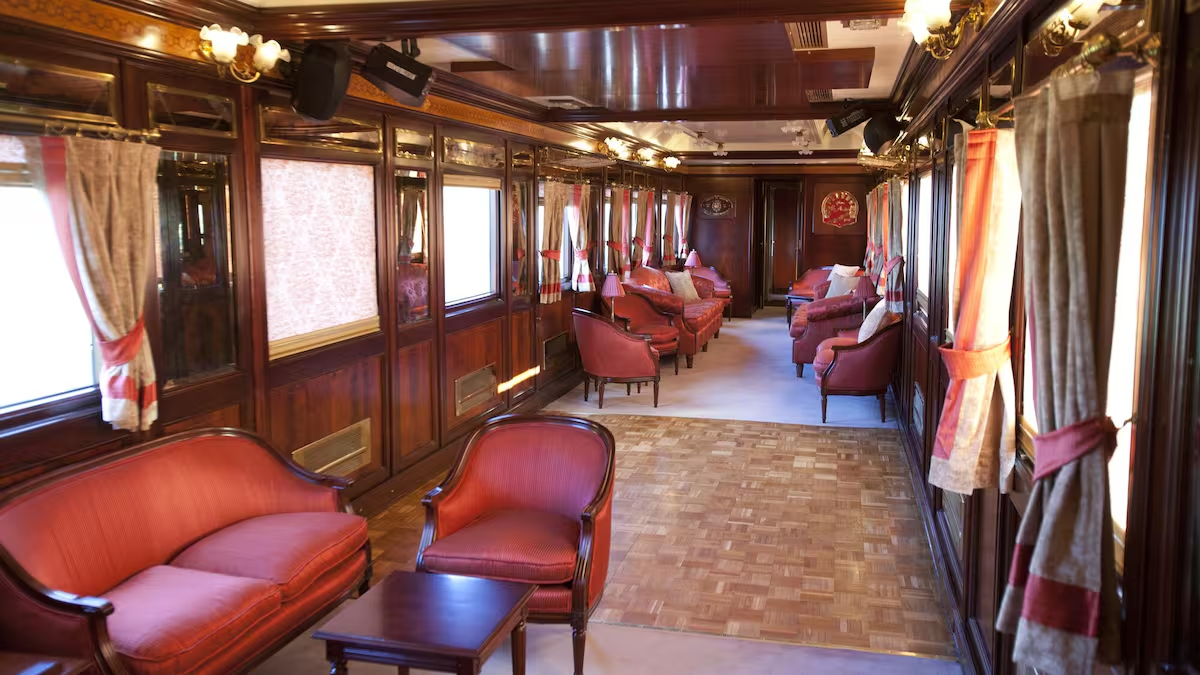
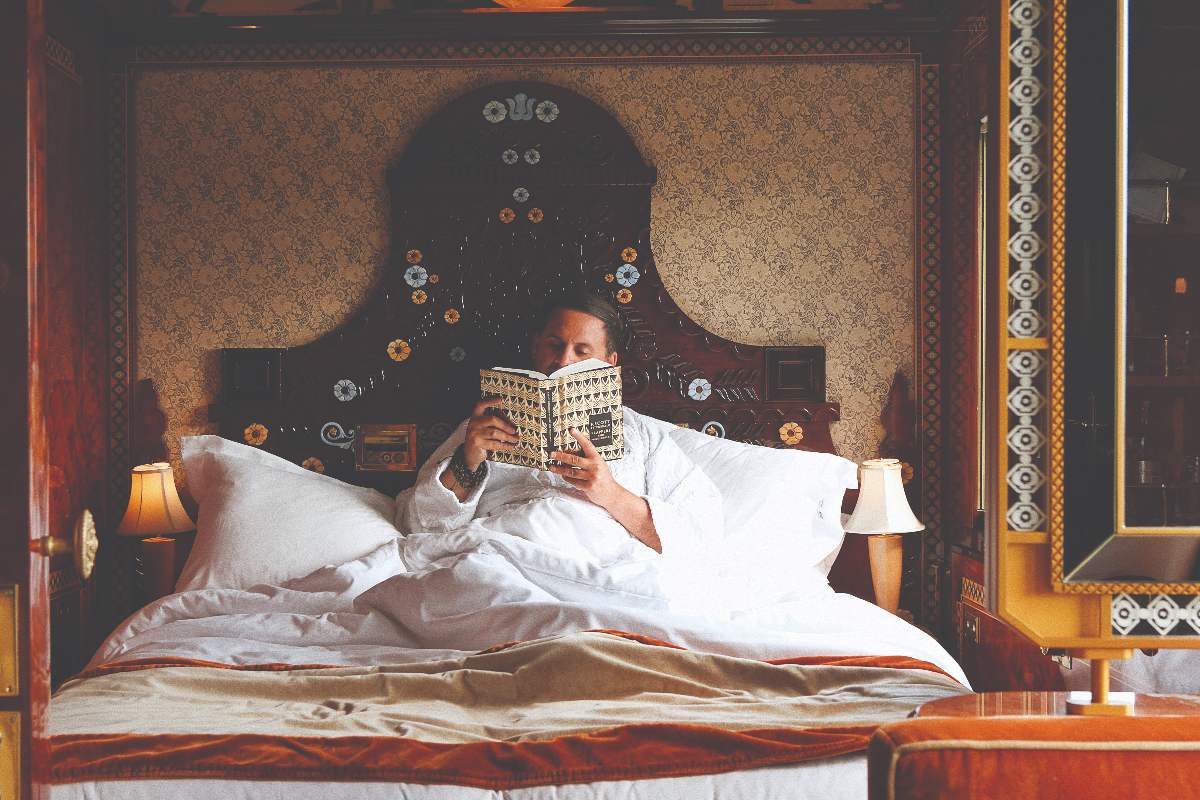
Since I was a child, I’ve loved the rhythmic sway of a train. The sedate pace, the repeating wallpaper of landscape rolling past the window. There is something comforting, almost hypnotic, about this most classic form of transport. Stepping onto a carriage, whether it’s a luxury sleeper or the delayed 9.25 Southern Service from London Victoria to Brighton, there’s something wonderfully nostalgic about the train. Like a gentle form of time travel, those big old windows reveal sketches of the past and snapshots of the present, all from the comfort of your own seat.Over the years I’ve traded road trips for some of the greatest train journeys on earth. I’ve seen sunrises over Lake Titicaca; sunsets on the African plains; eaten dinners next to Tiger-filled rainforests; and gotten absolutely sloshed on bottomless pisco sours up to the summit of Machu Picchu. Trains don’t just exist to get you from A to B – the best railway journeys offer an opportunity to explore a destination from a new perspective. The brute force of the Zambezi Sometimes that happens in the cars themselves, talking to strangers as you eat, sharing a tinnie or a flute as the wheels roll inexorably beneath you. Over the years, I’ve met people getting over their divorces, celebrating anniversaries and falling in love. Other times you can explore without moving as you absorb the otherwise inaccessible landscapes.Some of my best soirees on the tracks have been the far flung and ostentatious. In Africa, the 1,400-kilometre journey from Pretoria to Victoria Falls aboard Rovos Rail – nicknamed “The Pride of Africa” – was awesome in the true sense of the word. South African cities and pastoral plains morphed into the green void of Zimbabwe; the forests of Zambia, and the brute force of the Zambezi River. Spacious Edwardian-style suites (some with roomy clawfoot bathtubs) serve up the finest slice of “slow travel”. Train trips at a demure paceThe trip unspooled at a demure pace, unplugged from modern life. There are no TVs – nor even radios – and to this day, the Vos family who privately own it refuse to let guests access wifi onboard (admittedly this is better in theory than in practice, not just because I couldn’t access my emails, but because I couldn’t book Lana Del Rey tickets from the middle of Kruger National Park). On this train – and to a lesser extent on all trains – you belong, momentarily, to another world. You’re locked in, forced to exist in the moment, the vibration of your body and mind in tune with the tracks. Total disconnect is the modus operandi, and if you get bored of the scenery, Monopoly boards are stored in the games room and scheduled game drives in Zimbabwe’s Hwange National Park keep you busy before you reach the raw majesty of Victoria Falls.Luke and the Peruvian Andean ExplorerOn Belmond’s Venice Simplon-Orient-Express, it’s all about spectacle and pomp. From the moment you step on, it’s like being trapped inside a perpetual time warp. There’s free-flowing champagne, jazz and golden oldies on loop and white table service. Every passenger dresses in their finest frocks. But beyond the glam, this train’s greatest asset is its history. The train’s 1930s wagons are a masterclass in five-star Art Deco classicism. Cabins are top notch, with original polished wood and intricate marquetry. Two of the cars date back almost 200 years and more have survived Europe’s World Wars. They have hosted some of the world’s greatest historical figures – Agatha Christie included. Then there are the Grand Suites willed into life by artisans in France and the UK, all floral motifs, geometric patterns and unabashed pageantry. Let’s focus on Agatha ChristieThese cabins are the ultimate love letter to the golden age of 1920s train travel, following routes from Venice to Paris and all the way to Istanbul. They feel so cinematic that reality becomes a boozy blur. This is the train upon which I have felt at my sexiest; I usually hate playing dress up, but once I pulled up my slacks and posed in my Huntsman suit in the golden-lit carriages, I understood the power of looking dapper.Let’s focus in on Agatha Christie for a moment, a woman who has done as much as anyone for the PR operation of Big Train. This is a woman whose very name brings to mind the cosseted surrounds of lavish carriages, and whose life was spent riding the rails across Europe and beyond to visit archaeological sites. Legend has it, she was once stranded on a train for more than 24 hours after floods washed away part of the railway line on her return journey from the Middle East in 1931.She became fascinated by her fellow passengers, who would inspire the characters from her most famous book, Murder on the Orient Express. Speaking of that infamous train, Christie drew on another real-life incident when writing that novel: an incident in 1929, when the Orient Express became trapped in deep snow in Turkey for several days. If you’re ever seeking inspiration, consider boarding a train.A dining carriage on the Venice-Simplon Orient Express‘No way I’d rather travel than by train’On the other side of the planet, deep inside the Peruvian interior, South America’s first luxury train, the Andean Explorer, feels like another story entirely. I remember waking up in my sleeper car one morning to the sight of a lonely high-altitude lake glowing under the early morning sun. It looked like a mirage. This was a god’s view of the world, high up in the Andean plateau, where no car or plane could reach. Unlike the other grand train journeys of the world, this one’s like being on an open-air observation deck. When the sun sets, the Milky Way rises in all its haunting glory, and when it flickers over stratospheric lakes you can see why Peruvian folklore reveres Mother Nature so poetically.These are some of the most beautiful landscapes on earth, seldom seen by anyone except those that ride these storied carriages.In Scotland, back on home turf, it was the Royal Scotsman that captured my imagination. On the red carriages of this luxury sleeper, you can practically hear the Highland flings up in the Cairngorms and make out the whispers of witches on the Isle of Skye. The landscape visible from the train conjures images of trolls, sorcerers and Celtic gods, a vision of Britain before all the kings and queens ruled the lands. It’s a culture shock, even for Brits like me who think they’ve seen it all.GWR nationalisation is comfortingIn Italy, the Tuscan routes are best (Florence to Pisa especially), while the Rome to Naples Frecciarossa trains are notable for their speed, some belting along at 300 kilometres per hour. That said, train travel doesn’t have to be glitz and glamour. Some of my most memorable journeys have been on your average GWR services, contemplating life from a window seat en route to the middle of nowhere in rural Wales.It’s comforting to think that GWR – which will be renationalised later this year – has been running trains across this line for decades, on tracks between Bristol and London built by none other than Isambard Kingdom Brunel. It’s both a living piece of history and a portrait of Britain in 2026, flawed but hopeful. And with that, I’m off to catch the train home – because there’s no way I’d rather travel.