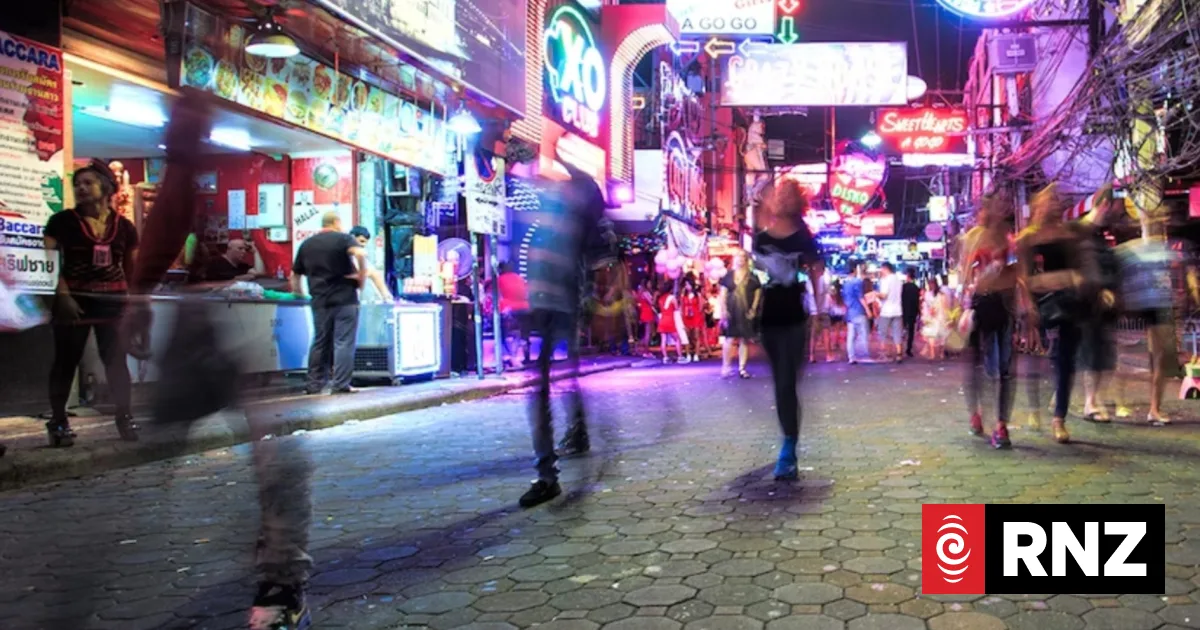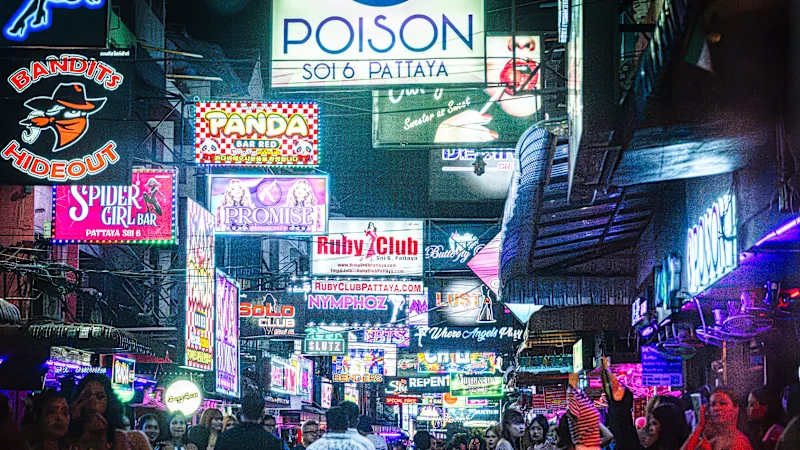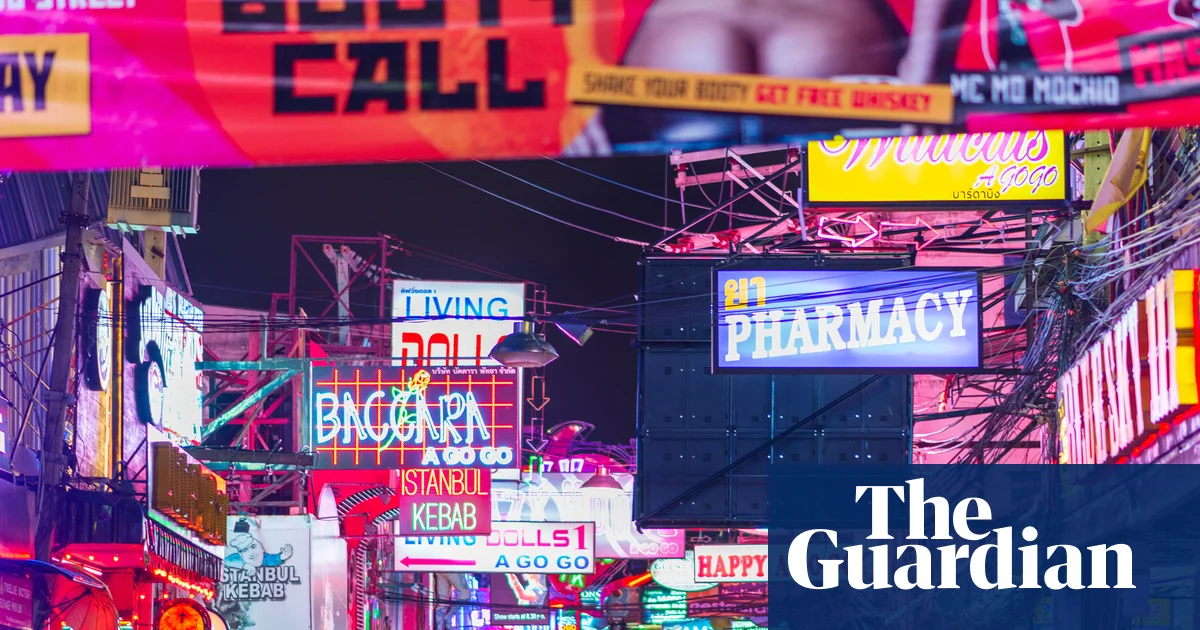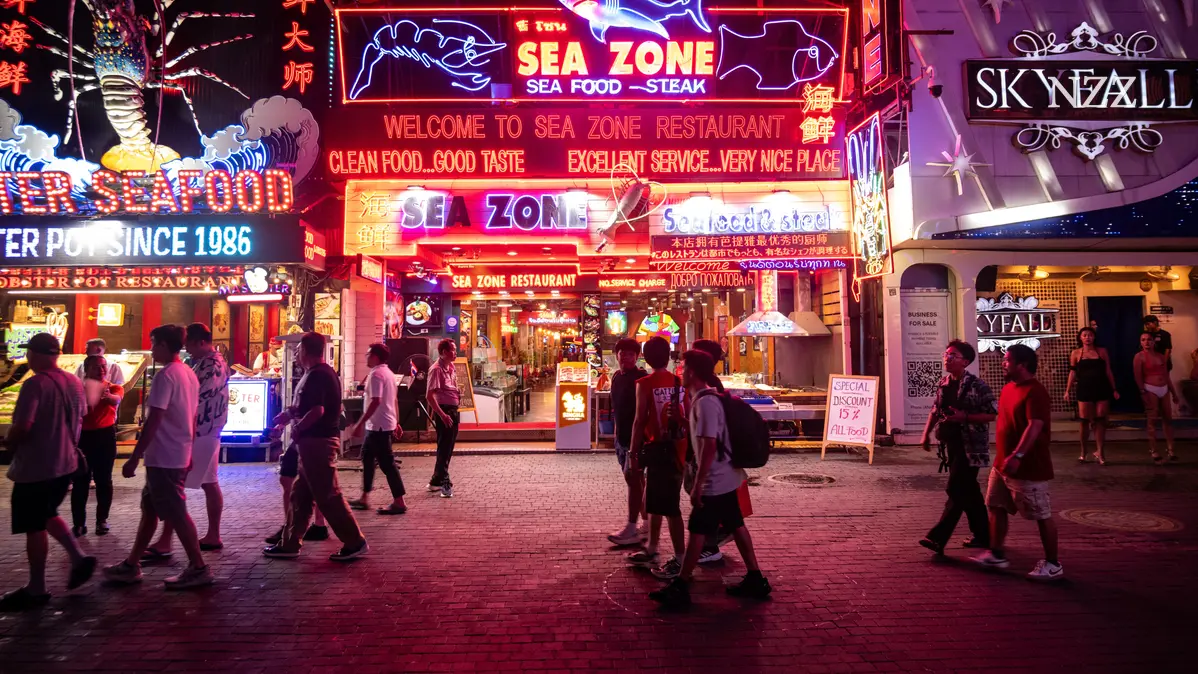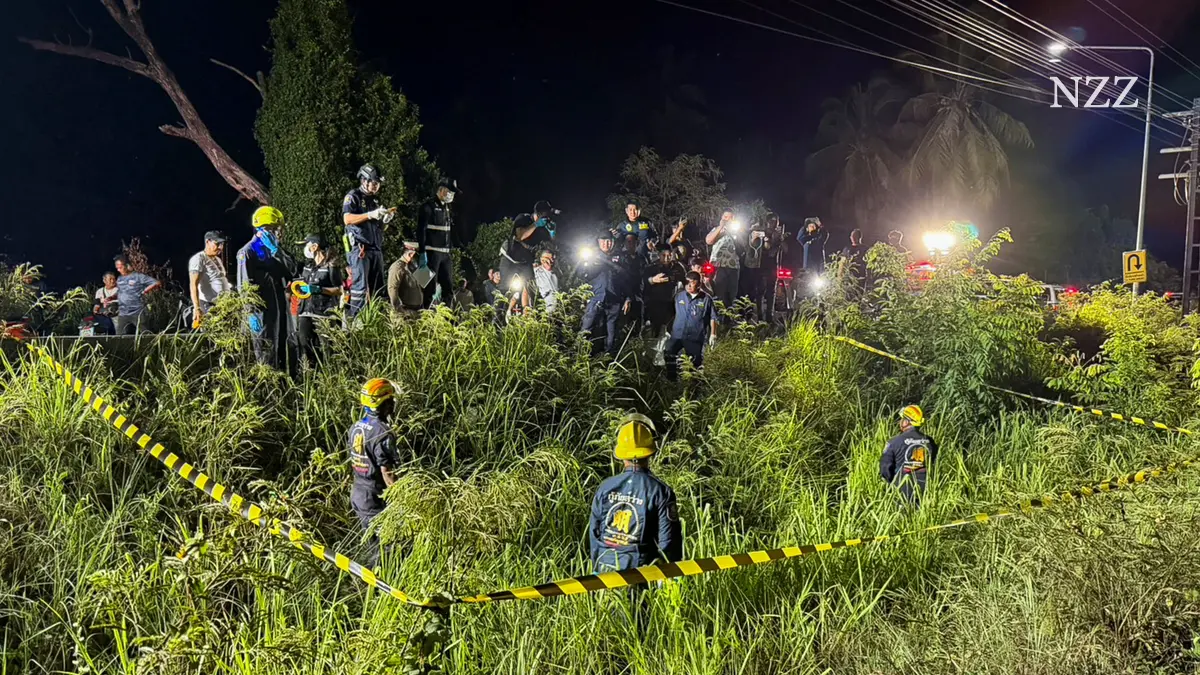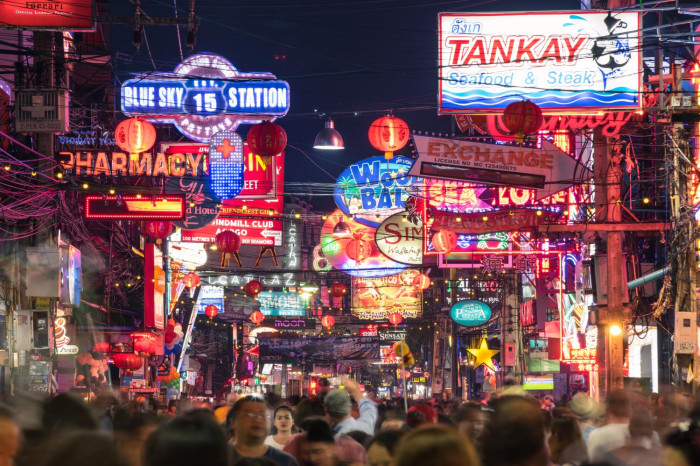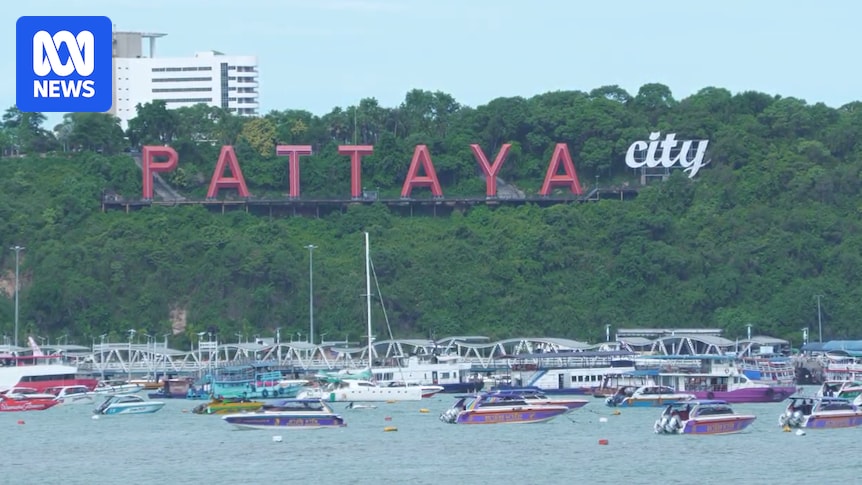
The Thai city of Pattaya is known for a brightly lit strip of go-go bars known as Walking Street frequented by tourists after dark.Its international reputation for seedy nightlife is justified, even if the city's red light district is confined to only a few streets, according to travel bloggers and Thai tourism experts."This is not exaggerated or just an old stereotype. It is actually there," said Pipatpong Fakfare, an associate professor and tourism researcher at Bangkok University."The nightlife district is small geographically but huge in terms of how much it shapes Pattaya's global reputation."Pattaya is now in the global spotlight for a murder case, after Australian man Simon Peter Carman, 45, was accused of murdering Thai teenager Tunchanok Donhomla there last week.Mr Carman has been charged with four offences: murder, concealment of a body, moving or destroying a body, and taking a minor aged between 15 and 18 for sexual purposes. Thai authorities say Mr Carman has denied all of the charges.Police allege Simon Carman picked up Tunchanok Donhomla from the Beach Road vice strip in Pattaya. (Supplied: Pattaya police)Before the criminal case, Pattaya had spent years attempting to change its international image, setting a goal of 27 million visitors in 2024.It tried attracting more families with an aquarium, water park, malls and marinas, while also hosting prestige events such as Miss Tourism World 2026 to attract different media coverage, Dr Fakfare said.Authorities had also conducted crackdowns on Walking Street, arresting sex workers, warning tourists about scams and fixing lighting and CCTV to make the area feel safer."However, from my honest view, none of this really changes the underlying picture much," he said.Sex work is illegal in Thailand although operates openly as a "grey market" only intermittently targeted by authorities.'I would never go back'Pattaya, about 150 kilometres south of Bangkok, is one of Thailand's most popular destinations and appears in market research firm Euromonitor's annual ranking of the world's 100 most-visited cities.Its location close to Bangkok and the capital city's Suvarnabhumi Airport has helped attract international tourists, said Pattarachit Gozzoli, an associate professor and expert in social and economic development at Mahidol University in Bangkok.But it was the Vietnam War that first transformed the area from a quiet fishing village into a destination for American soldiers decades ago, she said.Pattaya became a hub for bars and sex work, which remained after the US soldiers left and the city kept growing."Pattaya is still going on [with] this kind of business," Dr Gozzoli said.Authorities have worked to change Pattaya's reputation in recent years. (Supplied: Tourism Thailand)It's become home to a large and visible population of expats since the war.While Pattaya has fewer than 120,000 registered residents, it's estimated up to 70,000 foreigners also live there long-term or for an extended stay, Dr Fakfare said."Whole neighbourhoods like Jomtien, Pratumnak and Wongamat feel like expat enclaves, with entire streets of foreign restaurants, shops, and foreign signage everywhere," he said."It is one of the most visibly international cities in Thailand outside Bangkok."But its reputation has repelled some visitors including travel bloggers, who have delayed visiting the city.Adriana Neptuna said parts of Pattaya felt like Bangkok did a decade ago. (Supplied: Wanderlicious)Adriana Neptuna, who runs travel blog Wanderlicious, said she and her husband finally visited earlier this year on their eighth trip to Thailand.Ms Neptuna said she felt "exceptionally overwhelmed" as she passed through Walking Street, located near her accommodation."I wasn't maybe prepared for what to expect from Pattaya because I've been to Thailand so many times," she said."The atmosphere is very, very different from the rest of Thailand."She counted only three other female tourists as she passed through Walking Street."It was otherwise just all completely men. And it seems like most of them were there for the sex industry, to be honest," she said."There's lots of music, there's lots of noise, there's a lot of recruiter type people on the street trying to get you into their bars, showing you lots of pictures of like naked imagery, like right up close in your face, which was quite shocking."I would never go back [to that part of the city]."Siromes Akrapongpanich, director at non-government organisation the Child Protection and Development Center, said there were up to 50,000 sex workers in the area.He said the centre was helping 70 children impacted by their parents' activity as sex workers."At least around nine or 10 of them have seen their biological parents providing sexual pleasure for the customers in front of their very eyes," Mr Akrapongpanich said.The atmosphere of sex work was pervasive in the city, with brothels open near schools and temples, influencing how children thought about that work, he said."They will think that, 'oh, there's another kind of job, if I really am desperate that's … the safety net for me'."The ABC approached the Pattaya City Council, Pattaya Nightlife Business Association, Tourism Authority of Thailand and Association of Chonburi Tourism Federation for comment.Pattaya's 'split identity'Pattaya is also a destination for Thai people, especially those living in Bangkok, but they tended to stay away from the red light district, Dr Gozzoli said."They can do day trip or a night trip and have the cheap seafood of good quality because it's fresh," she said.The city had built a large mall and attracted large hotel chains in its attempt to clean up its image, Dr Gozzoli said.Before the city's tourism economy was struck by the COVID-19 pandemic, both local and national governments had also announced plans to turn Pattaya into a hub for meetings, conferences and exhibitions, she said.An advertisement for a business seeking "good-looking ladies" in Pattaya. (ABC News)But Mr Akrapongpanich is sceptical about attempts by authorities to change the city's image."It is just like the old wine in a new bottle," he said.Dr Fakfare described Pattaya as a city with a "split identity".He felt safe on a recent visit there with his family including his two children, and they avoided its red-light district."During the day, it's a normal beach town," he said."Besides the nightlife venues, there are many family-friendly attractions, beaches, shopping malls, water parks, dinosaur gardens, and cultural sites that make it worth visiting."But its image as a destination for sex tourism still put off many families and first-time visitors."The tourism industry knows the image problem holds Pattaya back," he said."Many tourists still perceive Pattaya as a party city."
How Pattaya tried to shed its sex tourism hub reputation
It has become the centre of international attention after an Australian allegedly murdered a teenage girl, but Pattaya City has had an international reputation for decades.
1,051 words~5 min read