Highways: Tackling land acquisition issues
| Photo Credit:
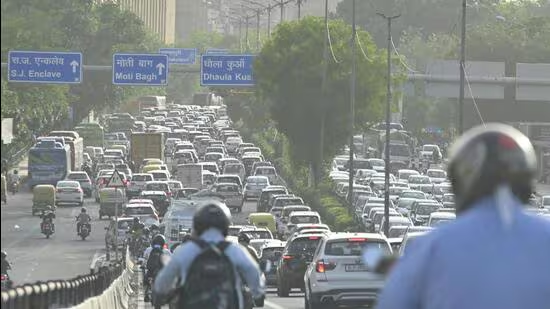
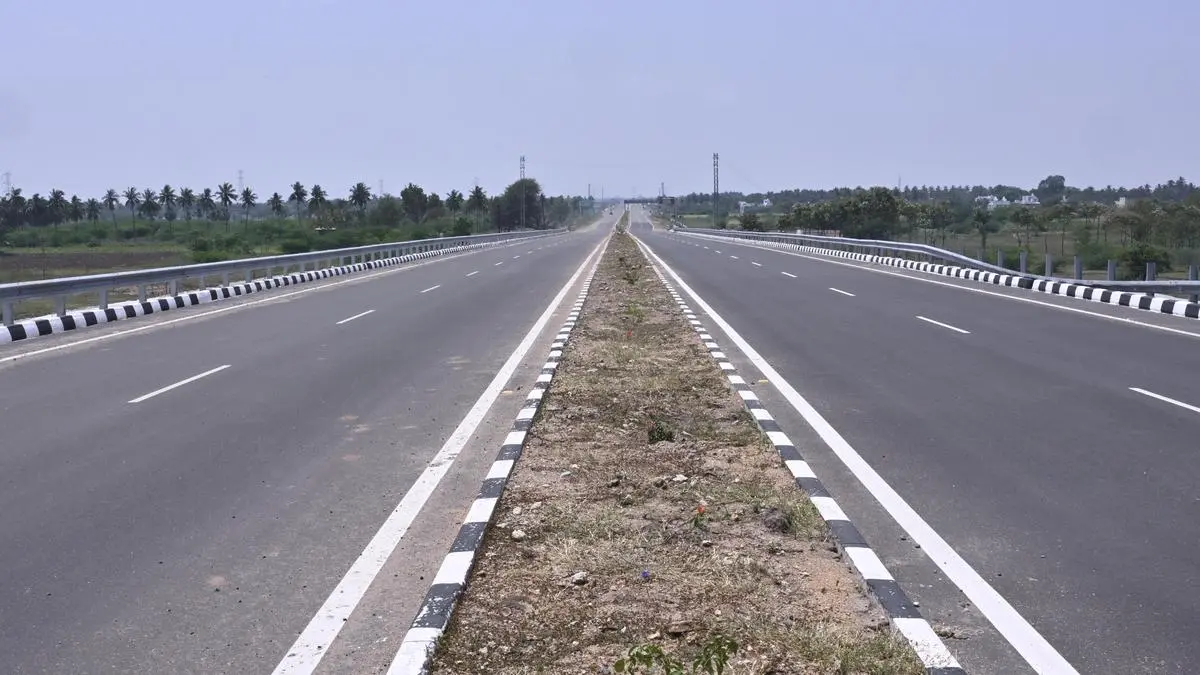
It was reported recently that large cities will soon have bypasses or ring-roads to reduce congestion and facilitate mobility. This is a welcome move but availability of land will be an issue which, if not sorted out, can thwart the best laid plans. We look at some options.Highways bring huge economic development along the margins and abutting areas. However, the benefits — accessibility, increase in land costs — mostly accrue linearly to lands right alongside the road or highway and rarely reach inner areas. Lack of planning in respect of the surrounding areas and the fact that most lands are privately owned imply that facilities come up haphazardly: small eateries, shops etc. causing congestion and traffic pile-ups. The primary role of a highway is to connect endpoints and reduce travel time; Such facilities have quite the opposite effect. Linear urbanisation along highways also brings in other problems like garbage and lack of civic amenities.All this can be solved if planning for the marginal lands is also part of highway development. However, this means more land acquisition. Landowners rarely cooperate in the planning process willingly and usually create impediments in acquisition. Therefore, land acquisition continues to be the bugbear.The lack of availability of land, not just for roads, but for all infrastructure, is increasingly being flagged as one of the major concerns in the economy needing urgent structural reforms as underway in labour or banking. The amended land acquisition laws with Rehabilitation & Resettlement (R&R) policies and special laws like those for highways have made things easier and faster but opposition continues, leading to delays and increased costs.There is urgent need, therefore, to examine how the issues relating to land acquisition and road-margin planning can be addressed.Protests against acquisitionSome years back, we needed land for several highway projects in Tamil Nadu, specially greenfield bypasses; but protests by land owners were a challenge. Of course, that lands abutting roads are valued several times higher is well-known and people were happy with the idea of the road but only as long as their own village or lands were kept out of it.It took us a lot of time to even arrive at an alignment because every time an alignment was proposed one group would oppose it and suggest a realignment that would specifically avoid their own lands or village! This would invariably be tinged with political colour and result in multiple (mis) alignments; many projects would get stalled, sometimes ending in law and order issues.Typically, landowners protest because they are faced with a triple whammy: One, loss of land which is often the only productive, income-generating asset owned; Two, low compensation because of payments based on guideline values rather than market prices; Three, and most important, the mortification of sacrificing their asset at a low price only to see the value of a neighbours land increasing several-fold (courtesy the new infrastructure) which is denied to them! This is quite understandable; therefore there is a need to make it a win-win situation. It was in this context that a land pooling scheme for roads was proposed and announced.Broadly, it was like any other land pooling scheme for town planning or industries but with a portion of land along the road margins proposed to be handed back to those who lost land. This meant that the width of the corridor acquired for the highway would increase so that there would be sufficient land available beyond the road margins for handing over to the original owners. When I discussed this with a group of farmers from Salem who were losing land, they were very enthused.It has taken some time for an overall policy to be evolved between different departments since it straddles many sectors — Housing, Industries, Revenue etc. Necessary amendments in the relevant acts and rules and the notifications have all been published with implementation beginning. Meanwhile, several other States have implemented land-pooling schemes of different kinds. In AP, the way land was acquired for the Amaravati Township project through land pooling is something that should be replicated for all projects requiring land. Though there were challenges these are now hopefully behind us.The advantagesThe advantages of such pooling are obvious.(i) The land-owner loses land but gets back a portion whose value with road access and proper infrastructure may be several times that of the undeveloped land.(ii) No single land-owner is a net loser or gainer since everyone in the neighbourhood loses/gains land equally: no green-eyed spoil-sport!(iii) Better — area-wide, rather than linear — planning results: utilities, open-spaces and appurtenant infrastructure provisioning can be systematic.(iv) The alignment of roads and road grids need not be altered to suit vested interests.(v) Delays due to court cases are avoided.(vi) The costs of land acquisition could be recouped through ‘betterment levies’ on the lands benefitted.(vii) Road Grids to increase the number of holdings with planned access would lead to moderation in land prices.(viii) Fragmented government lands can be consolidated into larger parcels.Landowners will need to be partners in an inclusive development process.A situation may well arise where people come forward with voluntary gifts of land for roads realising the benefits due to a corridor (like enhanced land value).So, instead of payments to the land owners there could also be partnerships and competition (challenge mode) for road projects! This would be something akin to joint development of land by public and infrastructure provisioning departments.The writer was Secretary, MoPSW, GOI till recently and Principal Secretary, Highways, GoTN earlier. Views expressed are personalPublished on July 1, 2026