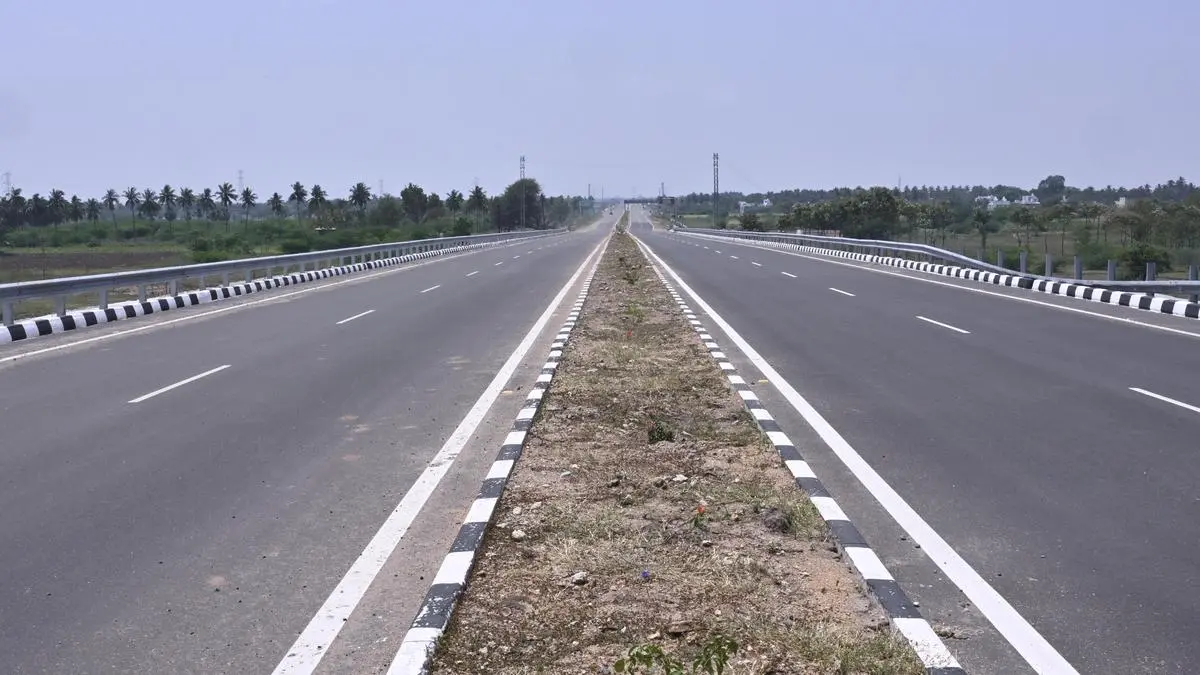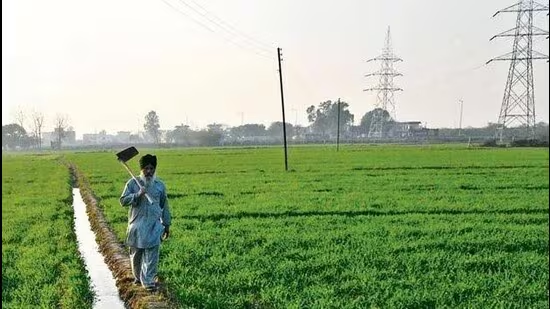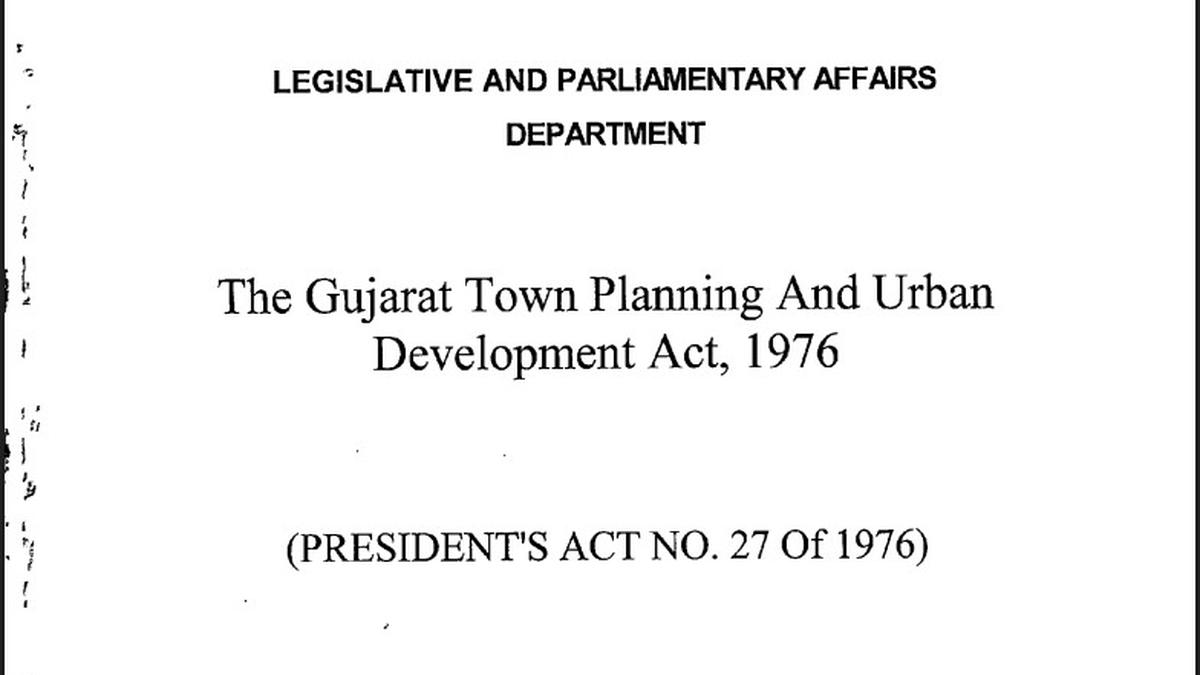
Rajasthan has recently announced the State’s first land pooling scheme. The government is optimistic that the scheme will help with land acquisition and deliver the land needed for roads, infrastructure, and development activities. Other States, too, are either actively thinking of implementing land pooling schemes. While States such as Gujarat and Maharashtra have found success, much will depend on localised innovation and institutional flexibility.Urban infrastructure projects in India have historically relied on land acquisitions. This process has become increasingly complex and financially burdensome, particularly after the enactment of the Right to Fair Compensation and Transparency in Land Acquisition, Rehabilitation and Resettlement Act, 2013. The limitations of land acquisition are both structural and procedural. Even before the 2013 Act, acquisition processes were time-consuming and often contested. Post-2013, the inclusion of rehabilitation and resettlement provisions have further increased financial obligations, making large-scale acquisitions for urban infrastructure increasingly unviable. This has resulted in a growing gap between planned infrastructure and its implementation. Plans are often under-executed due to the inability to mobilise land.On pooling landWhile States have tried different solutions, land pooling mechanisms, especially Town Planning (TP) schemes, have emerged as a viable alternative. In a land pooling model, landowners voluntarily contribute land for infrastructure development and receive a portion of the serviced land in return. This method reduces the need for compulsory acquisition and distributes development benefits among stakeholders.The TP scheme, widely implemented in Gujarat and Maharashtra, is among the most successful land-pooling models in India. Under this model, landowners voluntarily contribute about 25-40% of their land to provide infrastructure such as roads, parks, public amenities, and housing for economically weaker sections. The remaining land (60-75%) is returned to them as reconstituted plots that are better shaped, serviced, and more valuable. This method integrates land assembly, infrastructure provisions, and cost recovery.A key strength of the TP scheme is its participatory, people-centric approach. It is also financially self-sustaining, as incremental charges from landowners are recovered during development rather than up front. Compared with land acquisitions, TP schemes reduce displacement, ensure equitable benefit-sharing, and enable faster urban development while preserving environmentally sensitive areas. Recognising its potential, the Government of India has promoted TP schemes since 2019.Land pooling is, however, not a new idea. For instance, in Gujarat, it was introduced almost 100 years back and formalised under the Gujarat Town Planning and Urban Development Act, 1976. And over time, in Gujarat, more than 1,000 sq. km across Ahmedabad, Surat, Rajkot, Vadodara, and Gandhinagar have been planned through TP schemes.But unlike Gujarat, Maharashtra failed to update its statutory provisions for enabling TP schemes over time. However, Pune and the Mumbai Metropolitan Region Development Authority have recently adopted this model again to provide infrastructure and serviced land in the city’s peripheral areas.Exemplary modelWhile other States have tried to implement the model, it has not been easy. For example, in Guwahati, even though the Guwahati Metropolitan Development Authority Act, 1985 included provisions for the preparation and implementation of development schemes, it lacked clarity on critical aspects, including the percentages for land appropriation and institutional roles. An equally significant challenge was the absence of digitised land records; land records in Guwahati were maintained manually. Additionally, discrepancies were observed between revenue records and ground conditions.To address this, rather than conducting time-consuming joint measurement surveys, the existing map was retained as is, and final plot allocations were based on the land areas specified in the revenue records. This significantly reduced the time required to prepare the scheme. Reducing landowners’ contribution was another key decision to make the scheme more acceptable. Private landowners were asked to contribute only 12-15% of their land, compared with the usual 35-45%. This was primarily used for road infrastructure.In Rajasthan, land pooling had already been recognised in statutory provisions since 2016. However, they were handicapped by a lack of experience. Now, modifications are being made to the land-value calculations in the State to ensure that the financial burden on landowners remains manageable. The government has absorbed a portion of the cost, making the scheme more equitable and attractive.States that are just about to venture into land pooling, such as Tamil Nadu, Madhya Pradesh, and Delhi, also have to go beyond conventional approaches. Their challenge is to first convince landholders, communicate the benefits, and contextualise the approaches. Particularly, factors such as legislation on land-pooling requirements, adjusted land-contribution mechanisms, and equitable financial models will collectively determine the success of TP schemes.Amit Gotecha is an urban planner advising various State governments on town planning schemes
How land pooling solves acquisition woes
Compared with land acquisitions, town planning schemes reduce displacement, ensure equitable benefit-sharing, and enable faster urban development
TL;DRAI
Rajasthan introduced a land pooling scheme where owners contribute 25-40% of land for infrastructure and receive improved plots. This voluntary model bypasses acquisition delays and distributes benefits equitably, proving replicable for addressing India's urban infrastructure gap.
746 words~3 min read