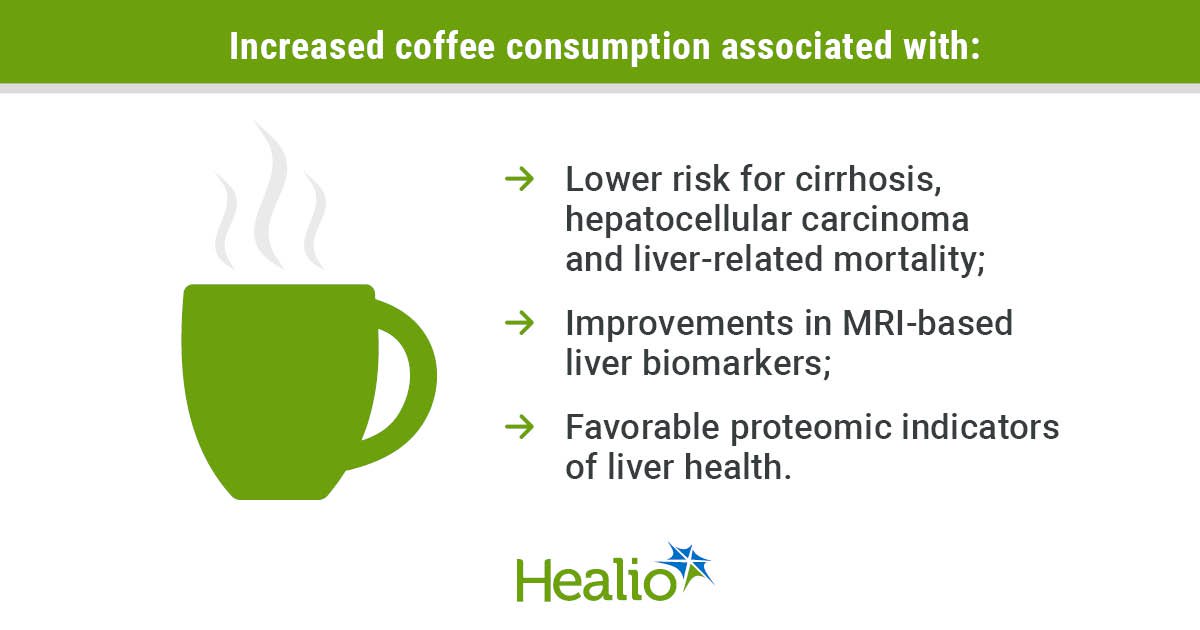
Coffee drinkers are significantly less likely to develop liver cancer or die from liver disease, a new study has found. Analysis of the coffee consumption of more than 350,000 adults found those who drank five or more cups a day were 50 per cent less likely to develop liver cancer compared with non-coffee drinkers.They were also around a third less likely to develop cirrhosis - whereby the liver becomes severely damaged, increasing the risk of brittle bones, sepsis and organ failure. The benefits to liver health appeared to remain in people who opted for decaffeinated coffee, and even those with a sweeter tooth, the researchers found. 'Collectively, these findings provide multidimensional evidence that coffee intake relates to improved liver health, even before clinical disease,' Dr Hyunseok Kim, a transplant hepatologist and study lead author said. 'Our results show that common preparation habits do not negate coffee's beneficial biological effects, proving the most comprehensive assessment to date of long-term coffee consumption and liver health.' The study - published in the journal Clinical Gastroenterology and Hepatology - tracked 354,957 adults' coffee consumption for around 13 years. Coffee consumption was reported by participants - in cups per day - at the start of the study and then again when they underwent a liver scan. Drinking five cups of coffee a day could significantly slash your risk of liver cancer, research suggestsUse of sugar and artificial sweeteners was also reported. Advanced MRI scans showed coffee drinkers had less fat in and around the liver - a key marker of liver disease - inflammation and scarring-related biomarkers, along with healthier liver protein profiles.While those who drank five cups or more saw the most protective effects, even those who drank one to two cups a day were significantly less likely to develop cirrhosis and liver-related mortality than non-drinkers. The researchers concluded: 'Given coffee's wide availability, safety and affordability, promoting moderate unsweetened coffee consumption could represent a simple, scalable strategy for liver disease prevention.' However, they acknowledged that because coffee consumption was self-reported, there could be some bias in how people remembered what they had drank and the quantity.A 2025 study similarly found that giving patients with cirrhosis 400mg of caffeine - roughly four cups of coffees' worth - a day improved their liver function. And an older review by the British Liver Trust found that regularly drinking moderate amounts of coffee - decaf or otherwise - may prevent liver cancer. Experts are not entirely sure why coffee has such a protective effect, reducing and preventing scar tissue, but it is thought to be due to its powerful combination of bioactive compounds and antioxidants which may exert anti-inflammatory effects.
Drinking coffee can slash the risk of deadly liver disease
Coffee drinkers are significantly less likely to develop liver cancer or die from the disease, a new study has found.
693 words~3 min read