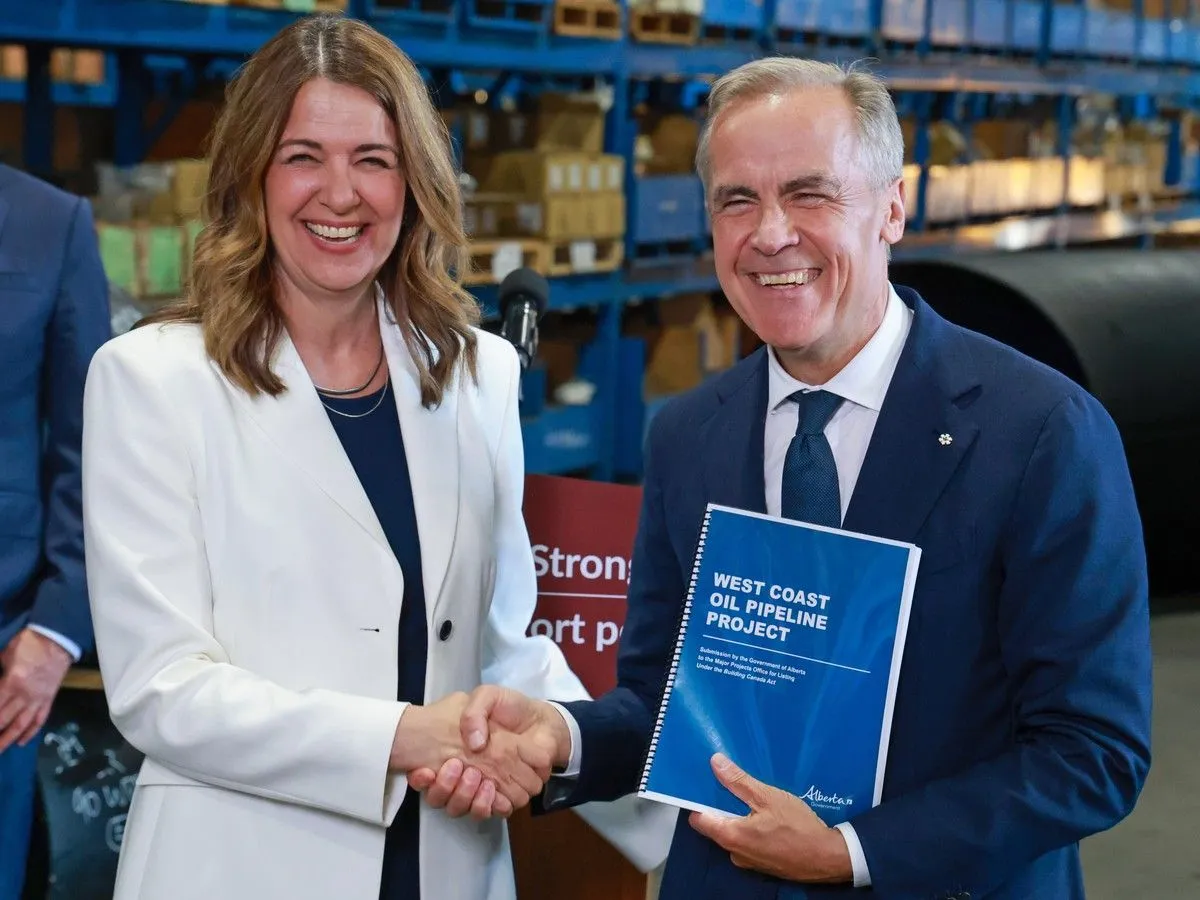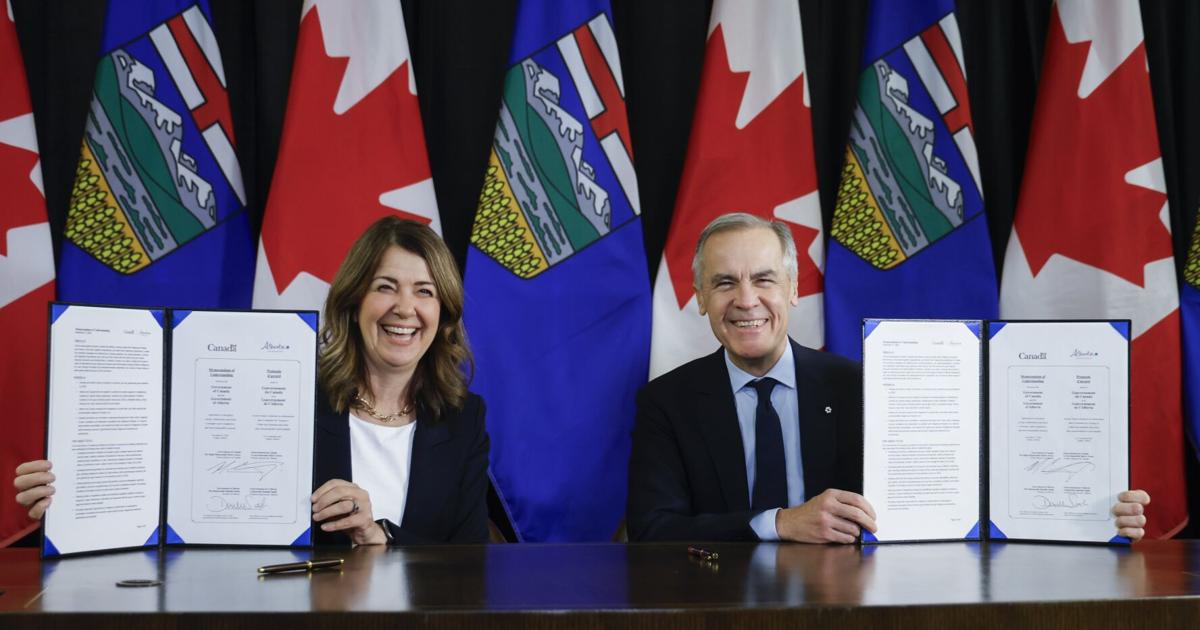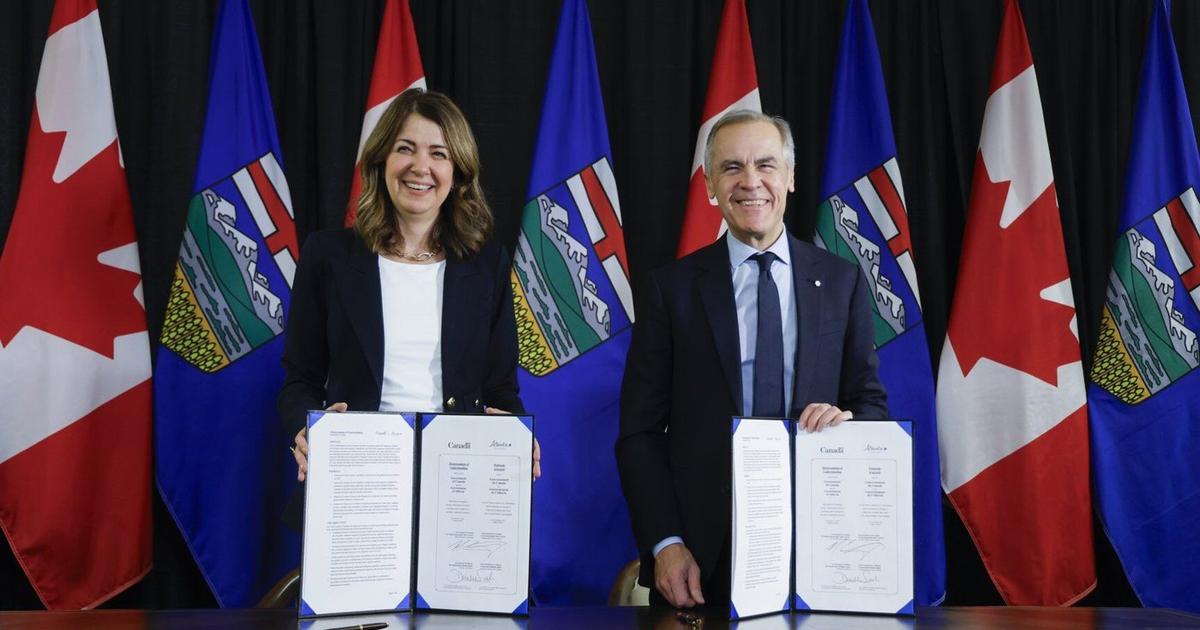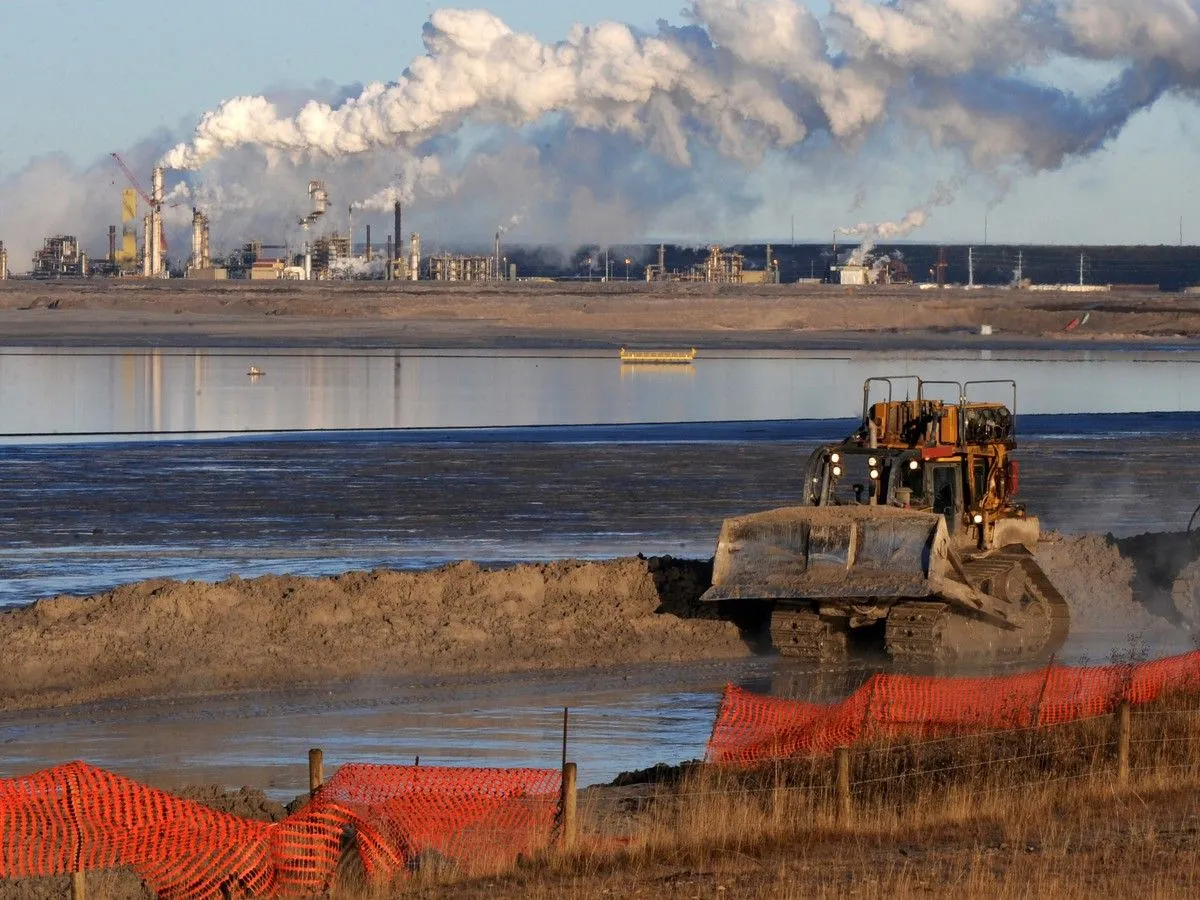
Skip to Content News Archives Economy Energy Oil & Gas Renewables Electric Vehicles Mining Commodities Agriculture Real Estate Mortgages Mortgage Rates Finance Banking Insurance Fintech Cryptocurrency Work Wealth Smart Money Wealth Management Investor Personal Finance Family Finance Retirement Taxes High Net Worth FP Comment Executive Women Puzzmo Newsletters Financial Times Business Essentials More Innovation Information Technology FP500 Podcasts Small Business Lives Told Tails Told Shopping Financial Post Store Obituaries Place a Notice Advertising Advertising With Us Advertising Solutions Postmedia Ad Manager Sponsorship Requests Classifieds Place a Classifieds ad Working Profile Settings My Subscriptions Saved Articles My Offers Newsletters Customer Service FAQ News Economy Energy Mining Real Estate Finance Work Wealth Investor FP Comment Executive Women Puzzmo Newsletters Financial Times Business Essentials HomeEnergyNewsOn the eve of Alberta's pipeline application, Carney concedes emissions will be higher“We can't afford to restrain the growth of an important part of our energy mix, oil and gas, to meet a short-term goal,” Carney saidLast updated 52 minutes ago You can save this article by registering for free here. Or sign-in if you have an account.Workers use heavy machinery in the tailings pond at the Syncrude oil sands extraction facility near the town of Fort McMurray on October 25, 2009. Photo by Mark Ralston/AFP/Getty ImagesJust days before Premier Danielle Smith is expected to reveal her government’s bid for a new West Coast pipeline, Prime Minister Mark Carney said Canada’s emissions will be higher in the next few years than what Ottawa had previously envisioned.Subscribe now to read the latest news in your city and across Canada.Exclusive articles from Barbara Shecter, Joe O'Connor, Gabriel Friedman, and others.Daily content from Financial Times, the world's leading global business publication.Unlimited online access to read articles from Financial Post, National Post and 15 news sites across Canada with one account.National Post ePaper, an electronic replica of the print edition to view on any device, share and comment on.Daily puzzles, including the New York Times Crossword.Subscribe now to read the latest news in your city and across Canada.Exclusive articles from Barbara Shecter, Joe O'Connor, Gabriel Friedman and others.Daily content from Financial Times, the world's leading global business publication.Unlimited online access to read articles from Financial Post, National Post and 15 news sites across Canada with one account.National Post ePaper, an electronic replica of the print edition to view on any device, share and comment on.Daily puzzles, including the New York Times Crossword.Create an account or sign in to continue with your reading experience.Access articles from across Canada with one account.Share your thoughts and join the conversation in the comments.Enjoy additional articles per month.Get email updates from your favourite authors.Create an account or sign in to continue with your reading experience.Access articles from across Canada with one accountShare your thoughts and join the conversation in the commentsEnjoy additional articles per monthGet email updates from your favourite authorsSign In or Create an AccountorIn a video address posted on social media, Carney said Trudeau-era ambitions for emissions reductions were “not sustainable.”He said those policies would have made energy too expensive for Canadians while constraining the oilpatch, just as trading partners are looking to Canada for energy — and as the country seeks to diversify exports away from the United States.Breaking business news, incisive views, must-reads and market signals. Weekdays by 9 a.m.By signing up you consent to receive the above newsletter from Postmedia Network Inc.A welcome email is on its way. If you don't see it, please check your junk folder.The next issue of Posthaste will soon be in your inbox.We encountered an issue signing you up. Please try againCarney also drew a direct line between his energy policies and national unity, arguing that a stricter environmental regime proposed by the Trudeau government was an “open opportunity for those people who wish to pull Canada apart.”“We can’t afford to restrain the growth of an important part of our energy mix, oil and gas, to meet a short-term goal,” Carney said.The prime minister’s remarks came at a crucial time — on the eve of Canada Day, when Smith vowed to have a pipeline proposal ready and submitted to the federal Major Projects Office in Calgary.The pipeline — part of Ottawa’s and Alberta’s energy pact — is contingent on a multi-billion-dollar carbon capture and storage project, which also requires approval from major oilsands producers.Carney said the previous government’s climate plan was well-intentioned and well-suited to the conditions at the time it was designed, but things have changed in the past decade. Prime Minister Mark Carney speaks at a meeting with Alberta Premier Danielle Smith in Calgary on May 15, 2026 before signing an agreement on oil pipeline approvals and carbon pricing. Brent Calver/Postmedia“Our neighborhood hasn’t been this hostile since Canada was founded,” Carney said. “The world hasn’t been this unstable geopolitically since the end of the Second World War.“We must establish stability amidst this chaos.”No private proponent has come forward with financial support for the pipeline, which could carry one million barrels per day of Alberta crude to the coast of British Columbia, feeding energy-hungry markets in Asia. Ottawa and Alberta have both said the line would need some kind of private backing.Coastal First Nations and B.C.’s provincial government are opposed to the pipeline, with both citing environmental concerns and an existing federal tanker ban in coastal waters.The memorandum of understanding on energy also laid the groundwork for several other agreements between the two governments, including an industrial carbon price, methane equivalency and environmental impact assessments.Carney said nobody knows how long the global economy will rely on conventional energy. But, until then, as much of the fuel as possible should come from Canada.Mark Parsons, chief economist with Alberta bank ATB Financial, said it was inevitable that the old federal plan would be revisited, particularly as priorities shifted to fast-tracking major projects.“We should be working on producing our emissions intensity over time, but still being globally competitive,” Parsons said. “We don’t want to see those emissions just go somewhere else.”Parsons said the country must continue to invest in technologies such as carbon capture and emissions reduction — which can be sold to the rest of the world — while staying competitive globally.“We would talk about becoming an energy superpower and these longer-term goals, but I think we have a short-term problem we need to address.“We need growth — and where’s it going to come from?”“We’re kind of at that critical moment where we do need to get shovels in the ground,” Parsons said. Join the Conversation This website uses cookies to personalize your content (including ads), and allows us to analyze our traffic. Read more about cookies here. By continuing to use our site, you agree to our Terms of Use and Privacy Policy.
On the eve of Alberta's pipeline application, Carney concedes emissions will be higher
Alberta expects to reveal its bid for a new oil pipeline on Thursday. Carney says emissions will be higher than previously envisioned.
1,115 words~5 min read