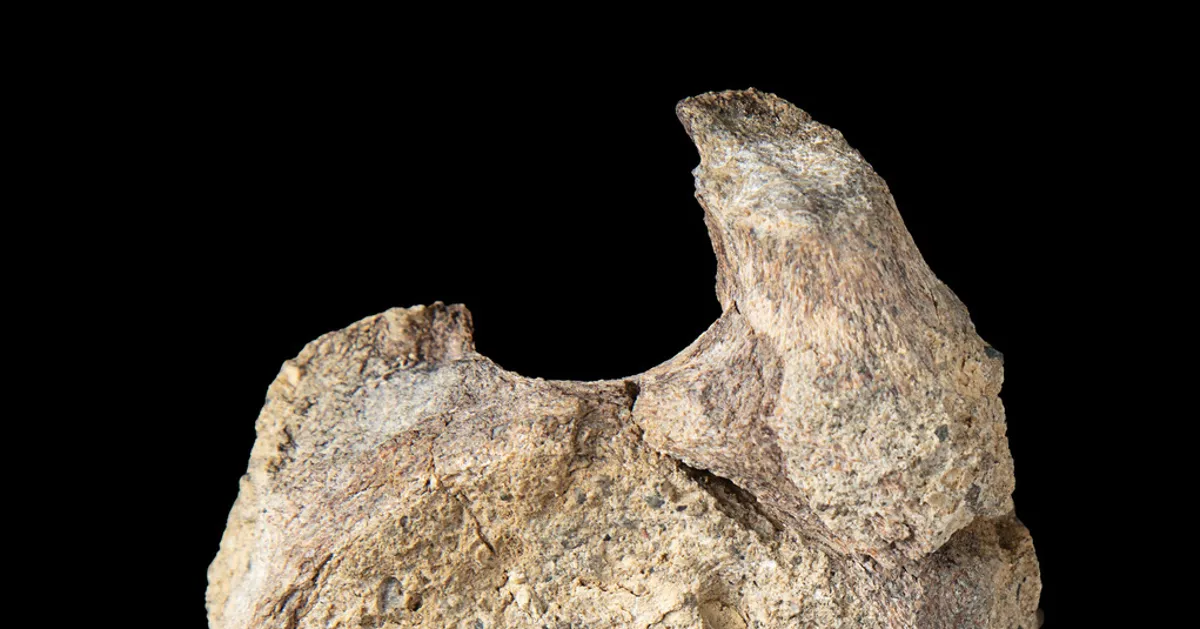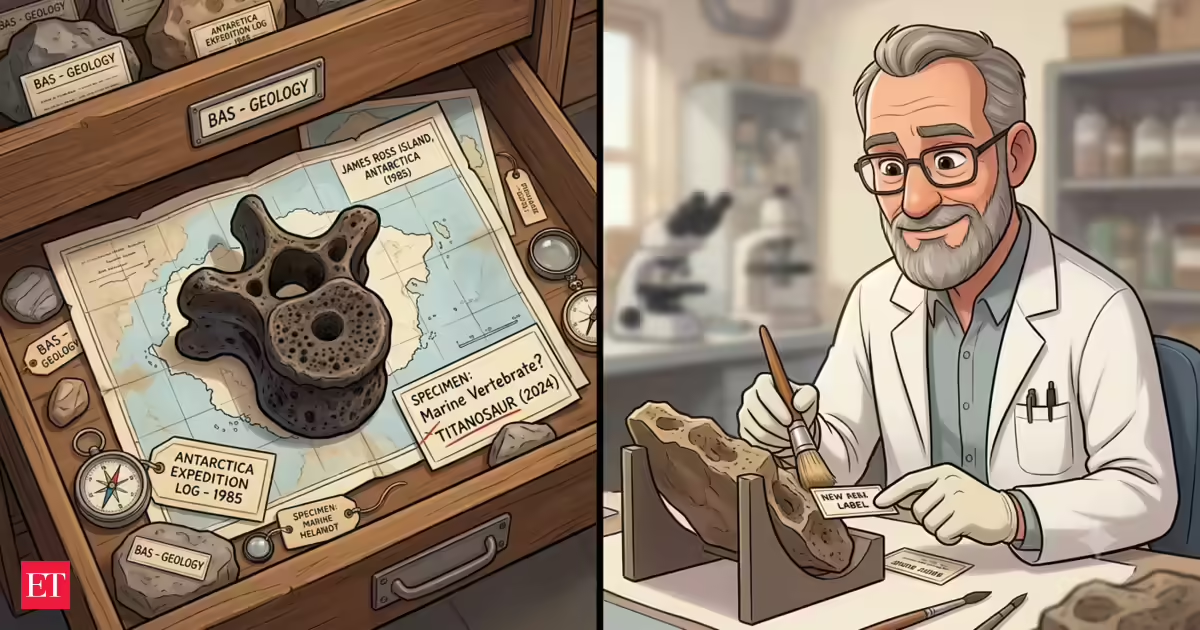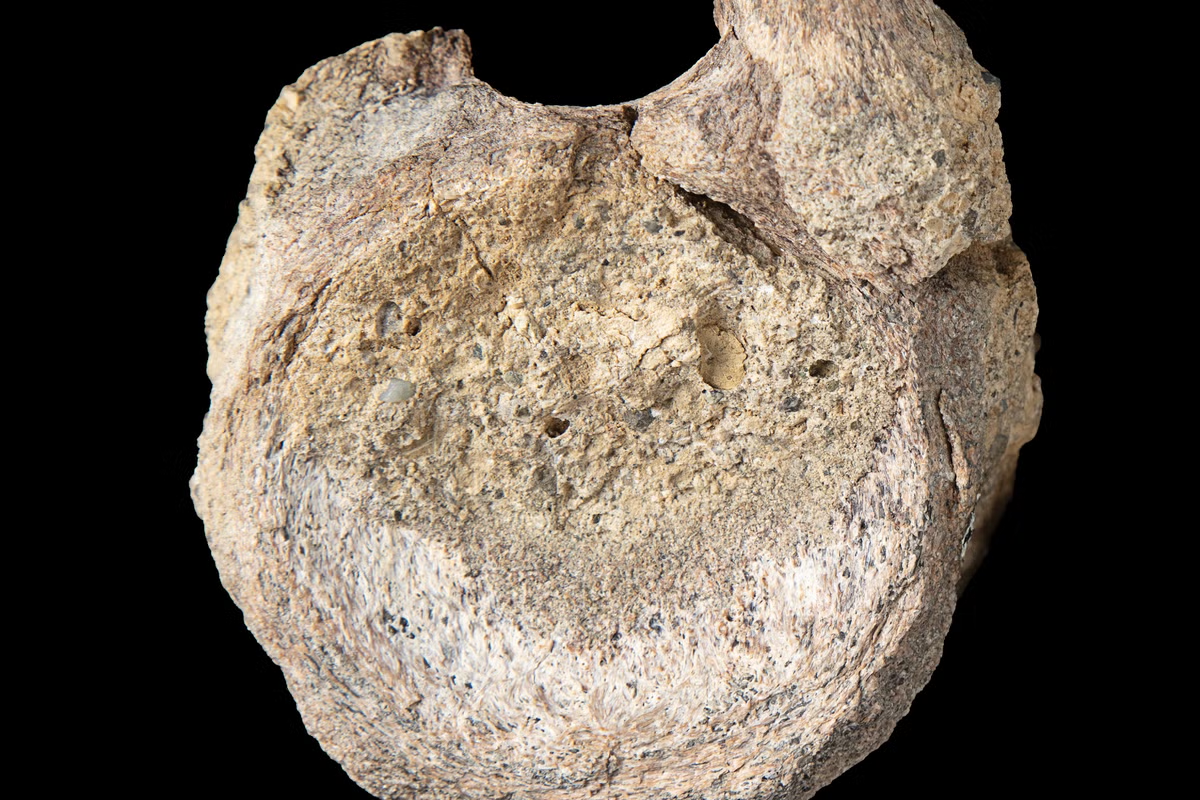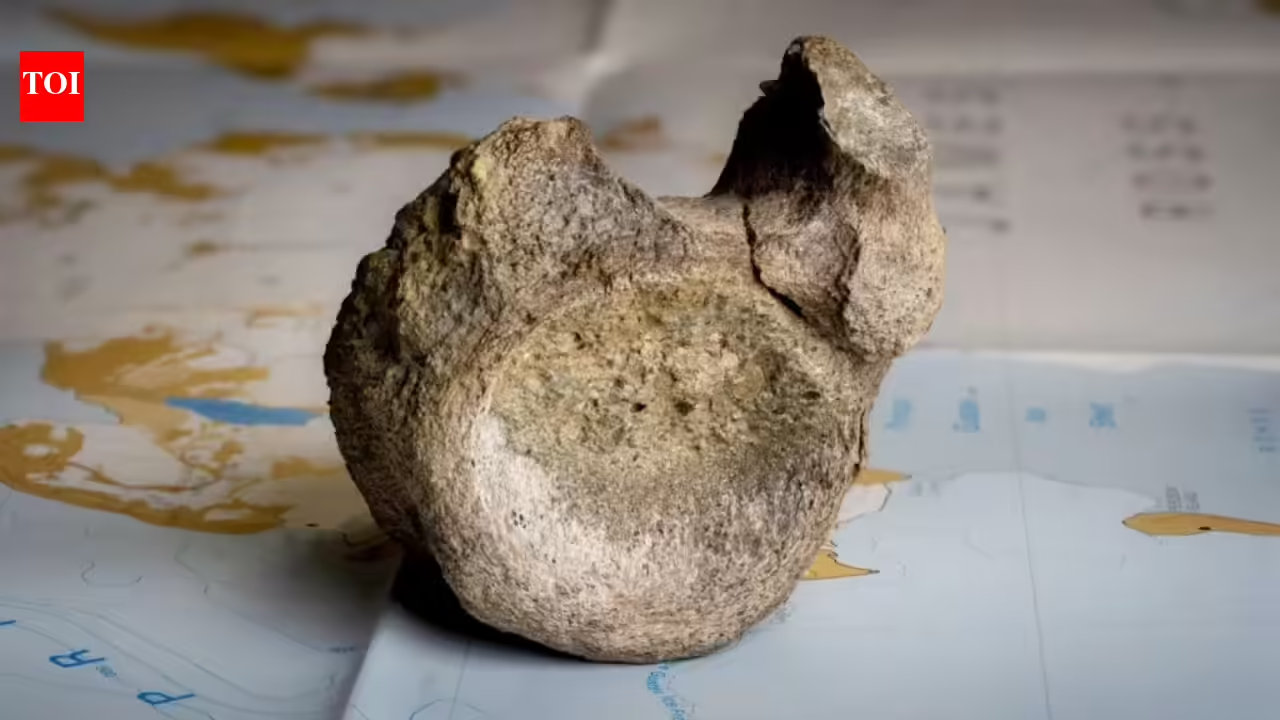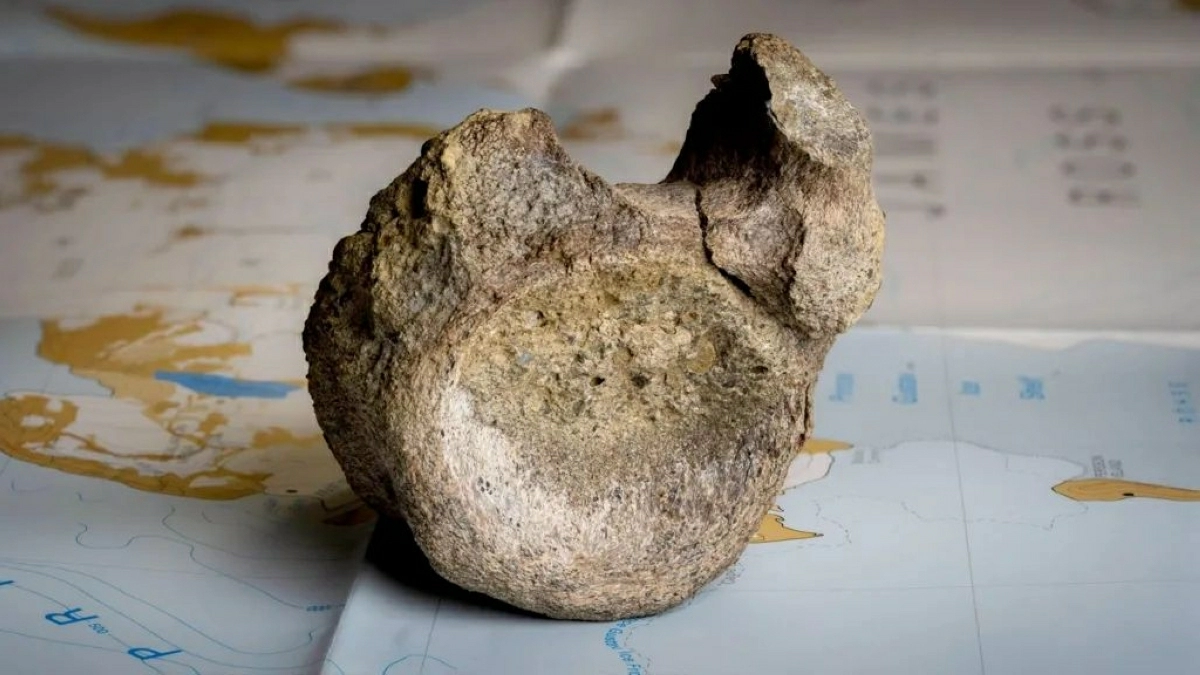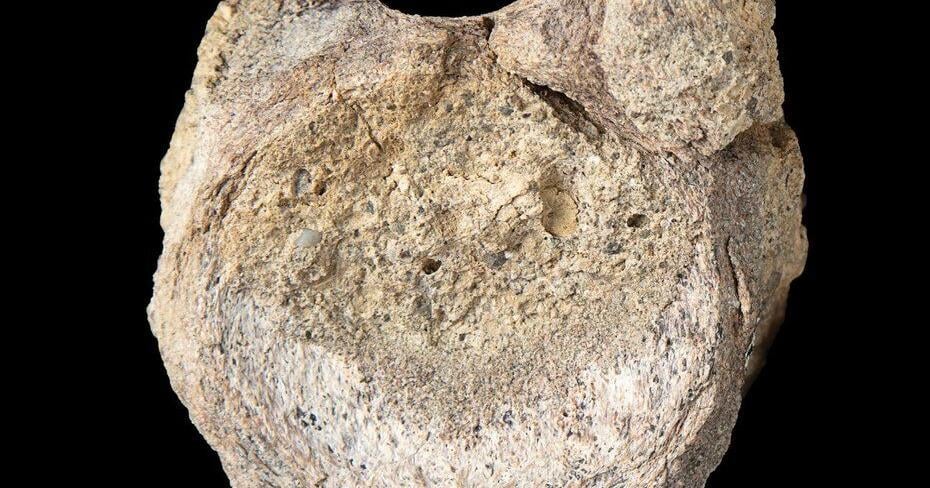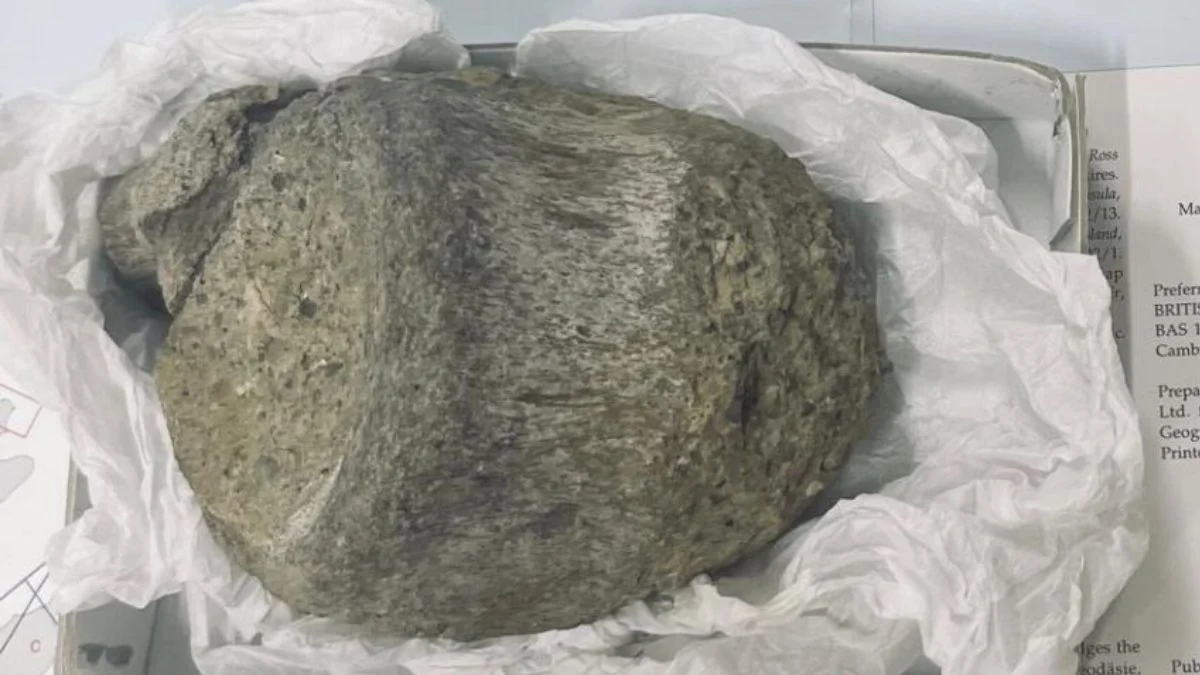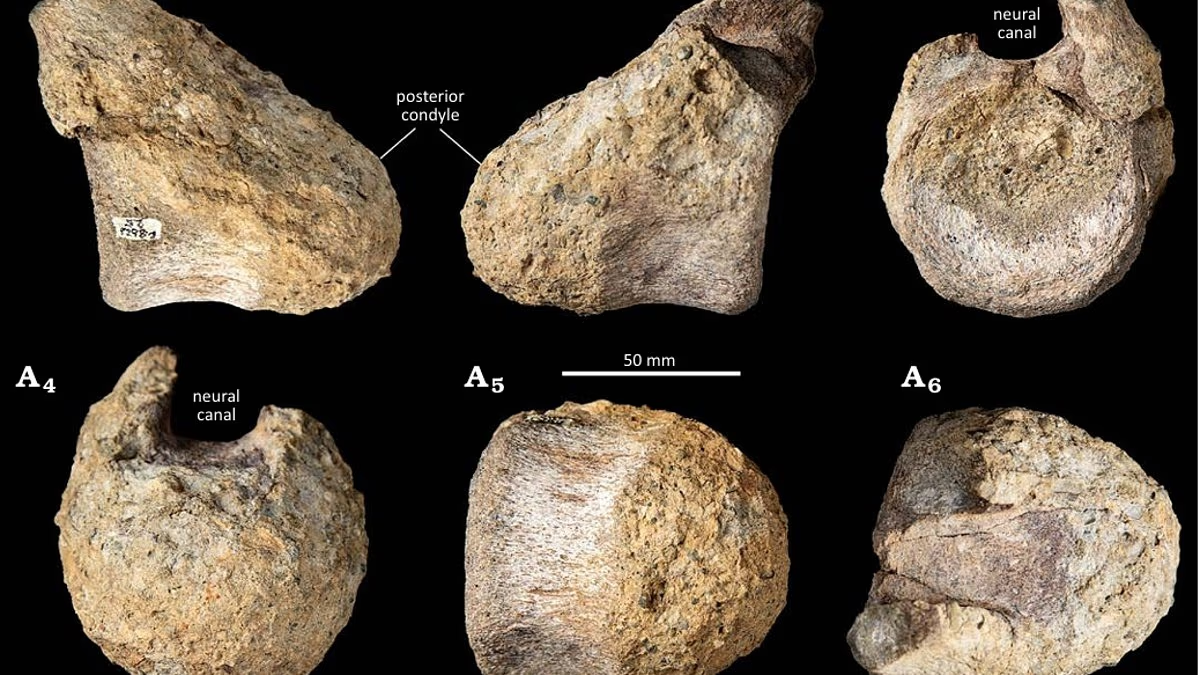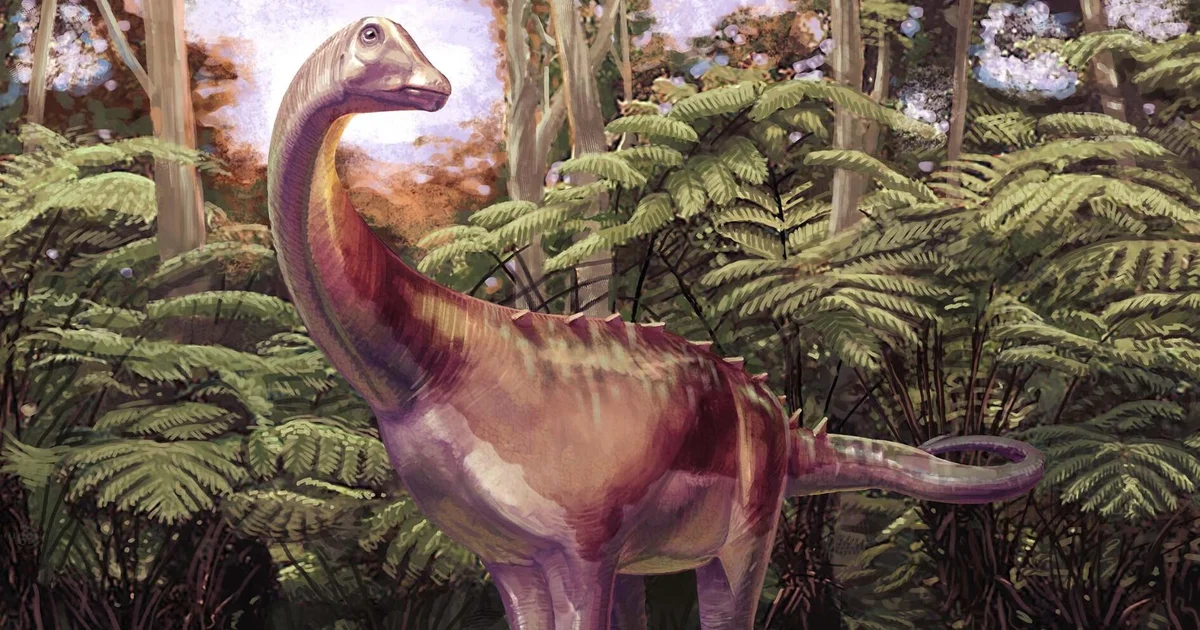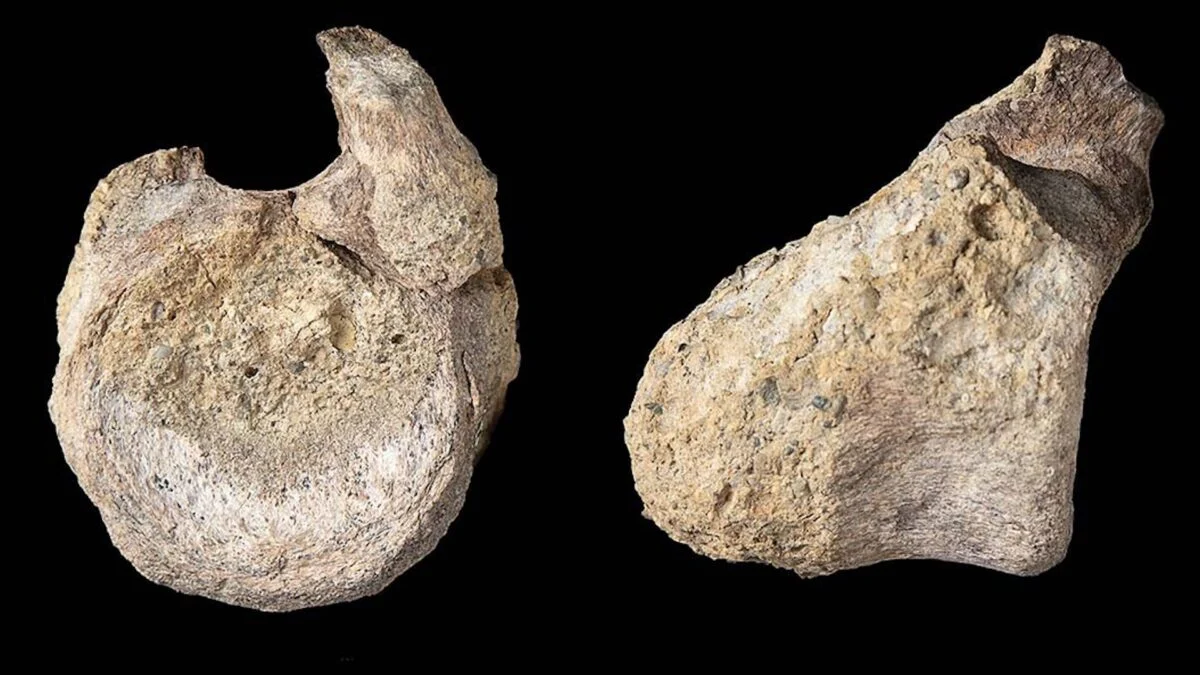
A rare dinosaur fossil from Antarctica was tucked away for decades before finally being identified as part of a large titanosaur that once roamed Earth’s southernmost continent. The fossil was first discovered in 1985 during an expedition to the James Ross Island on the southeastern side of the Antarctic Peninsula. At the time, it was recorded as belonging to a large marine reptile and stashed away in the British Antarctic Survey’s (BAS) collections. A new study, however, shows that the piece of bone actually came from a sauropod dinosaur. The tail vertebra is the first-ever dinosaur bone discovered in Antarctica and holds clues to an ancient time when these large beasts inhabited the Earth. The findings were published Monday in the journal Acta Palaeontologica Polonica. Mistaken identity Geologist Mike Thomson first collected the fossil during an expedition to map rock layers on James Ross Island. The researchers gathered marine reptile fossils to help date the area’s rock layers, including a mysterious vertebra that they believed belonged to an ancient reptile.
The bone was left unstudied for decades, boxed up in a storage drawer. That’s until BAS paleontologist Mark Evans spotted the bone and wondered whether it belonged to a dinosaur. “It was overlooked because I think it was misidentified while under harsh field conditions,” Paul Barrett, a dinosaur researcher at the Natural History Museum who helped identify the fossil, said in a statement.