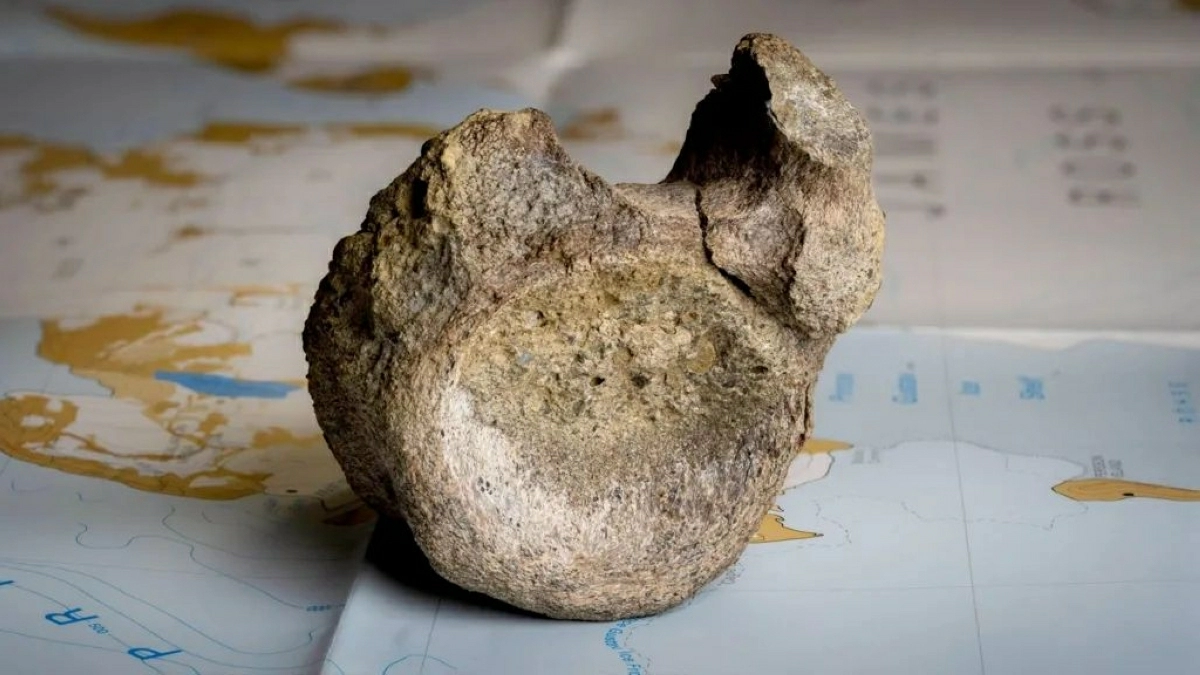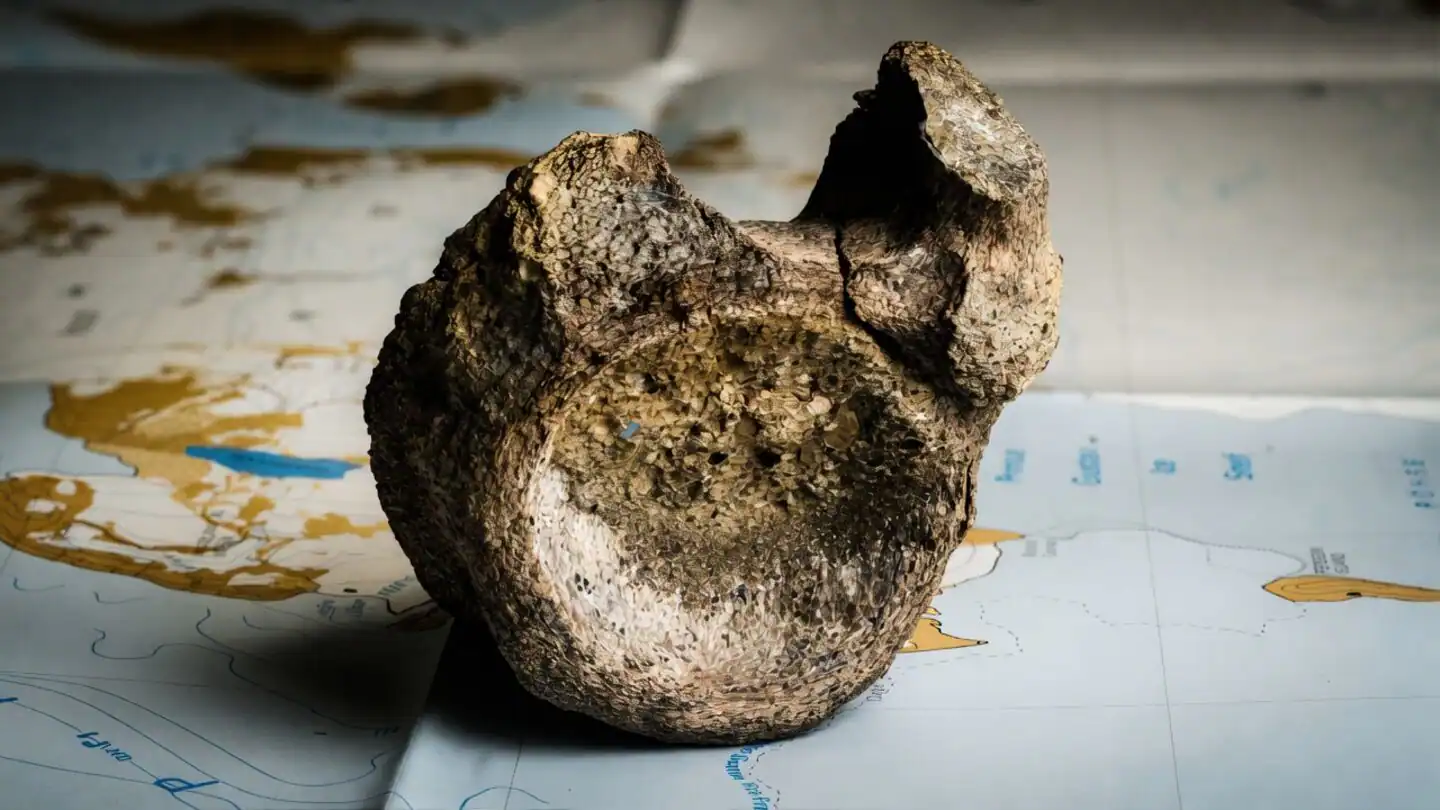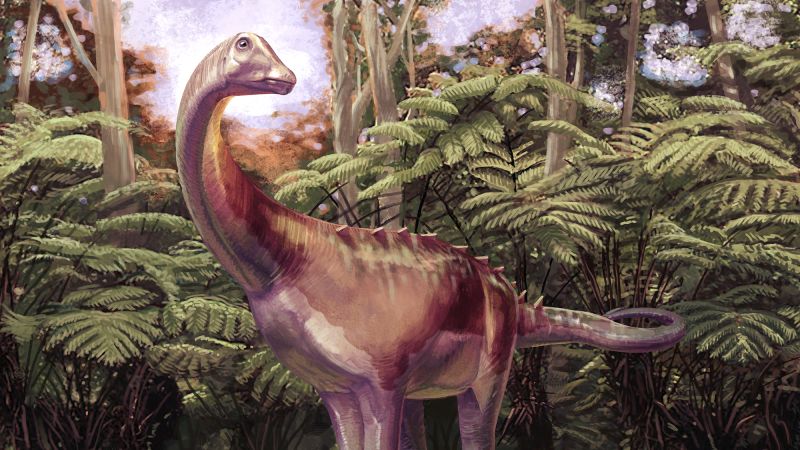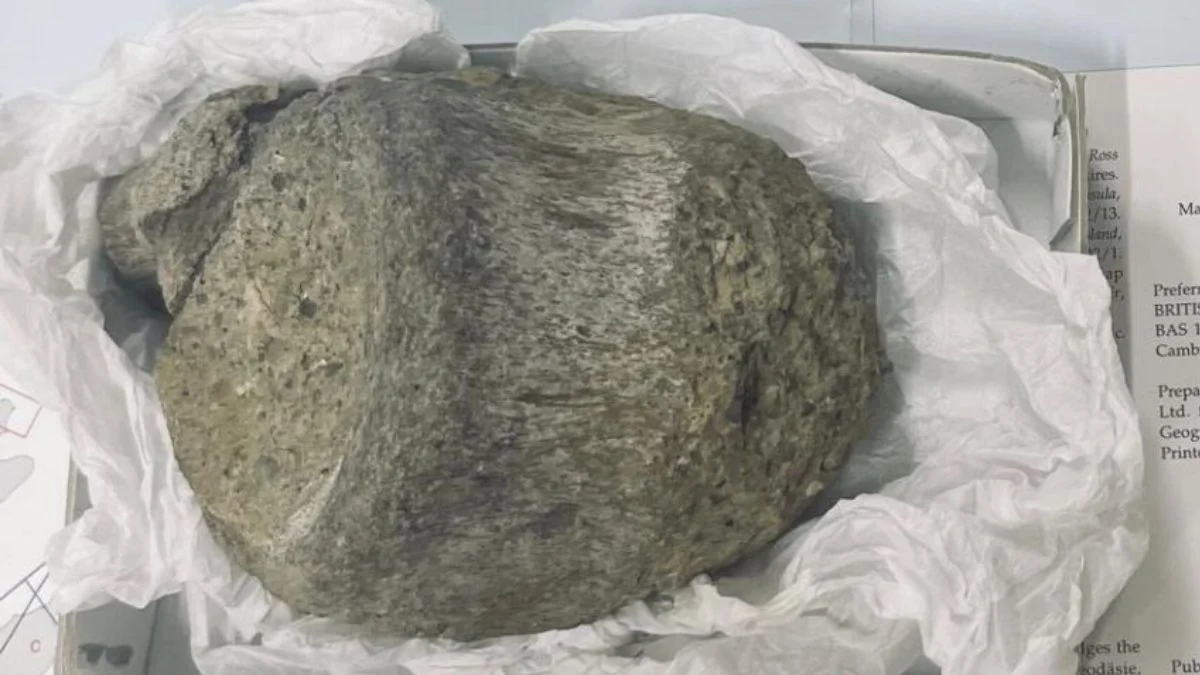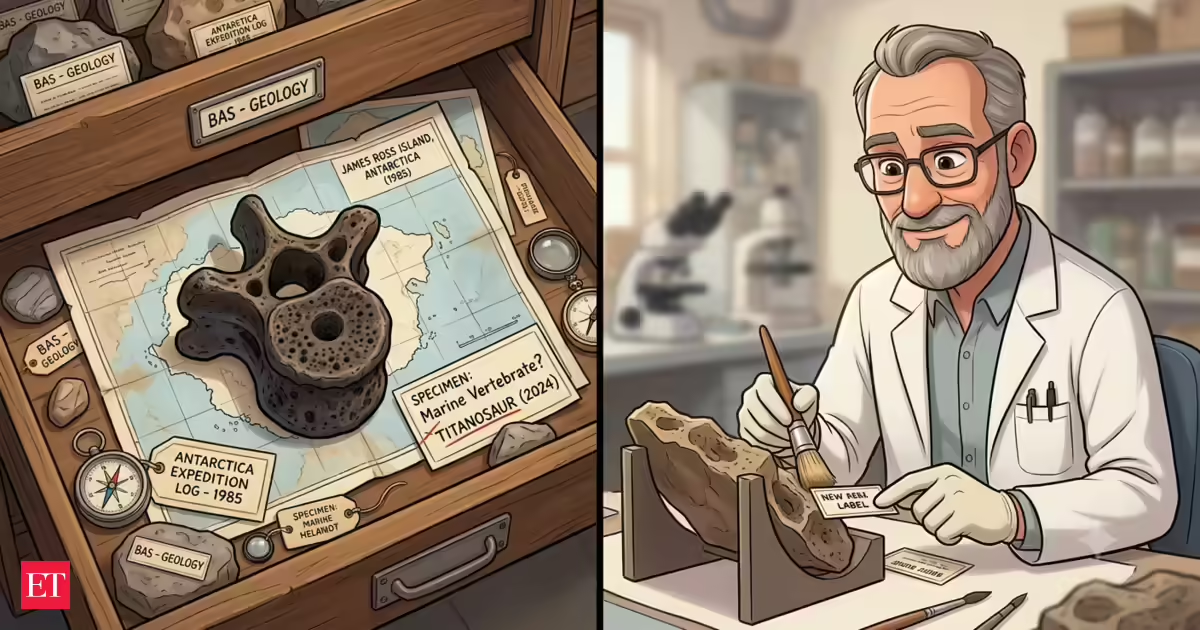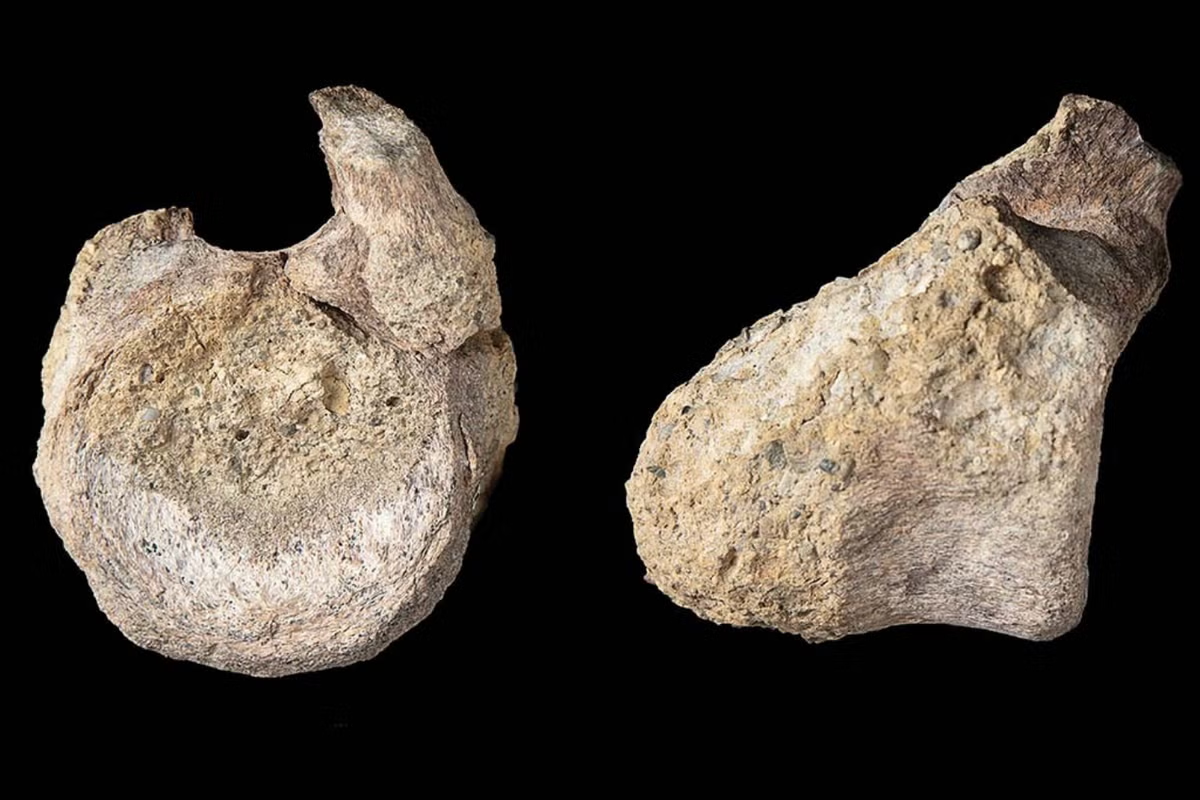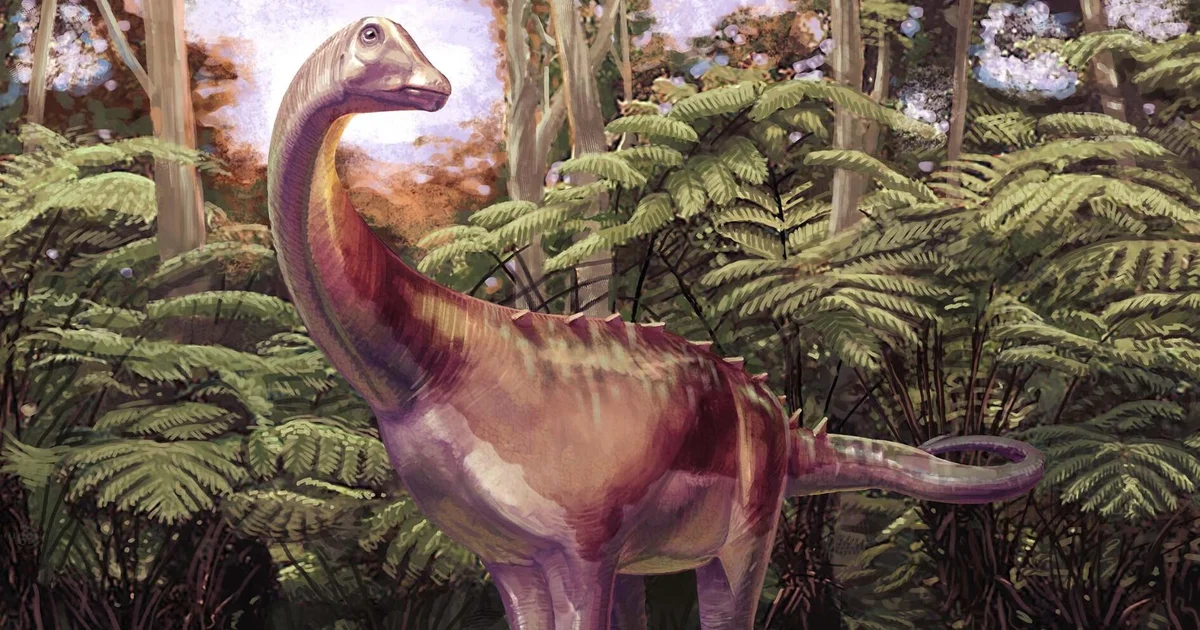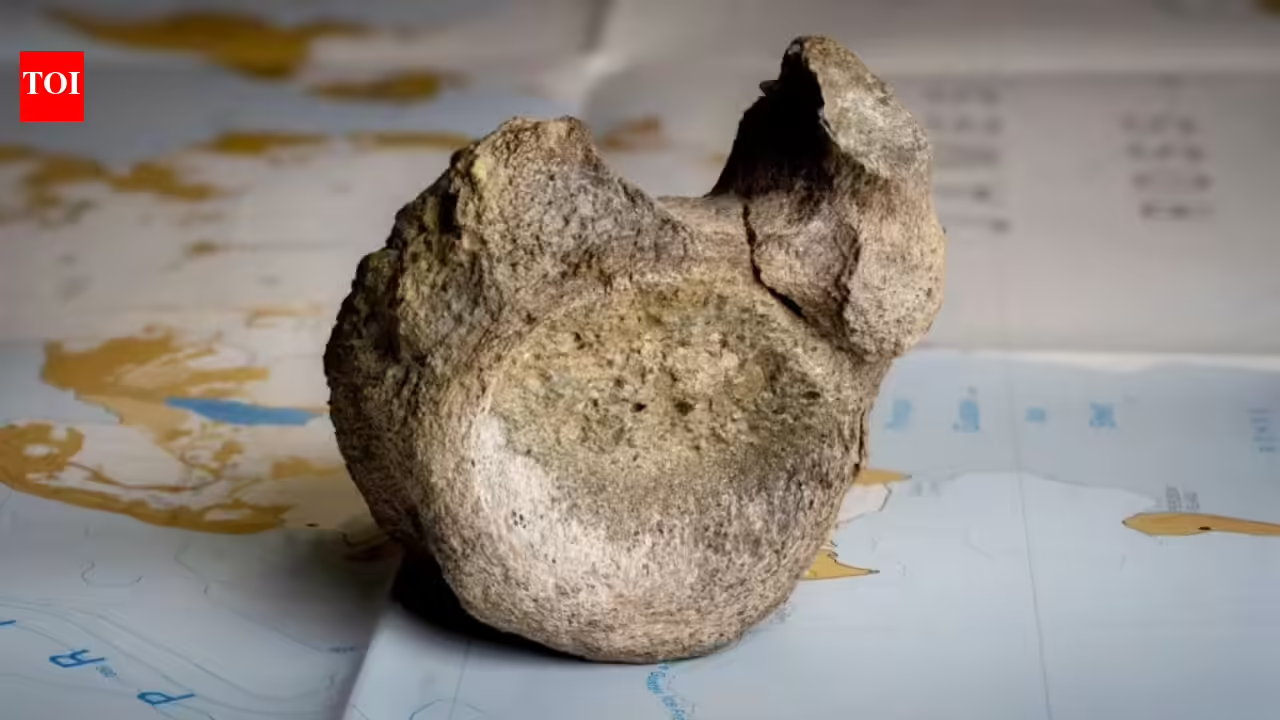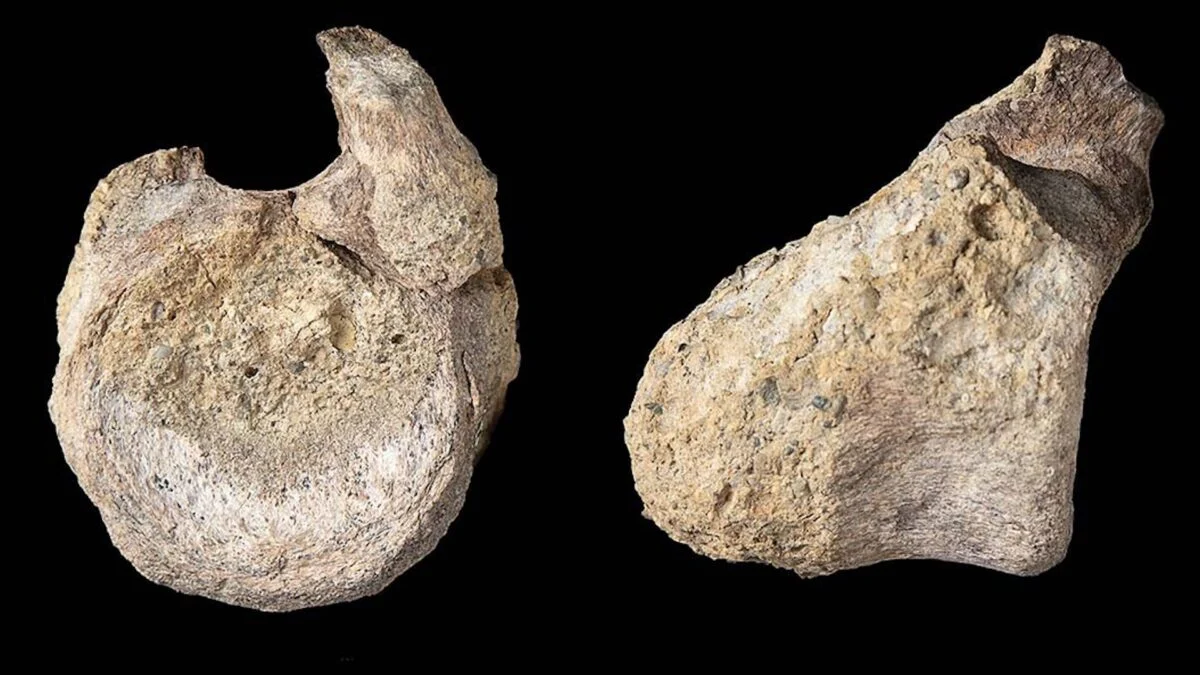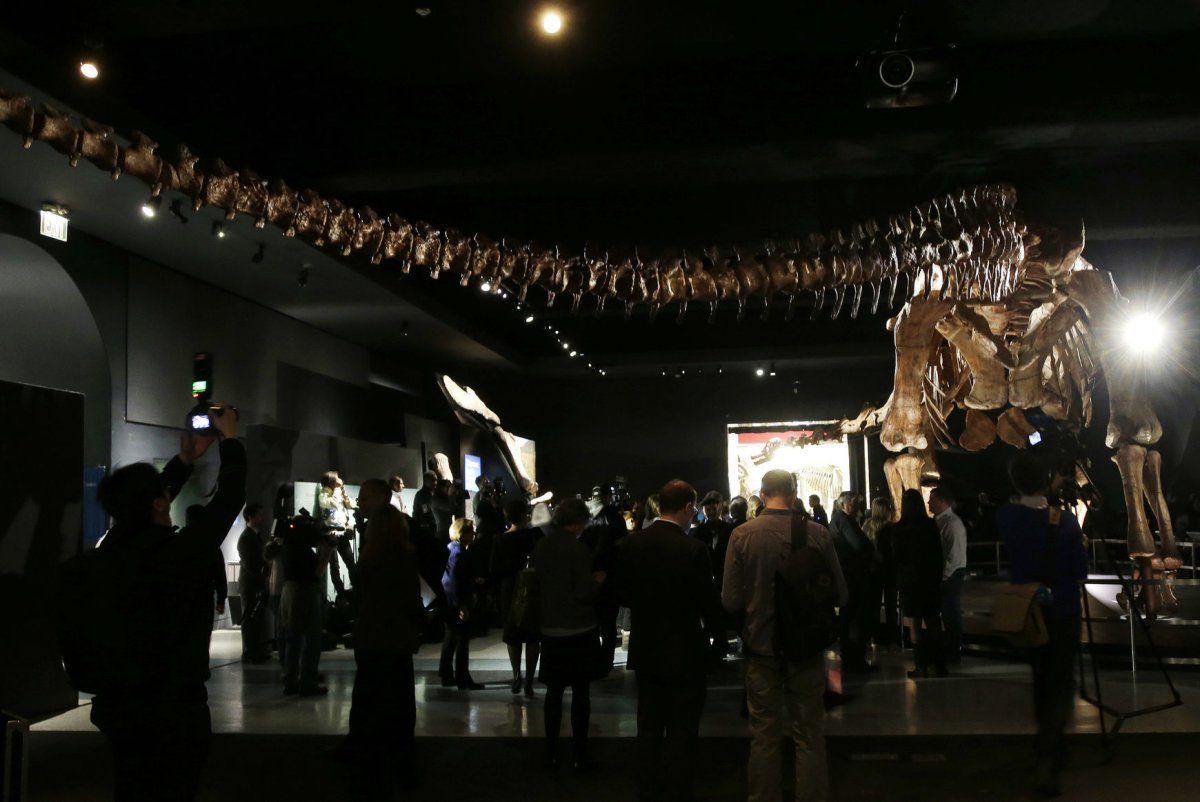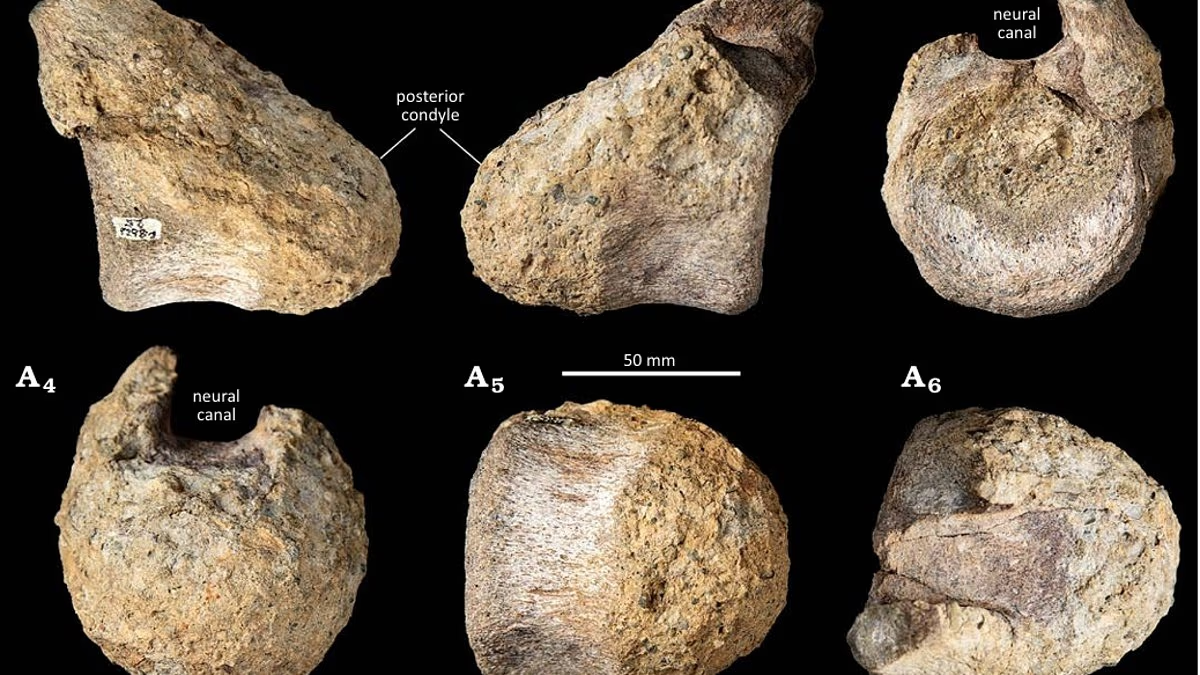
For 40 years it has been lying forgotten in a drawer – but a rediscovered fossil has turned out to be the first dinosaur bone ever found in Antarctica.The specimen was originally found on an expedition in 1985 but the team who unearthed it were not sure what it was.It has spent the last four decades stored away in the geology collection of the British Antarctic Survey (BAS) in Cambridge.But now, after close analysis by palaeontologists, it has been confirmed as a tail bone from a titanosaur – a group that included the largest animals to ever walk the Earth.The fossil is the only one from the continent to be found in a rock layer known as the Santa Marta Formation, dating back to the Late Cretaceous about 82 million years ago.Professor Paul Barrett, Merit Researcher at the Natural History Museum, London, said: ‘At first glance this appears to be an unremarkable fossil, but it holds an important place in the history of Antarctic exploration as the first dinosaur fossil found on the continent.‘At the time this animal lived, we know Antarctica would have been covered in lush temperate forest providing ample food for large herbivores.‘There are likely many more dinosaurs to be discovered on the continent. As climate change causes ice to retreat we may indeed find further evidence of this past biodiversity.’ Different views of the bone, which has been kept in a drawer for the past 40 years. It has been confirmed as a tail bone from a titanosaur A life reconstruction of the Antarctic sauropod. The fossil has been confirmed as a tail bone from a titanosaur – a group that included the largest animals to ever walk the EarthAntarctica has the sparsest dinosaur record of any continent. Most of the land is buried beneath thick ice, making fossil hunting extraordinarily difficult.Fossils have mostly been found at two sites - the Transantarctic Mountain range and the Antarctic Peninsula and its adjacent islands, where this fossil was found, with exposed rock along the shorelines.It was first discovered by Dr Mike Thomson during an expedition that characterised the rock layers on the Antarctic Peninsula for future geologists and palaeontologists.The scientists were primarily looking for invertebrates like ammonites because these are found throughout the fossil record and help to date the layers.Dr Mark Evans, palaeontologist and manager of the geological collections and labs at the BAS, said the team that first found it probably thought the fossil belonged to a marine reptile.‘When I first spotted this bone in our collections a few years ago, I suspected it was a dinosaur,’ he said. ‘After looking at it properly, I thought it was probably a titanosaur tail vertebra.‘Looking back at Mike’s notebooks, he knew it was a large reptile – so it’s very special to confirm his find 40 years later. We’ve also been able to compare it against dinosaur fossils that have been found since.’While the largest titanosaurs could reach lengths of 121 feet (36m) and weigh 57 tonnes, this long-necked specimen was either a juvenile or dwarf species with estimates placing it at just 19 to 23 feet (six to seven metres) in length. The yellow dinosaur highlighted on this map shows where the bone was first uncovered back in 1985 The largest of the titanosaurs were the equivalent of four double decker buses or a British Airways' Airbus A320. This also makes it 40 feet (12 m) longer than a blue whaleThe find sheds further light on how dinosaurs spread across the southern continents, the experts explained.To date no titanosaurs have been found in Australia, and there is only limited evidence of them in New Zealand.Confirmation of the presence of these animals in Antarctica makes it seem likely that they travelled on to these areas which were connected.At the time, the southern supercontinent of Gondwana - which Antarctica formed part of - was warm, despite its position at the South Pole, due to heavy volcanic activity contributing CO2 to Earth’s atmosphere.Matthew Lamanna, from the Carnegie Museum of Natural History, said: ‘This bone sat in a collection drawer for decades until new research revealed it for what it was: rare evidence that long-necked sauropod dinosaurs once lived in Antarctica.‘It’s a powerful reminder of exactly why museums collect, care for, and steward objects like these—new methods and expertise continue to emerge, enabling scientists to unlock discoveries from specimens that have been waiting in plain sight.’Dinosaur fans may already be familiar with titanosaurs. Back in 2023, the Natural History Museum opened up a new exhibition for the titanosaur featuring an enormous replica skeleton.Named Patagotitan mayorum, the sheer scale of this dinosaur makes other prehistoric life almost appear petite. Weighing in at 65 tonnes and stretching 121ft from head to tail, the dinosaur is the heaviest animal ever to walk our planet. Pictured: At a previous exhibition at the Natural History MuseumThe species was first uncovered in 2010 by an Argentinian farmer, who spotted a gigantic dinosaur bone poking out of the dusty ground.It turned out to be a femur – a thigh bone – which alone measured nearly 8ft (2.4m) long and weighed around 500 kilos.Being such a colossal animal meant an immense diet and Patagotitans digested 129kg of rough, spiky plants every day – the equivalent of 516 round lettuces.Experts know that animals who chewed their food could not have such a long neck, so they believe this prehistoric beast filled its cavernous mouth before gulping leaves down whole.The findings have been published in the journal Acta Palaeontologica Polonica. HOW THE DINOSAURS BECAME EXTINCT AROUND 66MILLION YEARS AGODinosaurs ruled the Earth around 66million years ago, but suddenly disappeared in what is known as the Cretaceous-Tertiary extinction.It was believed for many years that the changing climate destroyed the food chain of the huge reptiles. However, in the 1980s paleontologists discovered a layer of iridium - an element that is rare on Earth but found in vast quantities in space. When this was dated, it coincided precisely with when the dinosaurs disappeared from the fossil record. A decade later, scientists uncovered the massive Chicxulub Crater at the tip of Mexico’s Yucatán Peninsula, which dates to the period in question. Scientific consensus now says that these two factors are linked and they were both probably caused by an enormous asteroid crashing to Earth.With the projected size and impact velocity, the collision would have caused an enormous shock wave and is likely to have triggered seismic activity. The fallout would have created plumes of ash thought to have covered the whole planet, making it impossible for dinosaurs to survive. Other animals and plant species had a shorter time-span between generations which allowed them to survive.There are several other theories as to what caused the demise of the dinos. One early theory was that small mammals ate dinosaur eggs and another proposes that toxic angiosperms (flowering plants) killed them off.
Bone hidden in drawer for 40 years proves dinosaurs roamed Antarctica
For 40 years it has been lying forgotten in a drawer - but a rediscovered fossil has turned out to be the first dinosaur bone ever found in Antarctica.
1,145 words~5 min read