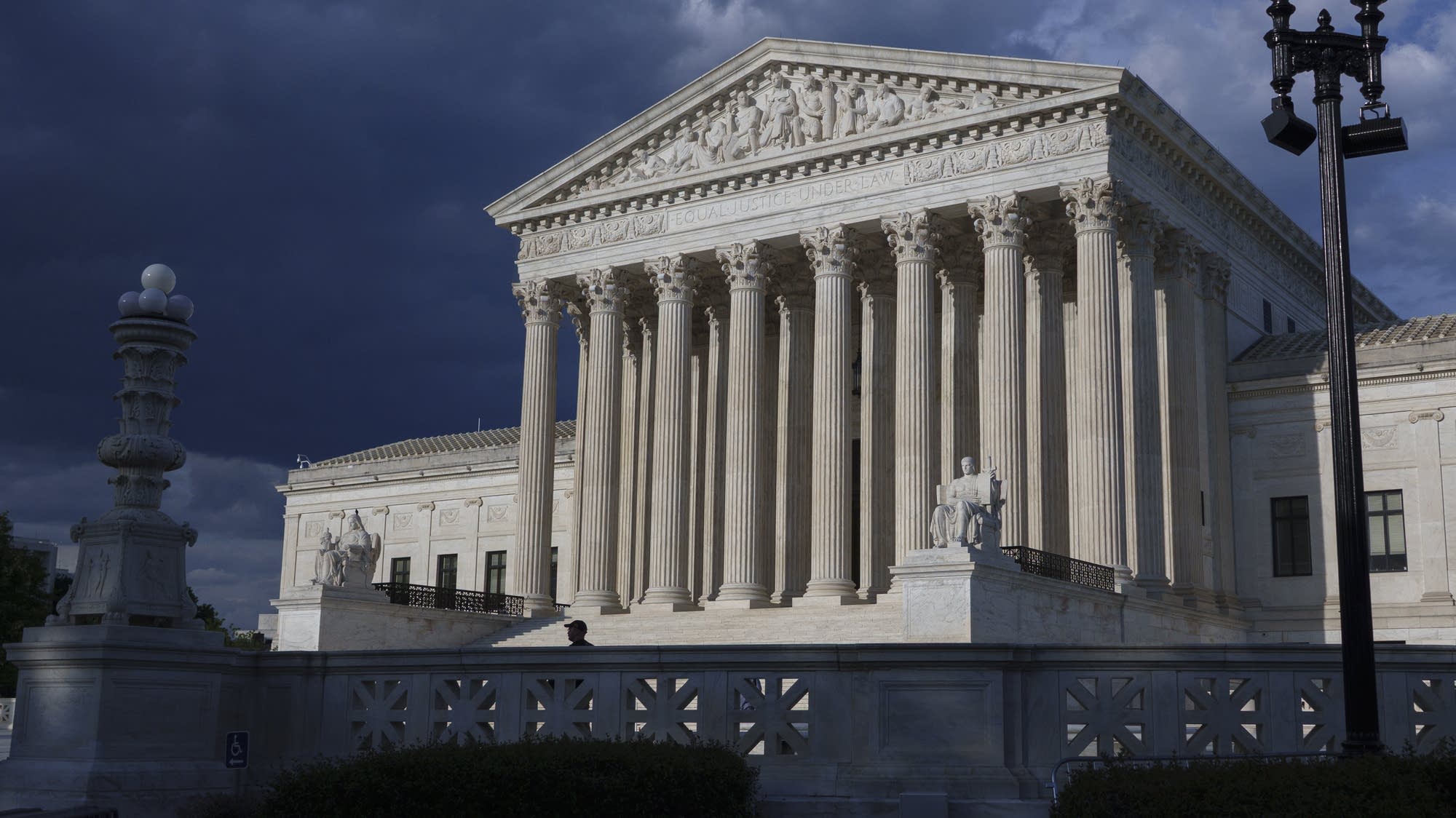
On Monday, the Supreme Court allowed Federal Reserve Governor Lisa Cook to keep her job (for now) but gave the president broader authority to fire other federal officials.For more on what this means moving forward, “Marketplace Morning Report” host Kimberly Adams spoke with Sarah Binder, a senior fellow at the Brookings Institution and a professor of political science at George Washington University. The following is an edited transcript of their discussion.Kimberly Adams: How does this ruling fit in with the court's opinion in Trump v. Cook, because it feels like the court is saying that the president has the power to fire all sorts of federal regulators, but the Federal Reserve is special. Why?Sarah Binder: Well, that's a core sort of odd part of what happened when the court released two decisions on the same day. The Slaughter case says a constitutional provision, you can't — right, it's like a categorical rule: Presidents can fire agency officials at will. But the Cook case, a court majority, it carved out an exception for the Federal Reserve and only for the Federal Reserve. It said, in essence, this agency — the central bank — is so important, and there are what we think of historically they call “an independent agency” — that protecting control over monetary policy is so important that the president cannot just fire somebody at will, which is the complete opposite 180 degrees of what they decided in Slaughter.Adams: This overturns not just Supreme Court precedent but also has a major impact on the way that Congress has written many laws. So what does Congress have to do now?Binder: Well, the court's decision says that these limitations Congress writes into the statutes for dozens of agencies, they said that that was unconstitutional. It limits the president's Article II executive power to run executive branch agencies, and so that's a tough hurdle, a very tough hurdle for Congress ever to overcome, unless they were to have a constitutional amendment to change it, but that's not in the cards.Adams: So, for both of these decisions, can you lay out short -and long-term impacts?Binder: The short-term impact here of the Slaughter case is that for agencies where Trump has not summarily dismissed commissioners or agency directors, that's likely to happen. Longer term, I think more likely you get more instability in financial markets and for consumers, and so forth, because the rules these regulators might otherwise have written could be undermined at the next turn. So that's on the Slaughter case. On the Federal Reserve case, in the long term, this was a 5-4 decision. It's a fragile — it's a critical decision, but it's a fragile decision. One could imagine a Supreme Court that looks quite different, or you lose that fifth vote and, suddenly, the Fed is on the losing end. And so, in the long term, that Cook case is a reminder that the Federal Reserve and its insulation from politics — the Fed needs a defender, and the court is a key defender here of the Fed. Can you count on that going forward in the long term? I think that's a big question mark.
The ripple effects of Monday's Supreme Court decisions
The Supreme Court helped defend the Federal Reserve’s independence — but only by a slim majority.
527 words~2 min read