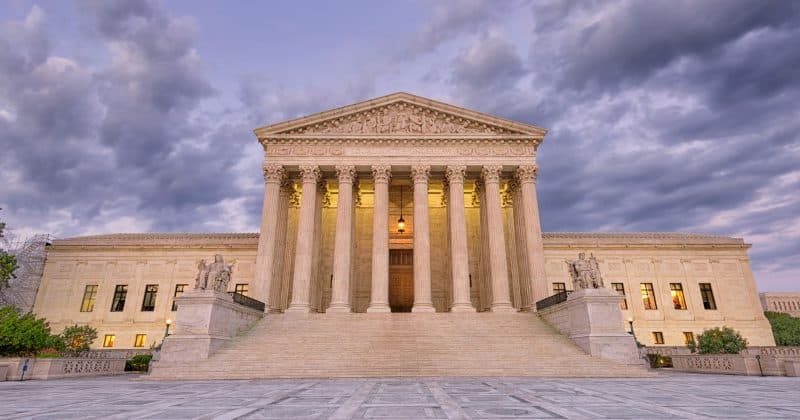
In a huge moment for Federal Reserve independence, the U.S. Supreme Court announced on Monday in a 5-4 decision that Federal Reserve Board of Governors member, Lisa Cook, will not be removed from her position, despite President Trump’s attempt to fire her.However, the court's opinion did not end there. Leah Litman is a law professor at the University of Michigan. She joined “Marketplace” host Kai Ryssdal to talk about how the court’s decision still expanded presidential power over agencies that would traditionally be viewed as independent, and what that means going forward. An edited transcript of their conversation is below.Kai Ryssdal: I want to take these one by one, and I want to take the Lisa Cook decision first. Actually, it seems the most straightforward, 5-4, the Supreme Court said the Federal Reserve is actually special. Leah Litman: Yes, that is basically the court's reasoning that the importance of the Fed means that the Fed is exempt from the court's newly announced rule that independent agencies cannot exist because the president must have the power to fire the heads of any agency exercising significant executive power.Ryssdal: So, what do you think? Just as a matter of the law, them carving out this special thing for the Fed, as opposed to independent agencies, which we'll get to the second case in a second.Litman: It is frankly ridiculous in the other case, the one announcing the rule that there can be no independent agencies. Chief Justice Roberts, who wrote the majority, included this incredibly far-reaching language indicating that the president has to have the power to fire everyone, no ands, [almosts] about it. Only he simultaneously issued an opinion that contained a big “and, but, except” — the Federal Reserve Board. And the justification for that exception to my mind kind of amounts to, “insert economic reasons here.” He averts to the importance of the Fed, and that's kind of it. Ryssdal: Here's the thing that got me about this. They carve out this special place for the Fed, because, oh my goodness, the economy, as you said. But then they said independent agencies fundamentally can’t exist, because reasons. But the whole reason the U.S. economy works is because of these independent agencies, right? All the regulatory bodies, all the rest of them. Help me out here.Litman: No, I think that that's exactly right. When you think about the agencies that the court has effectively demolished their independence, we're talking about the Federal Trade Commission, which protects consumers from fraud. We're talking about the Securities and Exchange Commission, which does the same. We're talking about the Equal Employment Opportunity Commission, which regulates the workforce. I could go on, but I hope those examples show that these agencies exercise sweeping powers over corporations, over the economy, over our health, over our safety, and the court just handed the president the power to dictate what the heads of those agencies do. And we've seen how agencies subject to his control exercise their power by persecuting perceived enemies and by granting favors to friends.Ryssdal: Justice Sotomayor, in her dissent in that case, said, “Chaos will follow.” One imagines policy and political ping pong here with regulatory agencies every four to eight years.Litman: Yes, that's exactly right. Because by handing the president the power to effectively remake the federal government every four years by firing the heads of these agencies, the court is allowing what are likely to be pretty stark vacillations between what one presidential administration will do and what the next will do.Ryssdal: Can we talk about Congress here for a minute?Litman: What’s that, according to the Supreme Court? Ryssdal: Well, that's kind of my point, right? That the court said these independent agencies have amassed all this power, but, and I'm not a lawyer, but I'm pretty sure Congress gave them the power.Litman: That's exactly right. Congress has been establishing these agencies for the better part of a century, and the Supreme Court just fundamentally reordered the distribution of power within the federal government, because they know better than Congress. It's really remarkable when you both read these opinions and also put them together with other opinions that the court has issued this term, which either invalidate laws that Congress has enacted, as was the case in Slaughter, the independent agency case, or render them effectively toothless and unenforceable, like some of the decisions we got last week. And the decision in Slaughter, which again erases independent agencies, seems to view the prospect of congressional oversight as somehow antithetical to democratic government. And by hamstringing, kneecapping Congress, my view is that the court is undermining democracy in the process.Ryssdal: This is going to sound like a facetious question, but it's really not. Now what happens?Litman: Now what happens is my guess is the President will attempt to assert the powers that he has been granted, and he will also press the limits of those powers by asserting control over the career civil service as well, and remake the entirety of the federal government.
Supreme Court decision axes the idea of independent agencies — except for the Federal Reserve
“These agencies exercise sweeping powers over corporations, over the economy, over our health, over our safety,” said University of Michigan law professor Leah Litman, “And the court just handed the president the power to dictate what the heads of those agencies do.”
840 words~4 min read