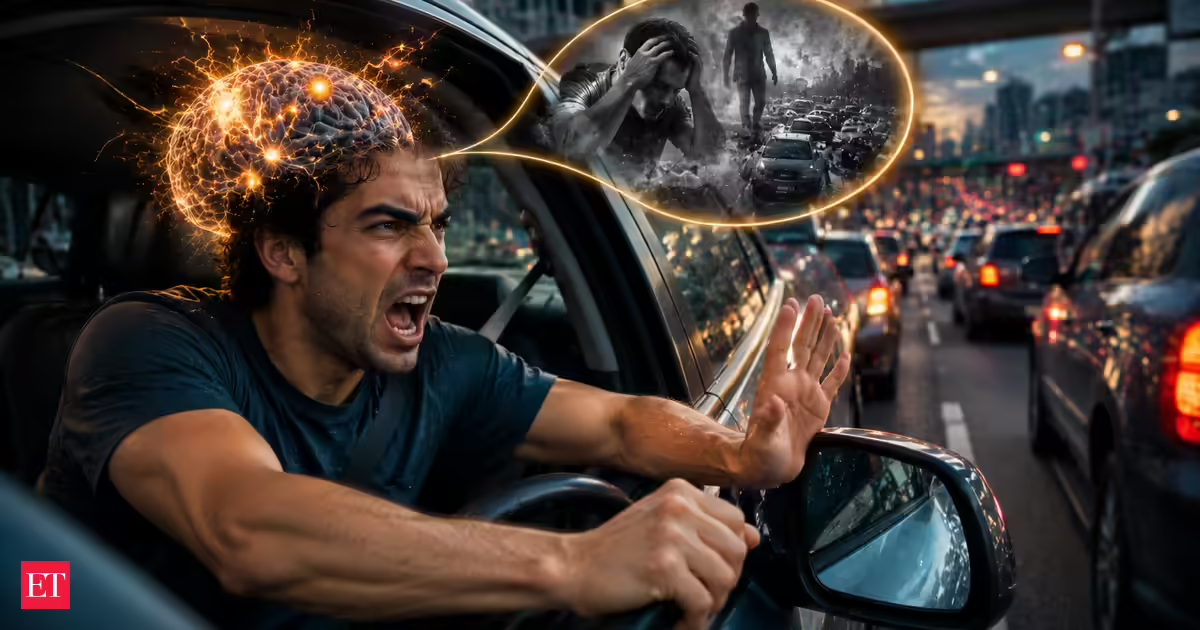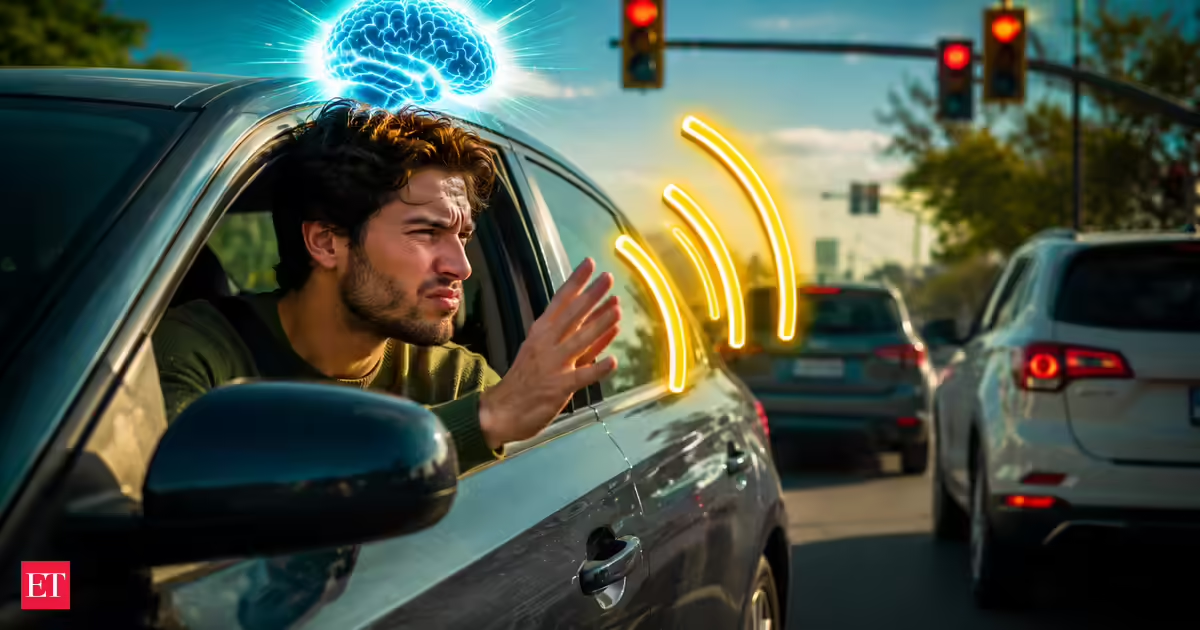
We all experience it on a daily basis. The traffic light changes, but before the driver in front has a chance to move, someone behind starts honking. The same thing happens during traffic jams, long queues, or crowded intersections. To some people, honking feels unnecessary. To others, it seems like the fastest way to get traffic moving.Psychology suggests that frequent honking is often less about the traffic itself and more about how people respond to delays, uncertainty, and perceived obstacles.That doesn't mean everyone who honks is impatient or aggressive. Sometimes honking is appropriate for safety, such as warning another driver of danger or preventing a collision. However, when people repeatedly honk during ordinary delays, researchers say several psychological processes may be influencing their reactions.Frustration builds when goals are blockedOne of the oldest explanations comes from the Frustration-Aggression Hypothesis, first proposed by psychologists John Dollard, Neal Miller, and colleagues.The theory suggests that frustration occurs when people are prevented from reaching a goal. In traffic, the goal is simple: keep moving. When a red light lasts longer than expected or another driver doesn't move immediately, the interruption can trigger frustration.You Might Also Like:For example, someone running late for an important meeting may experience stronger frustration than someone driving with no schedule. The horn becomes an immediate way of expressing that frustration, even if it doesn't actually solve the delay.Feeling out of control can increase emotional reactionsPsychologists also study Perceived Control. People generally feel calmer when they believe they can influence what happens around them. Traffic removes much of that control.Drivers cannot change the traffic signal, clear congestion, or control another driver's reaction time. For some individuals, pressing the horn creates a temporary feeling of taking action, even though it rarely changes the situation significantly. The action may reduce the feeling of helplessness, even if only briefly.Emotional self-regulation differs from person to personAnother important concept is Emotion Regulation. Emotion regulation refers to the ways people manage feelings like irritation, anger, or disappointment. Some drivers respond to delays by taking deep breaths or listening to music. Others instinctively express frustration through verbal comments or by honking.You Might Also Like:Imagine two drivers stopped at the same intersection. One quietly waits for the light to change. The other taps the steering wheel and honks within seconds. The situation is identical, but their emotion regulation strategies differ.Time pressure makes delays feel largerPsychologists have found that Time Urgency, a characteristic associated with the broader Type A behavior pattern, can influence how people experience waiting.Someone rushing to catch a flight or arrive at work may perceive even a short delay as highly significant. Research shows that people under time pressure often estimate waiting periods as longer than they actually are. As a result, a three-second pause after a green light may feel much longer, increasing the likelihood of honking.Social learning shapes driving habitsNot every driving behavior develops naturally. According to Social Learning Theory, developed by psychologist Albert Bandura, people often learn behaviors by observing others.Someone who grew up in a city where frequent honking was considered normal may continue the same habit without questioning it. In contrast, drivers raised in quieter traffic environments may rarely use the horn except during emergencies. This helps explain why honking habits often differ across regions and cultures.Stress reduces patience behind the wheelDaily stress doesn't disappear when people get into a car. According to the Transactional Model of Stress and Coping, developed by psychologists Richard Lazarus and Susan Folkman, people's reactions depend on how they evaluate stressful situations and the coping strategies they use.Someone who has already experienced a demanding workday, poor sleep, or multiple frustrations may have fewer emotional resources available during the drive home. A minor traffic delay that might normally seem unimportant can suddenly feel much more irritating. The traffic isn't necessarily worse, the person's available coping capacity may simply be lower at that moment.Honking doesn't always mean someone is an angry personA common misconception is that frequent honking automatically reveals an aggressive personality. Psychology doesn't support that conclusion. Some people honk because they're under unusual time pressure. Others may be following local driving norms, reacting to stress, or attempting to alert distracted drivers.At the same time, habitual unnecessary honking may reflect difficulty managing frustration in specific situations, but it cannot, by itself, define someone's personality. Context matters.Psychology suggests that people who honk in traffic or while waiting for the red light to go green may be influenced by frustration, perceived control, emotion regulation, time urgency, social learning, and everyday stress.Rather than simply reflecting impatience, frequent honking often represents how individuals cope with blocked goals and temporary loss of control. Like many everyday behaviors, it is best understood within the broader context of personality, environment, and the situation itself.FAQsWhy do some people honk immediately when the light turns green?Psychologists say frustration, time pressure, learned driving habits, and differences in emotion regulation may all contribute.Does frequent honking mean someone has anger issues?Not necessarily. Honking can result from stress, urgency, or local driving culture rather than an underlying anger problem.
Psychology says people who honk in traffic or while waiting for the red light to go green may not be angry, they may be responding to the invisible pressure they always feel
A common misconception is that people who honk frequently are naturally aggressive. Psychology does not support such a simple explanation. Honking can be influenced by many situational factors, including stress, frustration, heavy traffic, or the pressure of running late.
837 words~4 min read