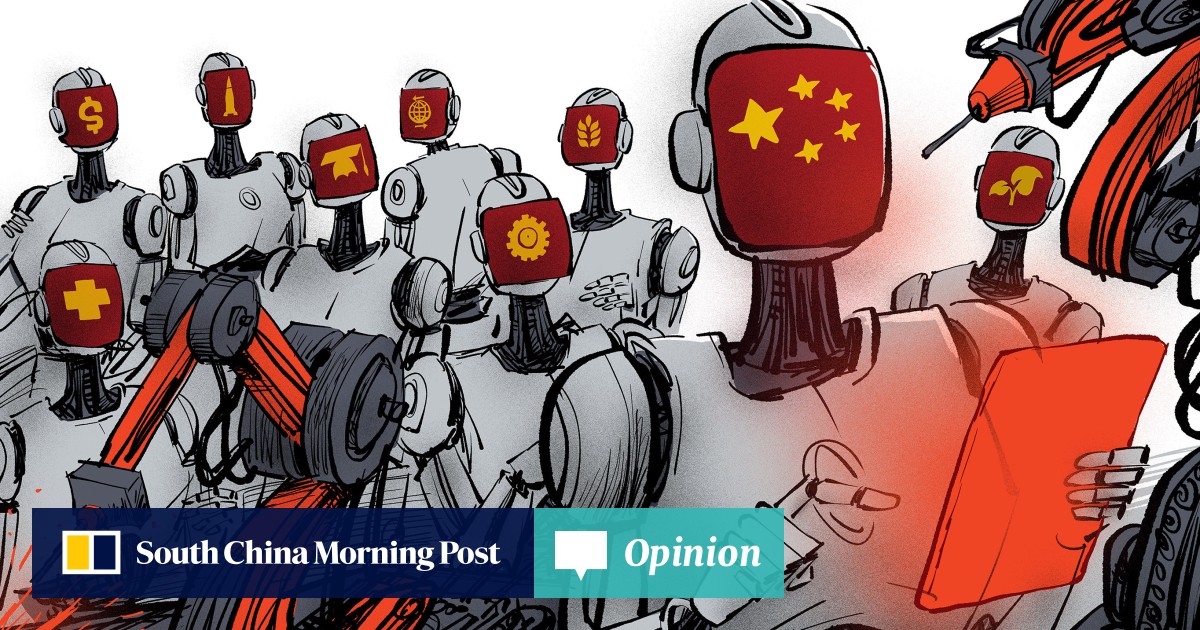
China’s embodied intelligence sector has undergone a quiet shift over the past six months.
The fixation on degrees of freedom in robot bodies has begun to ease. In its place, attention is moving toward the factors that may determine the ceiling of robotic intelligence: data, models, infrastructure, and, more importantly, whether they can reinforce one another in real-world deployment.
As debate continues over whether robots can replicate the scaling law of large language models (LLMs) through brute-force data accumulation, Luo Jianlan, associate professor at the Shanghai Innovation Institute and chief scientist at Agibot, has offered a view that cuts against the prevailing current: embodied intelligence cannot simply copy the development path of LLMs.
Luo has a recognizable way of speaking. He switches quickly between Chinese and English technical terms, builds arguments densely, and rarely gives ambiguous answers.
Rather than staying within the narrower debate over whether data, models, or infrastructure matters most, he points directly to the system-level problem. The central tension in embodied intelligence today is not whether any single component can break through alone, but whether these components can form a loop in real-world deployment.