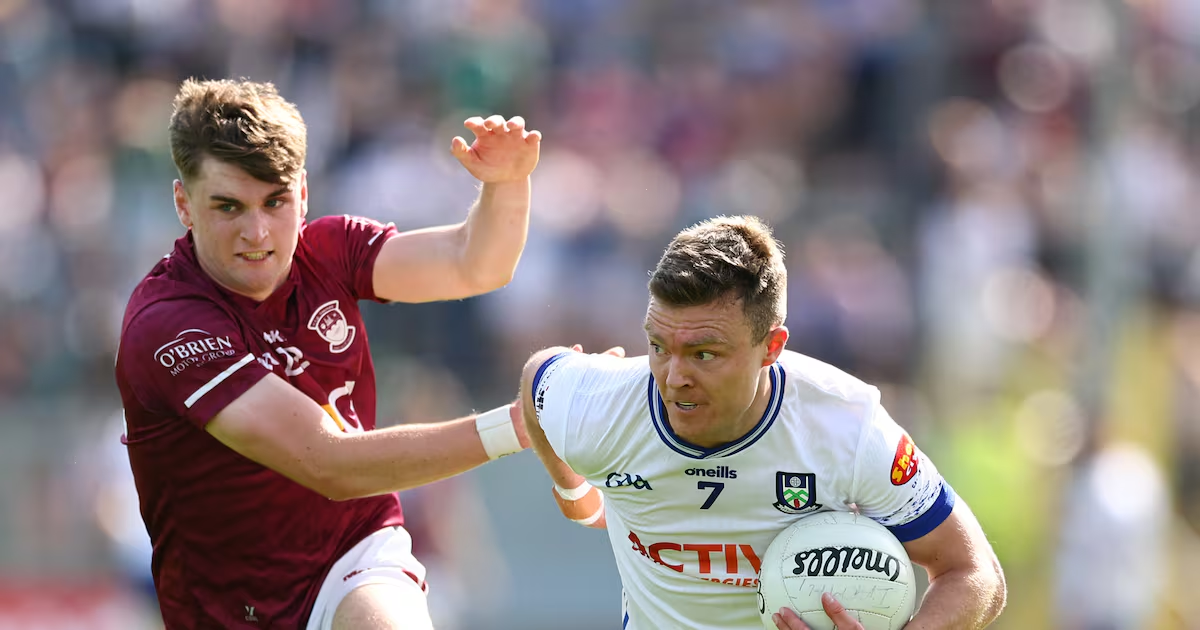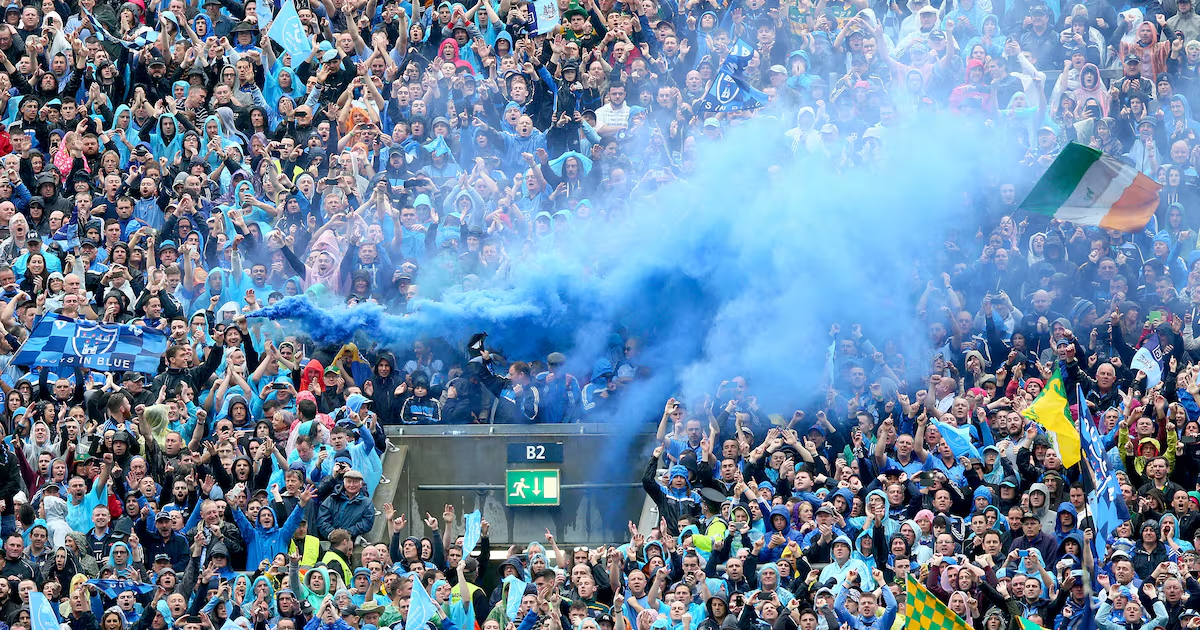
For a while last week, I toyed with a desperate plan that would have involved locking a Dublin Bike to a lamp-post near Croke Park on Sunday and later cycling at speed to a docking station at Phibsborough, where a getaway car would await, parked facing north.But in the end, I abandoned attempts to attend the Monaghan-Louth All-Ireland quarter-final, for which throw-in was 1.45pm, and concentrated instead on making the afternoon’s other big event: my appearance at the Hinterland Book Festival in Kells at 5pm.The day would be stressful enough, without adding a madcap bike and car chase to the plot. So instead, by around 1.30pm, I was on a 109X bus heading up Whitworth Road, watching rival supporters march in the opposite direction and feeling guilty, like a refugee escaping a war zone.Then I watched the first half on my iPhone. Or rather, I watched the first half of the first half, until somewhere near Navan when the treacherous RTÉ Player suddenly declared: “The content is not available in your region.”I refreshed the screen and turned the wifi on and off. But nothing worked. The content still wasn’t available in my region. It was as if the RTÉ player had literally interpreted the name of the festival I was attending. From German, Hinterland means “the land behind”. For the iPlayer, I might as well have been “Back of Bourke”, as Australians call the bush.Visual contact with the game was resumed in Kells, but it was too late by then. The Monaghan team seemed to have lost all focus, too, in the meantime. Now, naturally, I blame myself for the result.***My festival event was in the former Kells Courthouse, an 1802 building by Francis Johnston (of GPO fame), but now reinvented as an interpretive centre. And while there, I bumped into an old friend I hadn’t seen for years: the Market Cross, a ninth century High Cross that used to stand precariously at a local street junction. It was one of the great Irish landmarks. Many’s a night in childhood, when I was assistant greyhound trainer to a neighbour in Carrickmacross, we would pass it on the winding cross-country road to Mullingar dog track and know we were halfway there.Happily, we never bumped into it literally back then, unlike other drivers of the era. It was almost wiped out by a lorry in 1985 and a few years later was, again, seriously damaged by a schoolbus.Eventually, the town moved it to a safer location. So today it stands in stereo at the old courthouse, with the original in the gardens and a full-size replica inside. And I’m glad it’s safe. But in an ideal world, they’d have left the cross where it was and put the traffic in a museum.***The Market Cross is unusual for its genre, I’m told, in depicting two of early Christianity’s “Desert Fathers”: Paul of Thebes and Anthony the Great. This suggests the influence in ancient Ireland of the Coptic church, since both men were Egyptians.St Anthony is depicted alongside a goat, based on a legend whereby he was approached in the wilderness by such an animal claiming to be a lost soul.Although not the founder of the hermit tradition, as he is sometimes said to be, he did take it to greater extremes than predecessors, retreating deep into the desert and spending his last decades there.It’s an attractive idea sometimes. I often think I’d like to try it for a few weeks anyway, typically at this time of year, when Monaghan have just been knocked out of the championship and the hype surrounding the rest of the competition is suddenly insufferable.***Hinterland has been running for 16 years now, but one of the measures of its success was initially disconcerting, at least to me. When first reading the schedule for Sunday, I was appalled to see that curator Myles Dungan, taking temporary leave of his senses, had scheduled six events for 5pm. Somehow, in a small town, he found audiences for all of them.Of course, Kells has long experience of hosting festivals. While waiting for the bus back to Dublin on Monday, I read a sign about the Tailteann Games, held near here in ancient times. They were revived in the 1920s when the new Free State – in a mood of self-aggrandisement – attempted to reclaim a heritage said to be older and greater than the Olympics.What most struck me about the sign in Kells, by contrast, was the gentle scepticism that had descended in the intervening century. Each of the three paragraphs describing the games included a qualifying word or phrase. The first was prefaced with: “If ancient sources are to be believed”. The second began: “Apparently”. The third included the clause: “Allowing for some poetic licence...”. All that was missing was that great Hiberno-English disclaimer, “Mar dhea”.
Cross purposes – Frank McNally on a stressful collision of sport and literature in Kells
Tailteann Games was held nearby in old times when, perhaps, Monaghan may have fared better than Louth
804 words~4 min read