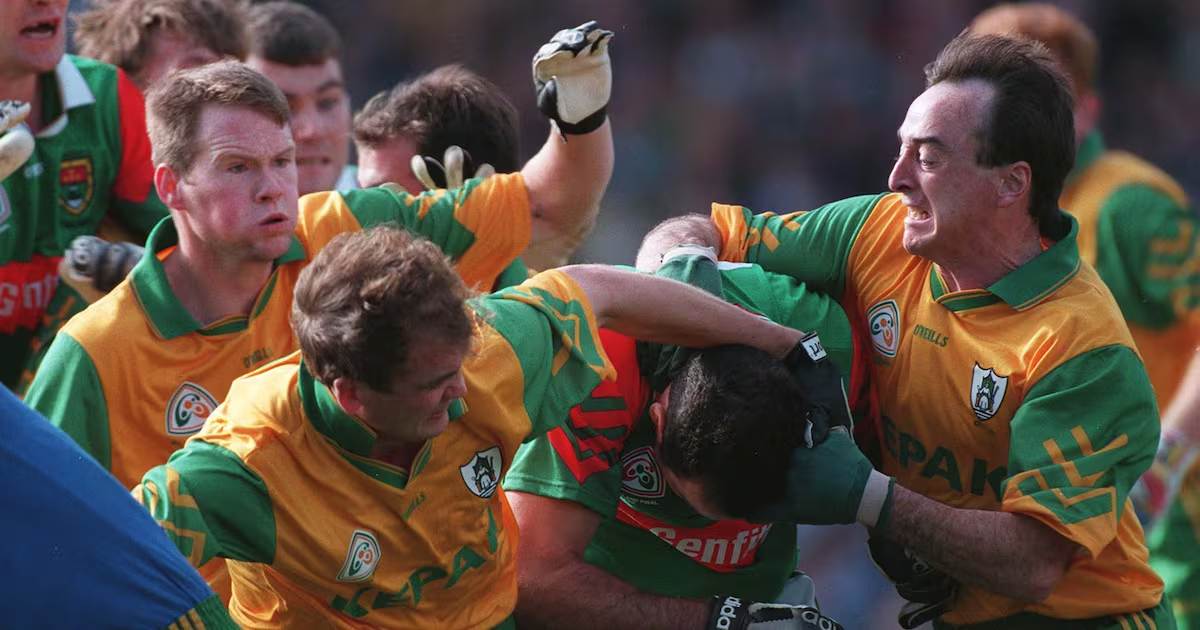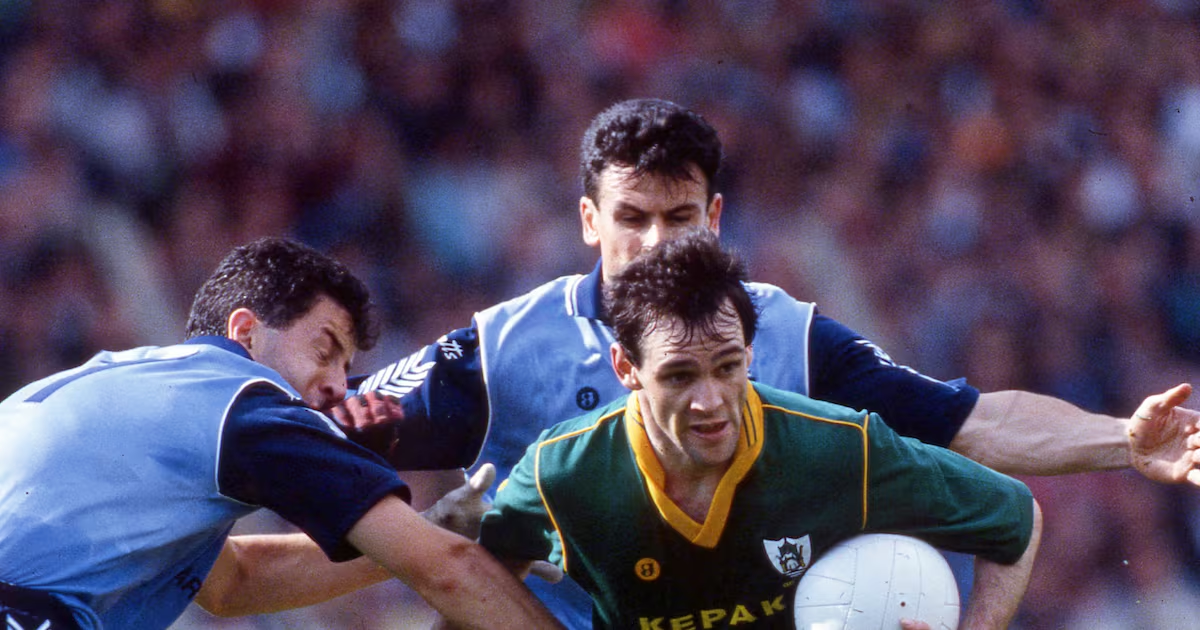
For Gaelic games followers of a certain vintage – especially those hailing from the neighbouring counties of Dublin and Meath, the months June and July and the Leinster Football Championship evoke memories of titanic struggles, epic battles, and, of course, 1991 and the never-to-be-forgotten four-game saga. Those of a sky-blue disposition – such as myself – could be forgiven for wanting to erase it from the collective memory bank, but the importance of that 320 minutes of football played out over 34 days, 35 years ago, is simply too important in the story of the game and by extension the GAA itself, for that to happen. The rivalry was nothing new, of course, but the allure of the four clashes from the year in question took the game to another level, captivating audiences far beyond the county boundaries of the two teams involved. Only one year earlier, the country was positively paralysed by the national fervour of Italia ‘90, leading some to raise concerns about the impact it might have on Gaelic games. Those prophets of doom – inside and outside the organisation – need not have worried, but few could have banked on a heaven-sent four-game series that copper-fastened the popularity of the games for another generation and beyond. This 13-year-old enthusiast was lucky to be present on Hill 16 for the first two instalments in the company of my Dad, having not yet earned my stripes to attend matches alongside older members from our club. A 1-12 each draw was followed by another stalemate seven days later when the two teams finished level 1-11 apiece after extra time. What I hadn’t bargained on was being shipped off to Coláiste Gaeilge Sheosaimh in Conamara for a three-week summer stint and the need for ingenuity to try to see the next instalment, not knowing there would in fact be two. Initially, we had to settle for radio coverage ar Raidió na Gaeltachta before access to a television was arranged – albeit with the English commentary turned down and RnaG’s tráchtaireacht as Gaeilge turned up. It was no exaggeration to say that the nation was absorbed in the fixture at this stage, so by the time game four came around, the western seaboard was not the place I wanted to be. Nonetheless, in keeping with lengthy periods of the first three games, Dublin led the play, and with 11 minutes remaining, they enjoyed a six-point cushion, lulling us into a false sense of security that there would likely be advancement and further outings to look forward to attending in the pursuit of the Sam Maguire Cup. Seeing no way back, we were “hooshed” out of our viewing perch in the Ionad Phobail and told to make for Johnny Breathnach’s bus a quarter of a mile away to bring us back to our Bean an Tí ar an Aird Mhór for dinner. Little did we know that for Dublin it was a case of many’s the slip between lip and cup. After hastily covering the distance from the college to our pickup point, we perched on a bench outside Tí Chadhain, meters from Cuan Chill Chiaráin and gazed at the teilifís through the panoramic window as bemused locals, pints in hand, took in the most dramatic of finales imaginable. The closing passages are still etched in my brain. Kevin Foley’s dancing feet put the finishing touches to a mesmerising nine-man move to level the game before David Beggy kicked the winning score into a stunned and silent Railway End. The guttural roar of the Meath fans in the Hogan Stand nearly reached us in the Conamara Gaeltacht. Cue pandemonium. Or dejection and disbelief – dependent on the colours adorned. Amazingly, Meath would need another replay to beat Wicklow on the way to a Leinster title, and despite reaching the All-Ireland final, they lost to Down, leading us all to ponder whether what was then considered a marathon campaign had in any way taken its toll. Three-and-a-half decades on, it still makes for gripping viewing and a reminder of how things have changed. Straight knock-out, trapdoor championship football, indecently tightfitting shorts, barely visible sponsorship logos, perspiration-soaked cotton-based jerseys, a referee being left in place for all four games and, of course, the full embrace of live television – previously viewed as a possible threat that could lead to overexposure undermining attendances. An unrecognisable Croke Park hosted almost 240,000 supporters, and the milestone of the GAA’s first one million punt gate was a reminder of the mass appeal of the fixture and indeed the game. There was no Dublin v Meath Leinster football meeting this year. But when the next one happens, and “strong men come hurrying through from the Plains of Royal Meath”, expect the numbers to turn out in force once again in Dublin 3 to witness the spectacle first-hand. It’s on such memories that cross-generational rivalries and traditions are built.
Football crazy: Alan Milton recalls the epic four-game saga between Dublin and Meath 35 years ago
‘It’s on such memories that cross-generational rivalries and traditions are built’
819 words~4 min read