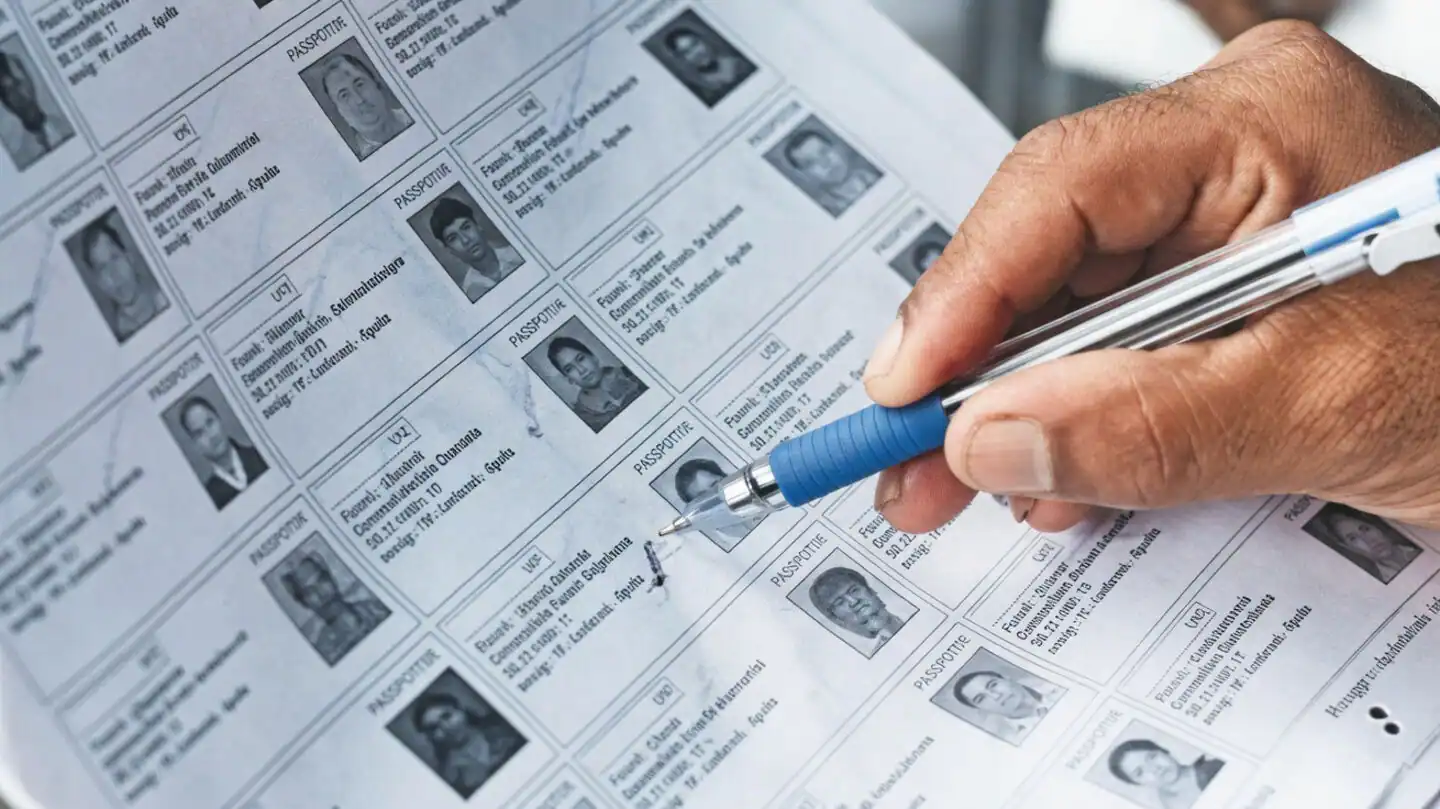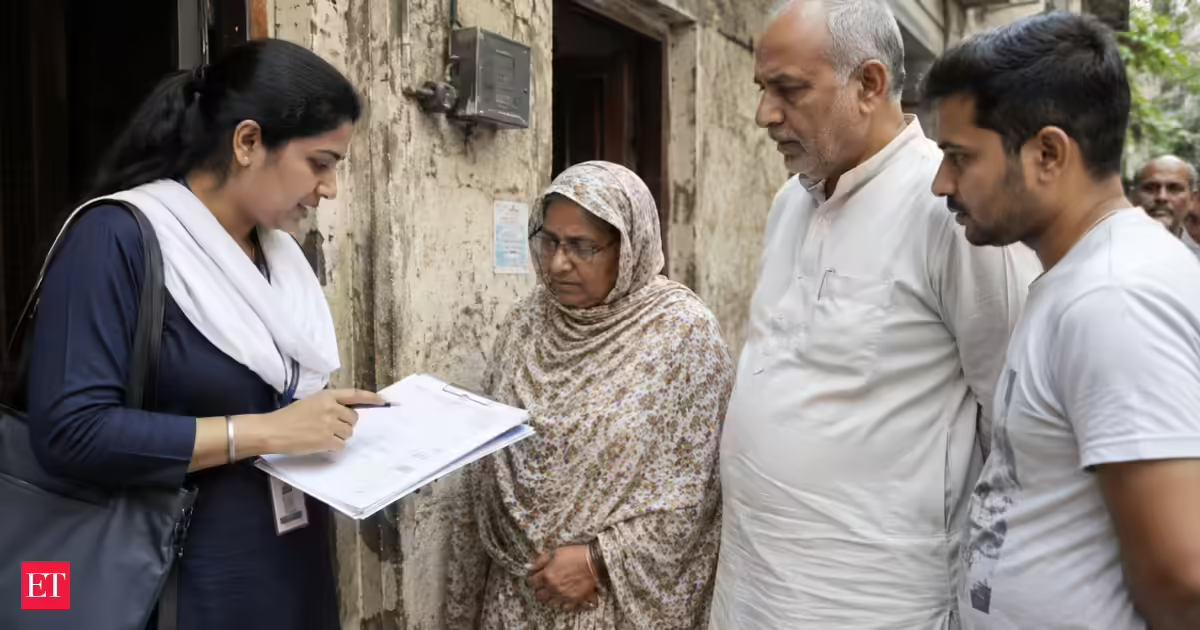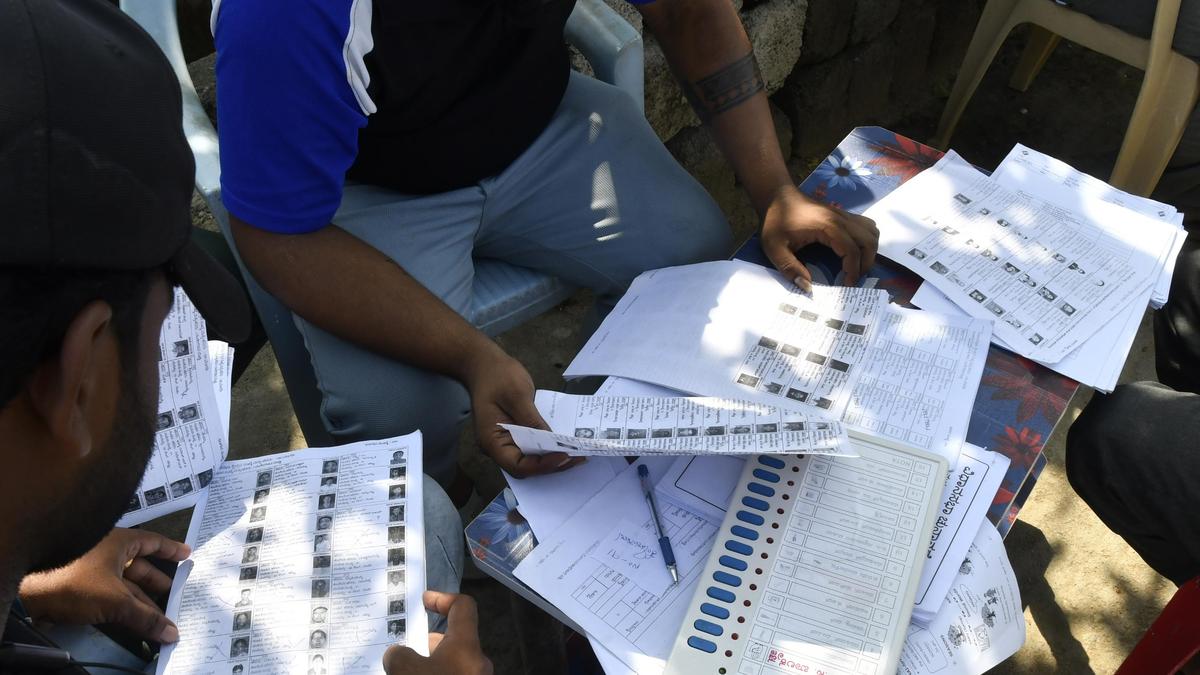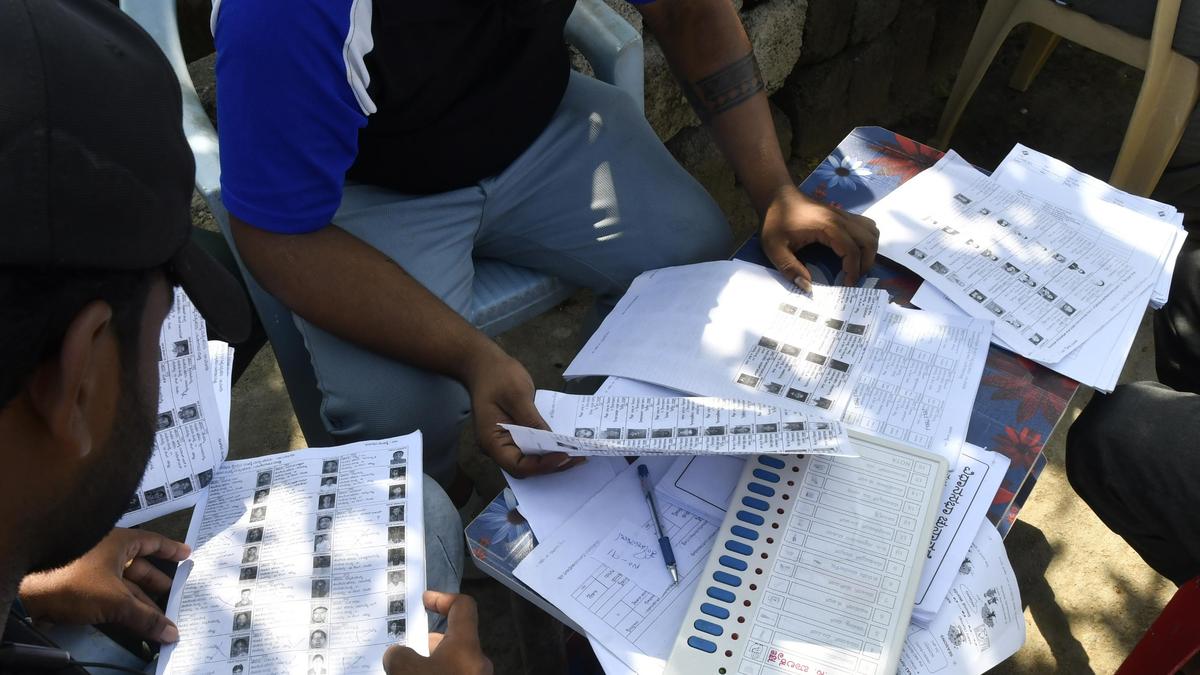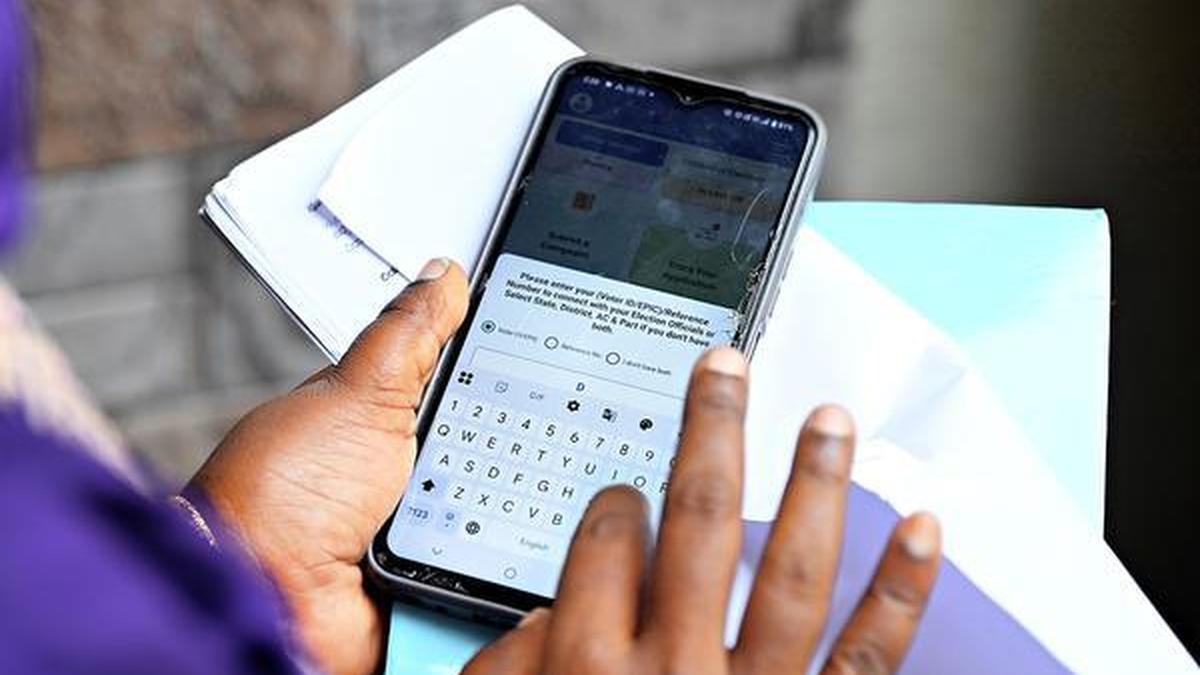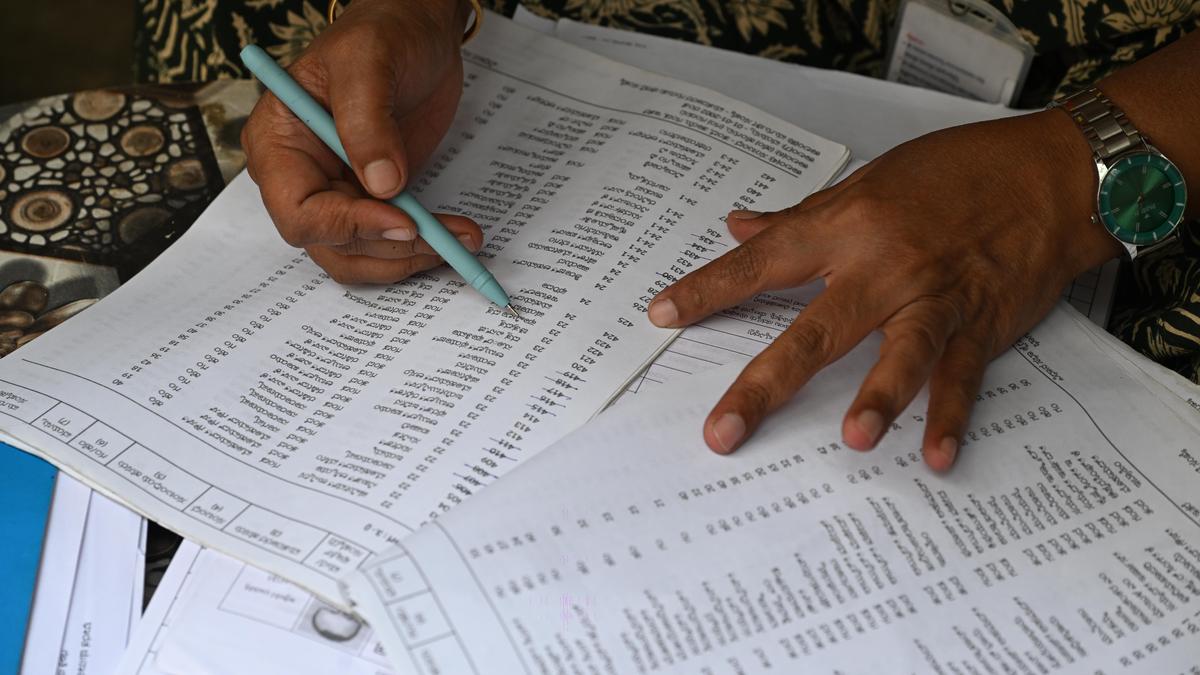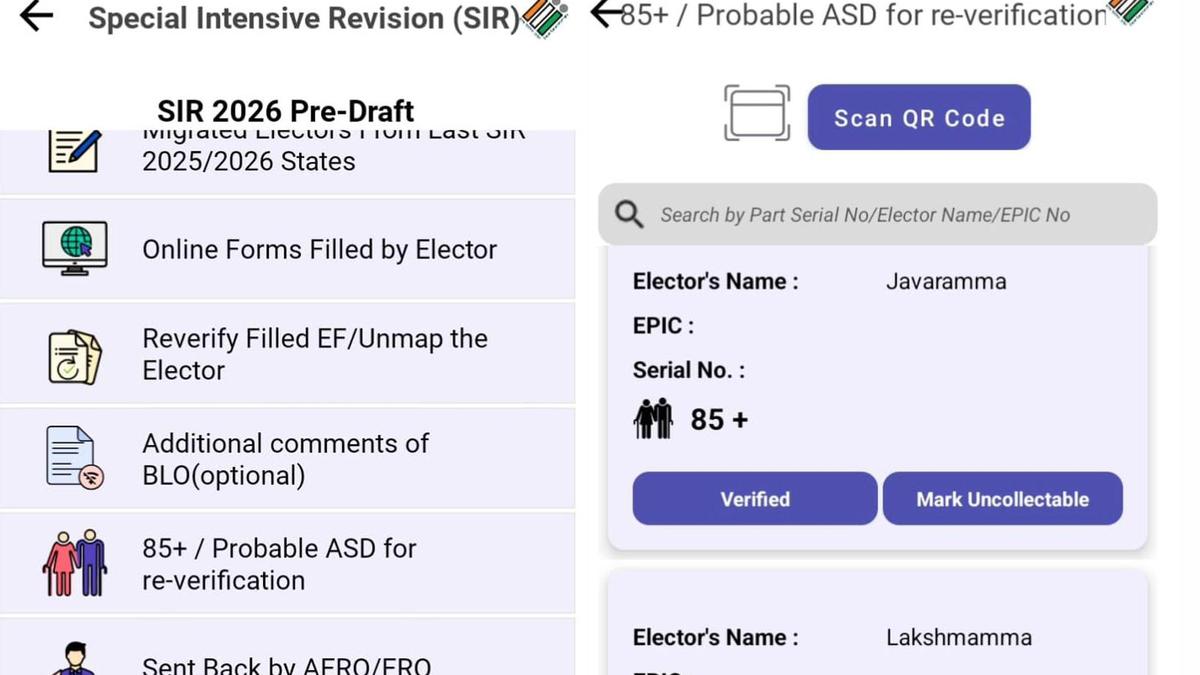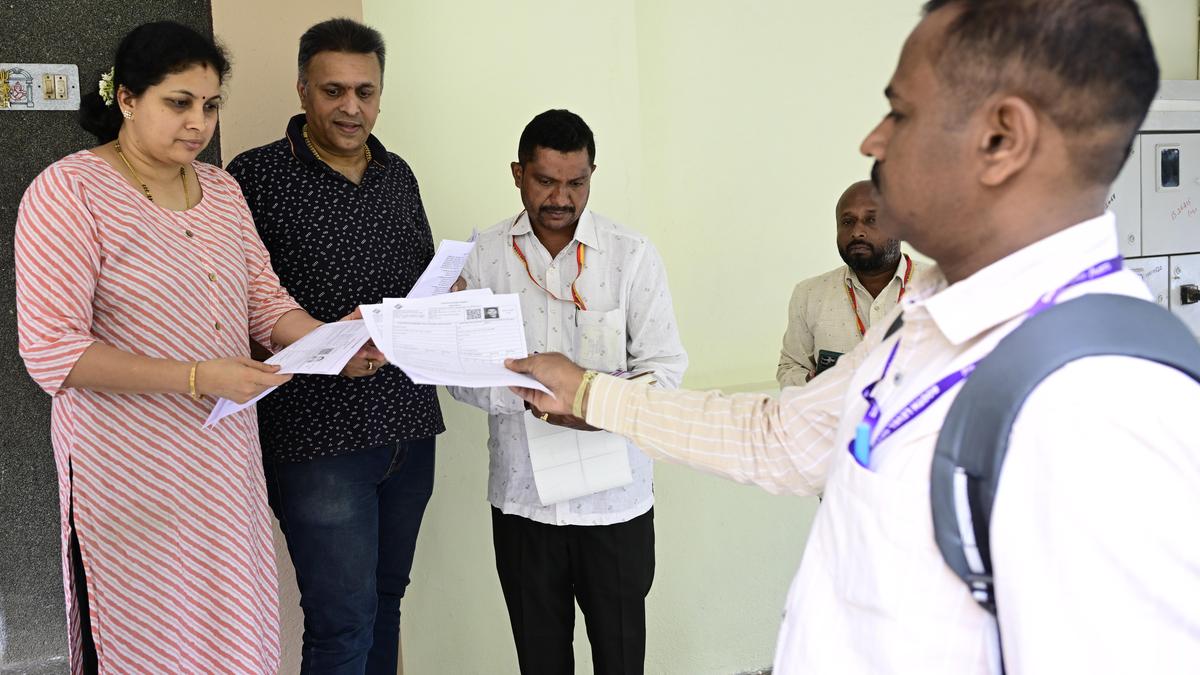
Enumeration forms being distributed to families, as part of the Special Intensive Revision of the electoral roll, in Bengaluru on Tuesday.
| Photo Credit: SUDHAKARA JAIN
With the Special Intensive Revision (SIR) now under way in the State, Karnataka is likely to have 11 types of “logical discrepancy”, if the same framework followed in other Phase III States is adopted. When the category was first introduced during the SIR in West Bengal, only four logical discrepancies were identified.While Karnataka Chief Electoral Officer (CEO) V. Anbu Kumar, addressing a press conference on Monday, said that “six categories of logical discrepancy have been identified”, he maintained that whether they would be applied would only be decided once the draft electoral rolls are published on August 5.He, however, said that “the categories may increase after the draft electoral rolls are out. The exact number will only be known after the draft electoral roll,” he said. Unlawful discriminationHowever, as seen in other States that are part of the Phase III SIR, 11 categories have been identified. If different States, apply different categories under the same legal framework, it could create different grounds for ‘rejection’ under the same law, which is considered ‘unlawful discrimination’. However, dismissing the apprehensions, the CEO said that “confusions should not be created in the first place about rejections.”DiscrepanciesThe categories include – less than a nine-month gap between progeny (siblings), less than a 15-year or more than a 50-year age gap between parent and progeny, less than a 40-year age gap between an elector and grandparent, different parent names between the current roll and the previous SIR, mapping with a different relative type between the current roll and the previous SIR (father/mother), mapping with the father in the current roll and the husband in the previous SIR, different father names in the current roll and the previous SIR, incorrect age difference between the current roll and the previous SIR, absence of any supporting document, and Aadhaar being the sole document submitted.Similar categories have been identified and announced already in states undertaking the Phase III SIR, including Telangana and Haryana. Political parties and rights groups argue that since all Phase III states are implementing the exercise under the same Election Commission notification, Karnataka is likely to follow the same framework. In Telangana, where house-to-house voter enumeration under the exercise began on June 25, as many as 89.88 lakh electors have already been flagged for anomalies in their data.