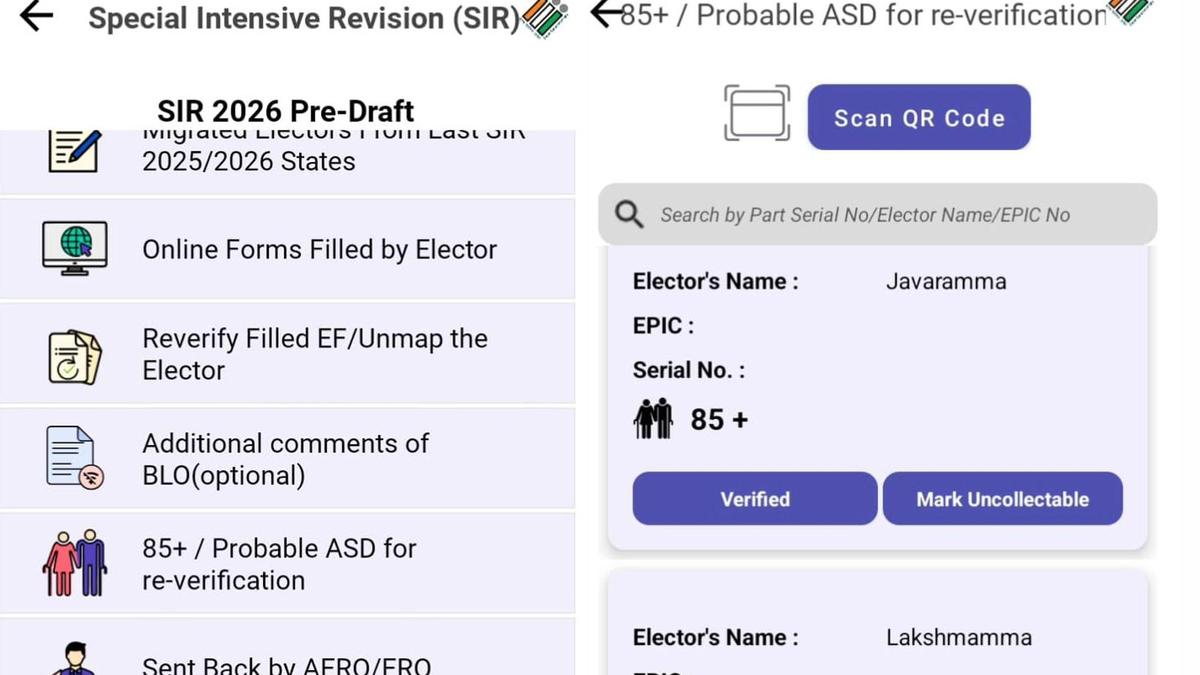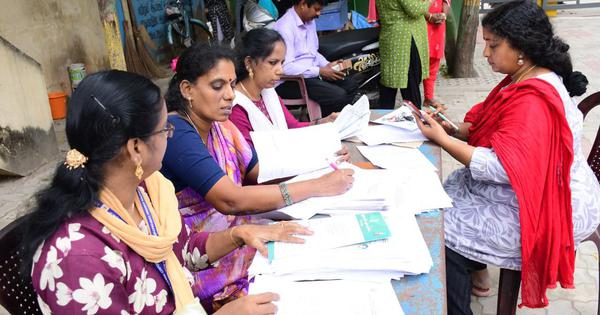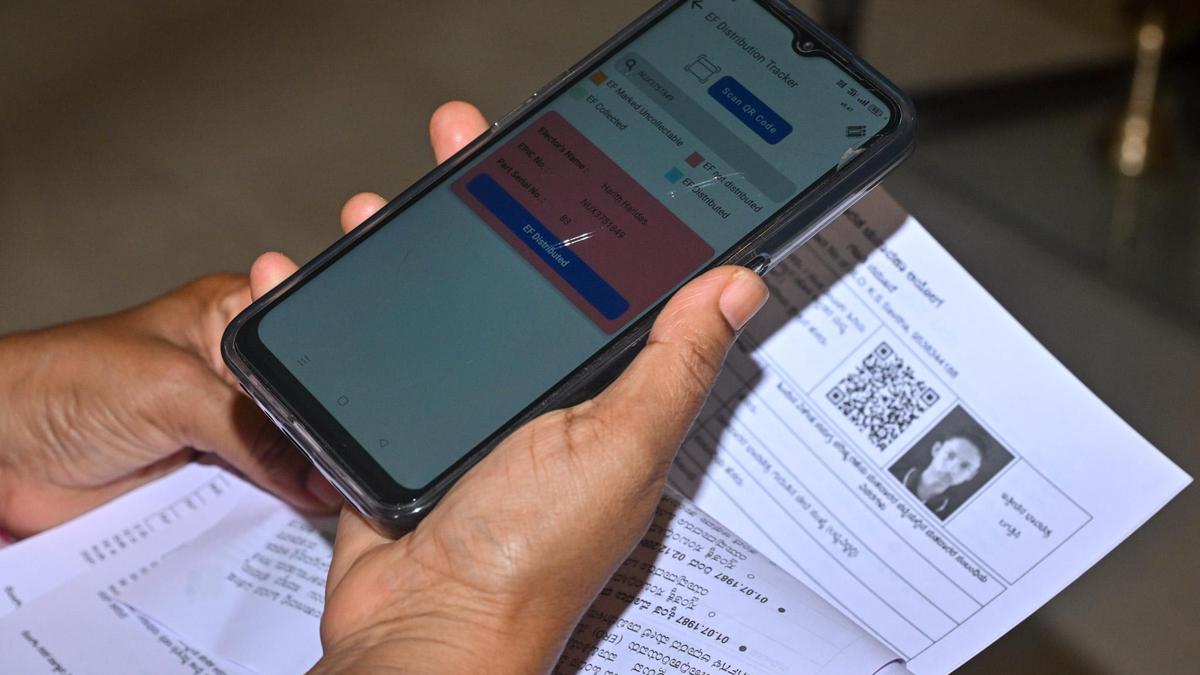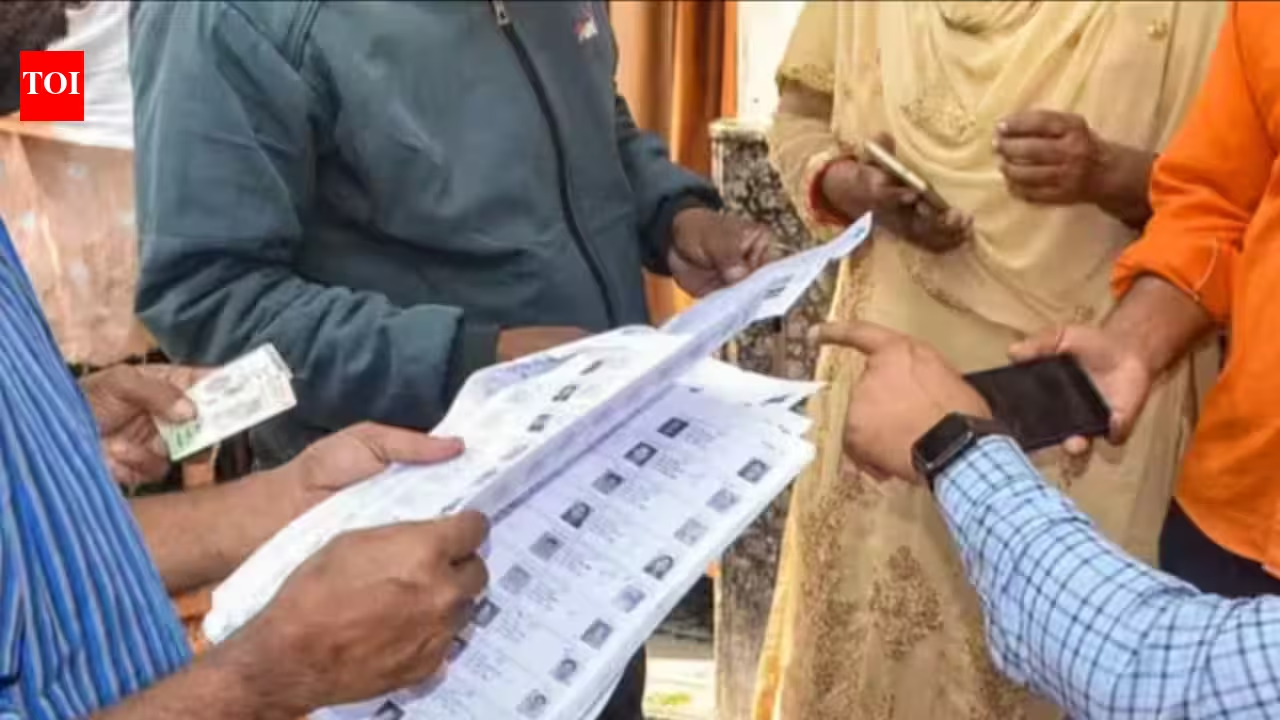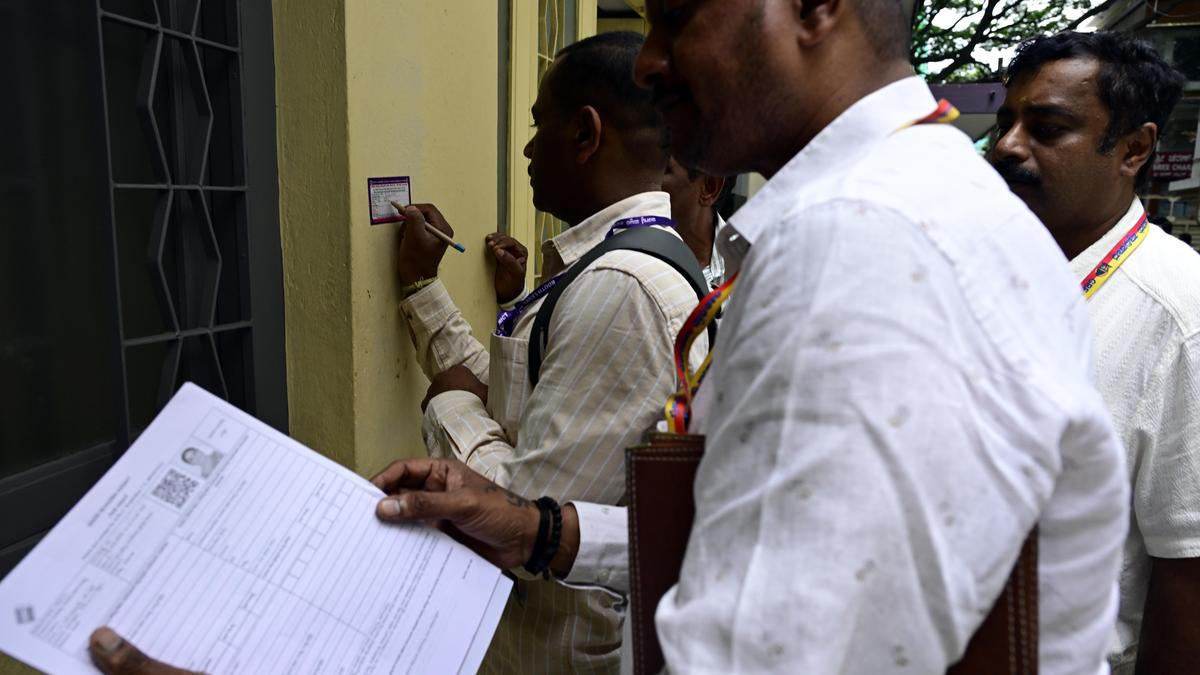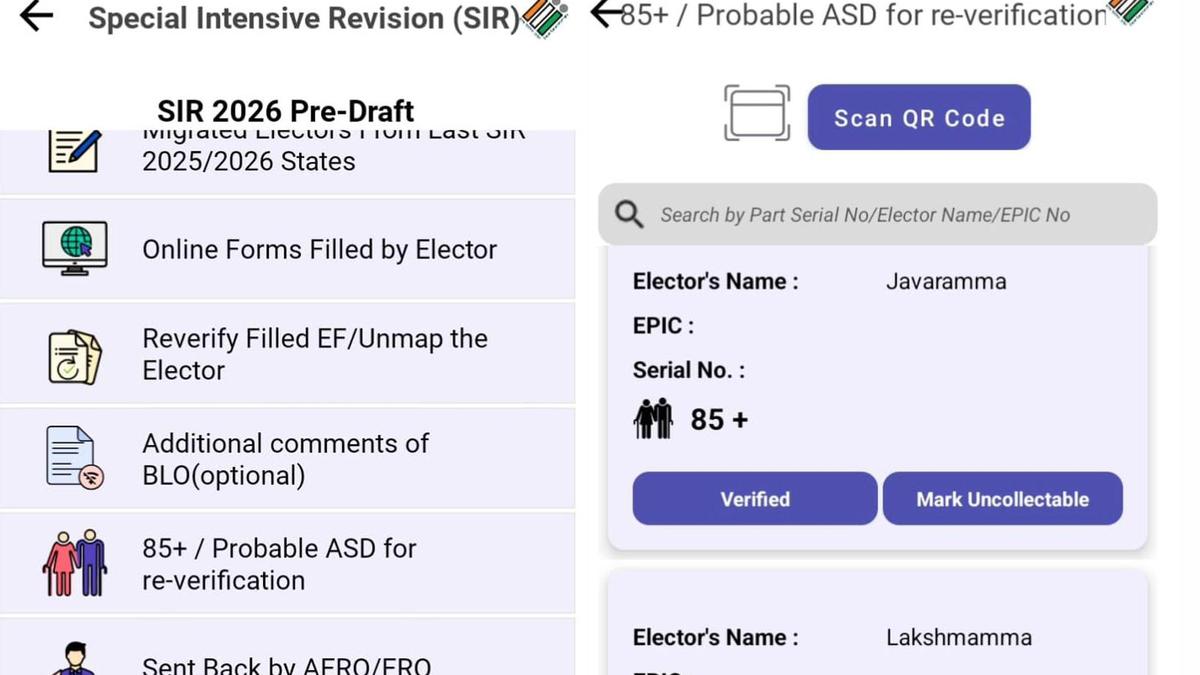
With the Special Intensive Revision (SIR) under way in Karnataka, Booth Level Officers (BLOs) say they have been instructed to “double verify” voters aged ‘85 years and above’ and place them under the “probable absent, shifted, dead/deleted or duplicate (ASDD)” category.While Chief Electoral Officer V. Anbu Kumar denied that any such instructions had been issued, multiple BLOs told The Hindu that they had been directed to flag voters above 85 for ASDD verification ‘even before any discrepancy has been established’. “Nobody whose enumeration form has been submitted should be placed under the ASDD category. But within the BLO app, there is a category called ‘Probable ASD’ where all voters above 85 are directly linked. We have been told to mark voters above 85 as ASDD because they are presumed unlikely to be voting,” a BLO said.‘Keep documents ready’Families who informed The Hindu of the practice said BLOs had asked them to “keep the documents ready”, indicating that notices could be issued after the publication of the draft electoral roll.“We were told to keep all the documents ready because notices would be served. When we asked why, despite having already submitted the enumeration form, the BLO said this is how the exercise has been designed for people above 85 years,” a resident said. Even civil society groups had earlier expressed concern that senior citizens would be particularly vulnerable to deletions during the revision exercise. What it meansBeing flagged under the ASDD category means the voter’s entry is subjected to additional scrutiny during the revision process. If the entry is proposed for deletion or exclusion in the draft electoral roll, the elector will be required to respond to a notice and establish their eligibility before the Electoral Registration Officer (ERO). Under the ECI’s stated procedure, this is generally meant for voters who could not be contacted after repeated visits or where there is evidence of death, shifting or duplication. As per the ECI, once an enumeration form has been collected and submitted, there is, prima facie, no basis to classify a voter as absent, shifted, dead or a duplicate unless a specific discrepancy emerges during verification. Even when a discrepancy crops up, it has to be treated separately.
SIR in Karnataka: Voters above 85 years face double checks, say BLOs
Voters over 85 in Karnataka face scrutiny and potential categorization as absent, despite having submitted forms, raising concerns about electoral fairness.
652 words~3 min read