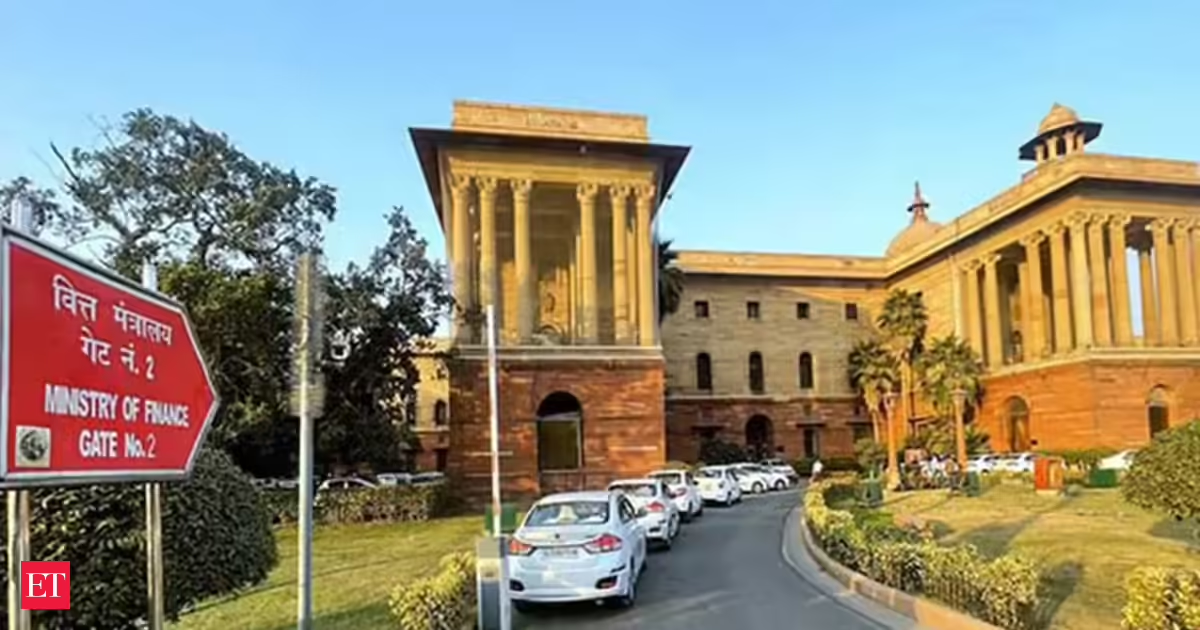
NEW DELHI, 23/07/2024: Scene at the entrance gate of Finance Ministry, at North Block in New Delhi on Tuesday. Finance Minister Nirmala Sitharaman presents a general budget for 2024-25, in the Parliament House, July 23, 2024. Photo: Shiv Kumar Pushpakar / The Hindu
| Photo Credit:
Headline inflation is likely to be contained in the coming months despite domestic inflationary pressures, according to a Finance Ministry report released on Tuesday. Additionally, the report called for a reorientation of agricultural pricing policies and prioritised policy reforms in the water sector.“As the global environment continues to evolve, inflation readings may remain relatively contained in the coming months. Recent easing in global commodity markets, a correction in crude oil prices, and softening of key input prices such as urea may help moderate imported inflationary pressures,” the latest edition of the Monthly Economic Review (MER) by Economic Affairs Department of the Finance Ministry said.Pressure pointsInflation rate based on Consumer Price Index (CPI) was 3.98 per cent in May as against 3.48 per cent of April. Though it is still lower than median rate (4 per cent) of targeted inflation range (2-6 per cent), there are pressure points. “Given the ongoing West Asia crisis and the subsequent global price shock, domestic inflationary pressures appear to be on an upward trajectory, particularly as fuel and energy price shocks diffuse domestically,” MER said.The report took note of the progress in peace agreement between US and Iran and said that recent easing in global commodity markets, a correction in crude oil prices, and softening of key input prices such as urea may help moderate imported inflationary pressures.Although the normalisation of global supply chains and trade flows to pre-conflict levels may take time, the decline in international commodity prices is expected to provide some cushion against further price pressures. “Government interventions, adequate buffer stocks of key agricultural commodities, and continued supply-side management measures also help mitigate potential supply disruptions,” it said.Further, it said: “Overall, the economy continues to exhibit resilience.” However, moderation in select high-frequency indicators suggests some easing in momentum. The uneven distribution of monsoon rainfall, emerging El Nino conditions, and geopolitical uncertainties will continue to shape the outlook. Although recent developments in West Asia have eased pressure on global energy markets, continued disruptions to oil production and shipping through the Strait of Hormuz could affect energy supplies and commodity prices,” it said.Policy prescriptionThe MER has also given some policy prescription. It said that the West Asia conflict was a reminder of the need for a national policy on buffer stocks for a range of critical raw materials and inputs. Attention now turns to the impact of a deficient monsoon. While the monsoon rains are expected to improve in July and August, experts point to the increasing unpredictability of rainfall patterns.“Among other things, water conservation, including recycling, utilisation of budgetary allocations for Jal Jeevan Mission, may now be at the top of the policy priority list. The West Asia conflict and the deficient monsoon rainfall (so far) also underscore the need to reorient India’s agricultural pricing policies to incentivise the cultivation of climate-resilient crops and disincentivise water intensive ones,” it said.The report concluded that the steady stream of destabilising events and developments globally and climatically is a reminder of the challenges likely to arise in the coming years and the need for policy to stay a step ahead of them.Published on June 30, 2026