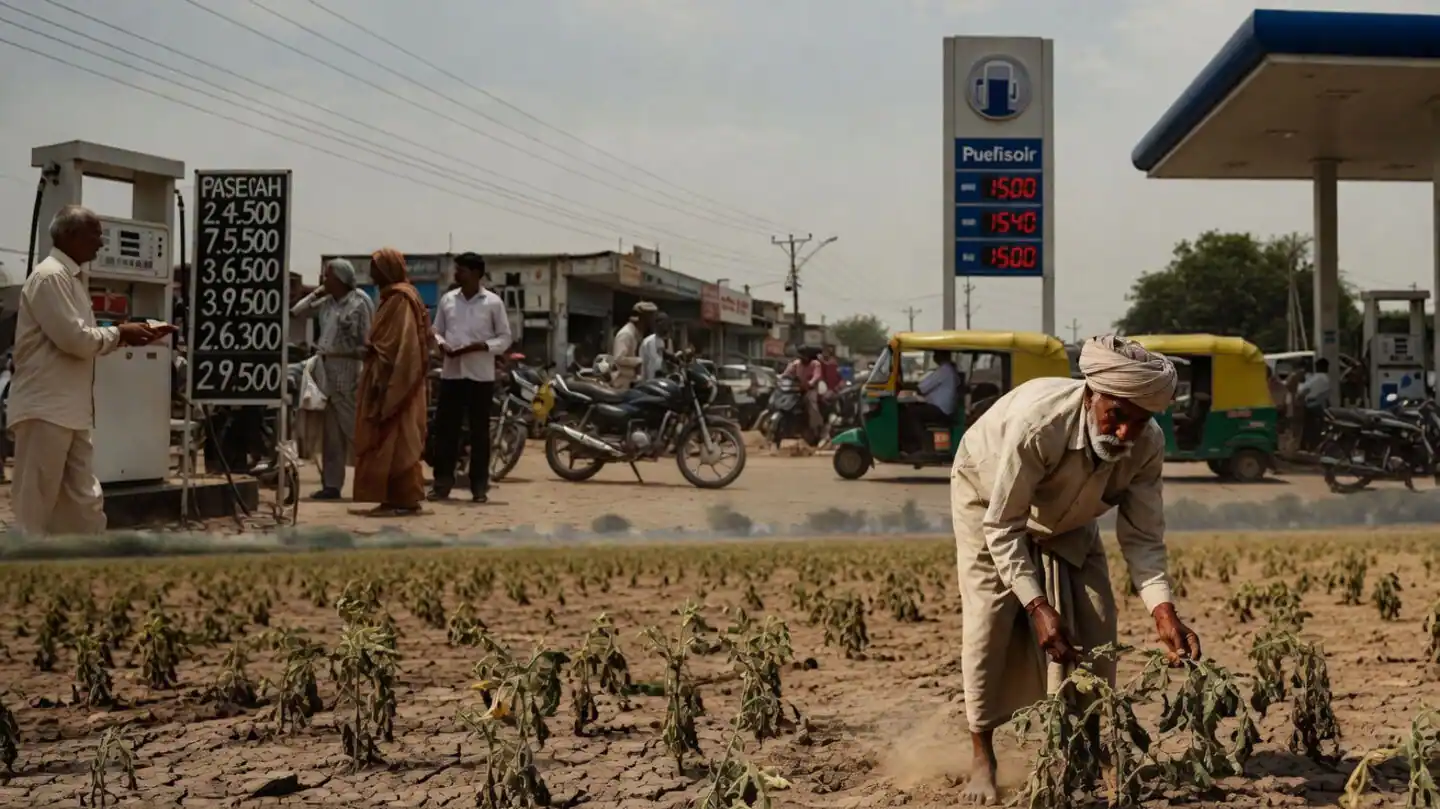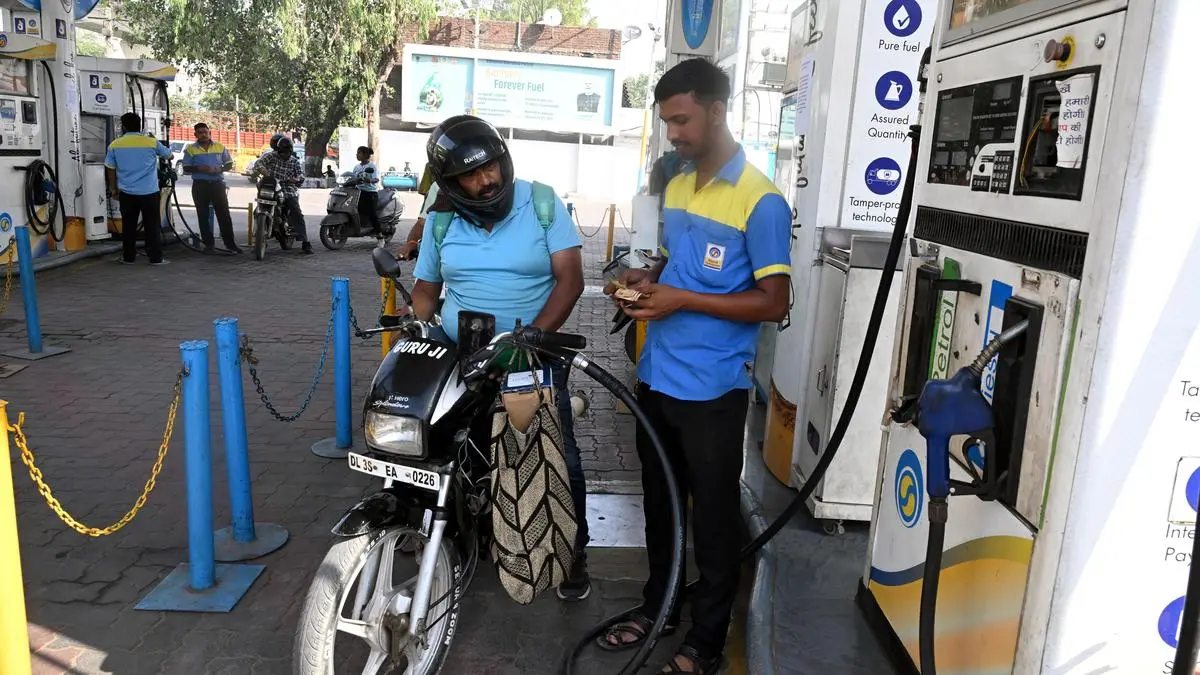
The Union finance ministry has flagged risks to the inflation outlook, citing recent fuel price hikes, global energy price volatility, rupee depreciation, the prospect of a below-normal monsoon and sharply rising wholesale prices, even as retail inflation remains within the Reserve Bank of India’s target range.FinMin flags inflation risks, calls for sustained vigilanceIn its monthly economic review released on Saturday, the ministry said “The inflation dynamics of April 2026 reflect a growing divergence between relatively contained consumer prices and sharply rising wholesale prices.”Retail inflation edged up to 3.48% in April from 3.4% in March, remaining below the Reserve Bank of India’s 4% target with 2-6% band, while a surge in the wholesale price index (WPI) accelerated sharply to 8.3% from 3.88% during the same period.While retail inflation increased only marginally to 3.48% and remained below the RBI’s target, price pressures intensified in select food items and services such as restaurants and accommodation, the report said. Wholesale inflation, meanwhile, was driven by elevated global energy prices, rupee depreciation and a low base effect.“The sharp rise in upstream price pressures, along with recent increases in fuel prices, suggests a gradual pass-through to retail inflation through higher transport, energy, and food-related costs in the coming months,” the report said.The ministry noted that the “recent hikes (on four occasions) in petrol and diesel prices (which have a combined share of around 5% in the CPI basket) by ₹7.38 and ₹7.52, respectively, may activate both the direct and indirect channels of transmission of the global price shock to the country’s retail inflation.”State-run oil marketing companies began raising fuel prices in phases after international crude prices surged following the outbreak of conflict in West Asia on February 28.A petroleum ministry official said, “Even after four rounds of hikes in auto fuel rates, OMCs were losing about ₹550 crore revenue daily, indicating another price hike shortly if international oil prices remain elevated. Benchmark Brent crude which closed highest on April 29 at $118.03 a barrel, on Friday (May 29) fell to $91.12, down by 22.8%.”The review, however, said India’s macroeconomic position remained resilient.“Overall, India’s macroeconomic position in May 2026 reflects cautious resilience. Strong services exports, adequate foreign exchange reserves and a stable labour market provide a firm foundation,” it said.At the same time, it cautioned that “the confluence of elevated global energy prices, a depreciating rupee, rising upstream cost pressures and the prospect of a below-normal monsoon calls for sustained policy vigilance”. Navigating FY27 will require agility across monetary, fiscal and structural dimensions to safeguard growth momentum and keep inflation durably anchored, even as the global environment remains uncertain, the report added.The ministry cited the India Meteorological Department’s forecast of monsoon rainfall at 92% of the long-period average. “Buffer stocks of rice and wheat at 817.53 lakh tonnes and adequate reservoir storage provide suitable cushion to foodgrains. However, any significant rainfall deficit coupled with current geopolitical conditions could translate into food inflation, weakening rural demand and aggregate growth,” it said.The report nevertheless expressed confidence in the economy’s underlying strength, noting that manufacturing and services activity remained in expansionary territory, the labour market was stable and foreign exchange reserves provided insulation against external shocks.“Domestic fundamentals remain broadly intact, manufacturing and services PMIs are in expansionary territory, the labour market is stable, and foreign exchange reserves provide meaningful insulation against external shocks,” it said.Looking ahead, the review said the duration of any disruption in the Strait of Hormuz remained the single most consequential variable for India’s external sector and inflation outlook.“Should normalisation occur soon, the conditions for a broader-based recovery, supported by strong services exports and sustained investment commitments, are in place. Policy will need to remain agile across monetary, fiscal and structural dimensions to navigate this period of compounded uncertainty while keeping medium-term growth objectives firmly in view,” it said.
FinMin flags inflation risks, calls for sustained vigilance
The Union finance ministry warns of inflation risks due to rising fuel prices and global volatility, despite retail inflation staying within target limits. | India News
632 words~3 min read