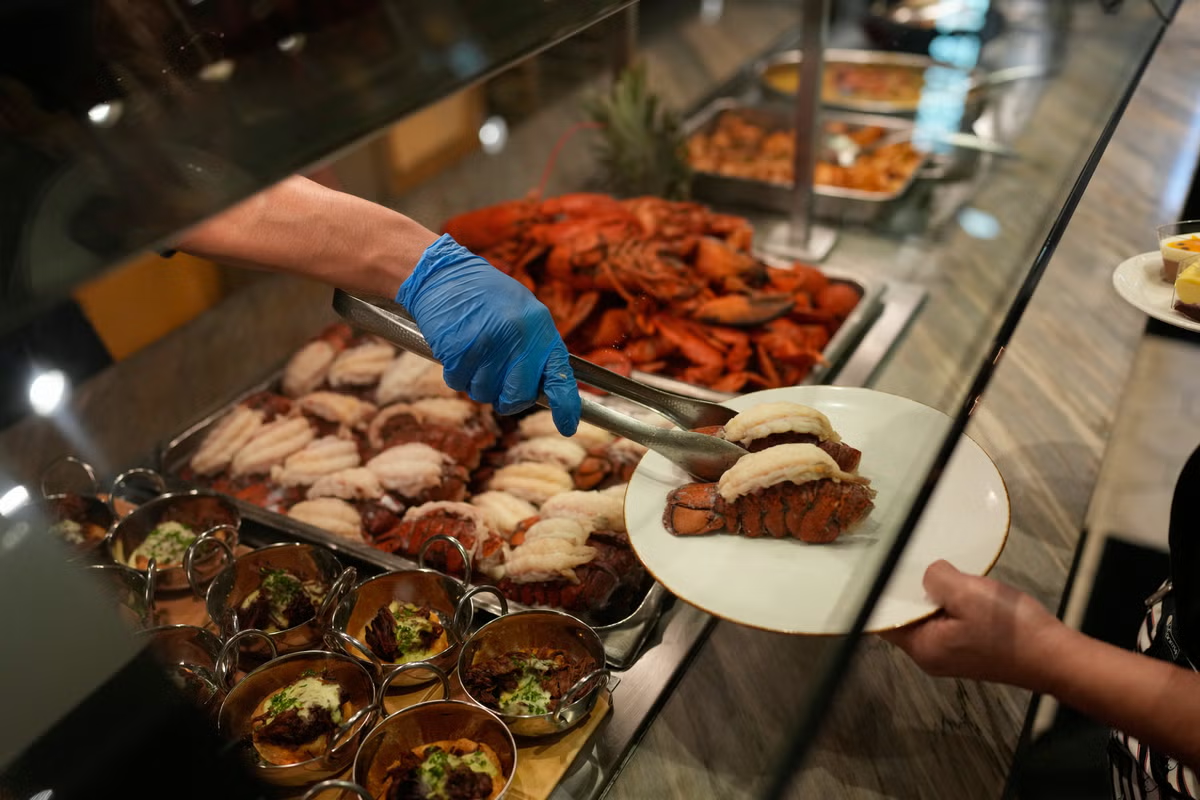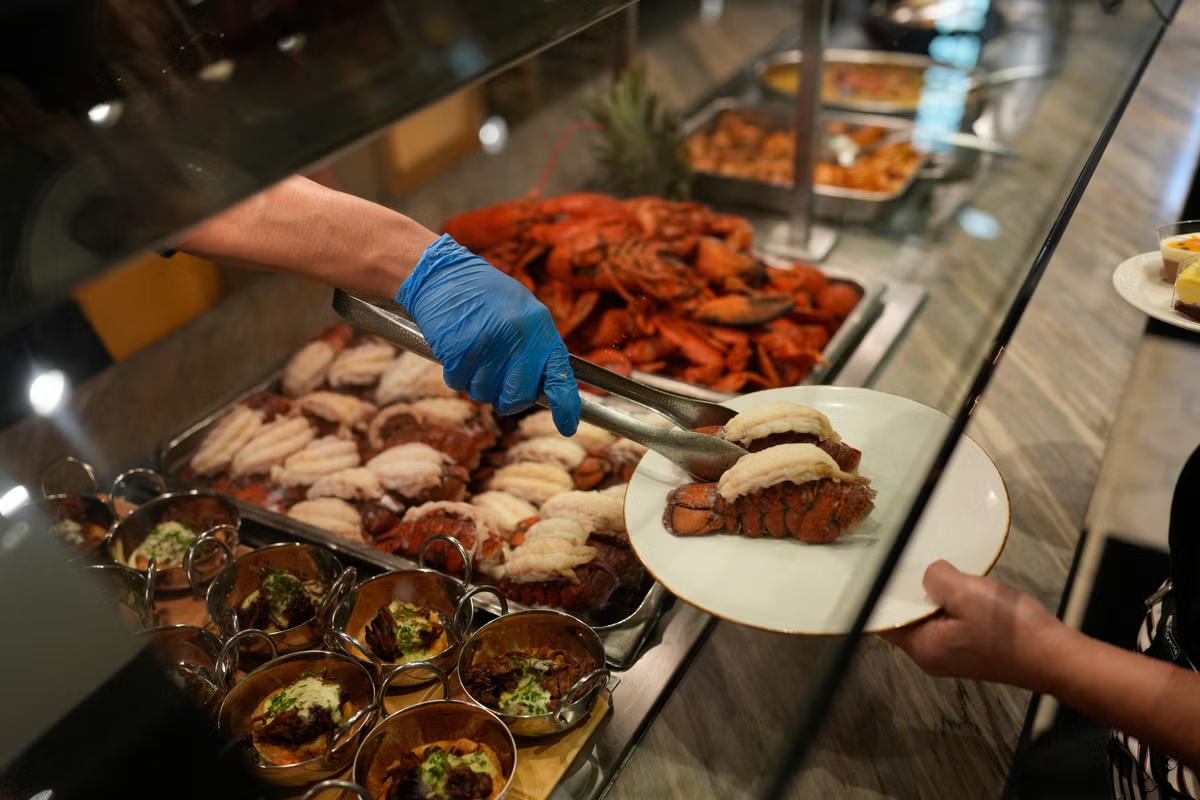
The MGM Grand has closed its buffet after 33 years, marking the demise of another buffet on the Las Vegas Strip. Beginning this month, tourists and residents no longer had the ability to pile on mountains of the Grand Buffet’s crab legs, waffles and eggs on their plates. Kevin O’Donnell — a 40-year-old resident of Riverview, Florida, — said he enjoys getting to sample different foods during his vacation and laments the buffet’s closure. “It's honestly very sad to me. One of the biggest draws for Vegas, obviously, was the buffets back in the day, and seeing them all start to disappear is unfortunate,” O’Donnell said. You’d get to eat a cheap meal, walk through the casino afterwards, and then lose that money, O’Donnell said. It was part of the Vegas experience. Even if you were unlucky at the slot machines, you’d still feel like you got a good deal. The number of buffets directly on the Las Vegas strip has dwindled from 35 to a mere seven. Treasure Island, Aria Resort, Rio and Luxor have all shut down their buffets in recent years. Treasure has opened a venue where you can place bets on sporting events, while Aria and Rio have opened food halls, which are essentially fancier food courts where vendors offer a variety of cuisines. Meanwhile, new casinos like Durango and the Fontainebleau Las Vegas have opened up food halls right out of the gate. Over time, buffets have become less financially sustainable. Changing consumer attitudes toward the buffet along with labor and food costs have all contributed to their demise, according to experts Marketplace spoke to. “They take up a lot of space in a casino, it costs a lot to run, and they're not usually — with a few exceptions — very profitable,” said Amanda Belarmino, an associate professor of hospitality at the University of Nevada, Las Vegas. The beginning of the endWhen the COVID-19 crisis began back in 2020, buffets around the U.S. closed due to safety precautions, including those in Vegas. During this period, many casinos reassessed their value and found there wasn’t high enough demand and they weren’t very profitable, so it made sense to shut them down permanently, Belarmino said.The labor and food costs behind running a Vegas buffet are high, she explained. “You have to have a large variety of food, and the more different types of food you have, the higher the cost is of purchasing that food,” Belarmino said. “One of the highest-demand items at a buffet tends to be seafood, which tends to be crab legs. And we’re not very close to the ocean.”Buffets are also stocked with food that’s out of season and people end up taking more food than they normally would at a sit-down restaurant, Belarmino said.Over time, consumers’ eating habits and attitudes toward buffets have also changed. All-you-can-eat restaurants aren’t as appealing to people anymore because of the rise of weight-loss medications like GLP-1s and because people have become more health conscious, Belarmino said. Some simply can’t afford Vegas anymore. O’Donnell, who used to go to Vegas regularly with either his wife or his buddies, said he isn’t surprised demand has declined as prices in Vegas and the overall economy have gone up.“The downturn in the economy recently has definitely hit my family pretty hard, so things like vacations have kind of fallen by the wayside,” O’Donnell said. O’Donnell said the last time he had been to the MGM Grand Buffet, it was “fantastic.” But the price tag was a bit steep, climbing to more than $100 for him and his friend. O’Donnell also lives on the East Coast, and with budget airlines like Spirit going out of business, it’s getting harder to find cheap airfares. He still plans to go to Vegas, but it’s a trip that requires planning maybe a year and a half in advance now. “It used to be more of a spur of the moment thing,” O’Donnell said. The future of the Vegas buffet Not all buffets have shut down. While low-priced and mid-priced buffets have suffered, high-end ones like The Buffet at Wynn Las Vegas and Bacchanal Buffet at Caesars Palace are still operating. They're in high demand and, because they're more expensive than a typical buffet, they're more profitable to the casinos, Belarmino said. The Wynn buffet can cost up to $80 per person and the Bacchanal Buffet can cost more than $90, while all the options at the MGM Grand Buffet cost under $45. For consumers, it's not just about the buffet's price tag, but its "price value," Belarmino said.The $100 buffet offers $100 worth of food to a lot of people, but many people felt like the $50 buffet wasn't worth $50 in value, Belarmino said.In this K-shaped economy, where the gulf between wealthy and low-income households grows wider, those with higher incomes are able to eat out often while lower-income households are cutting back on restaurant visits. Even the mid-priced buffet can ding customers’ wallets. In place of the buffet, many casinos are choosing to open food halls, which are more financially sustainable for them. “The casino does not necessarily own the venue, and so that becomes more profitable for them, because the casino isn't responsible for the food costs and the labor costs,” Belarmino said. If any of the dining spots within a food hall are unpopular, then the casino has the flexibility to change the restaurant, Belarmino said. If you look at the Vegas restaurant scene now, the region also has restaurants and bars “that are connected to higher-end dining and higher-end experiences,” said Alex Susskind, a professor of food and beverage management at Cornell. While older consumers gravitated toward buffets, younger generations want a more “Instagrammable” dining experience, Susskind added. Think of three- or five-course tasting menus. O’Donnell said the next time he goes to Vegas, he might hit up a buffet — if the math works out. “I would have to do my homework as far as what is still open and if it’s worth the price,” he said.
Why the Vegas buffet is becoming a relic of the past
The MGM Grand Buffet is closing after more than three decades in business.
1,010 words~5 min read