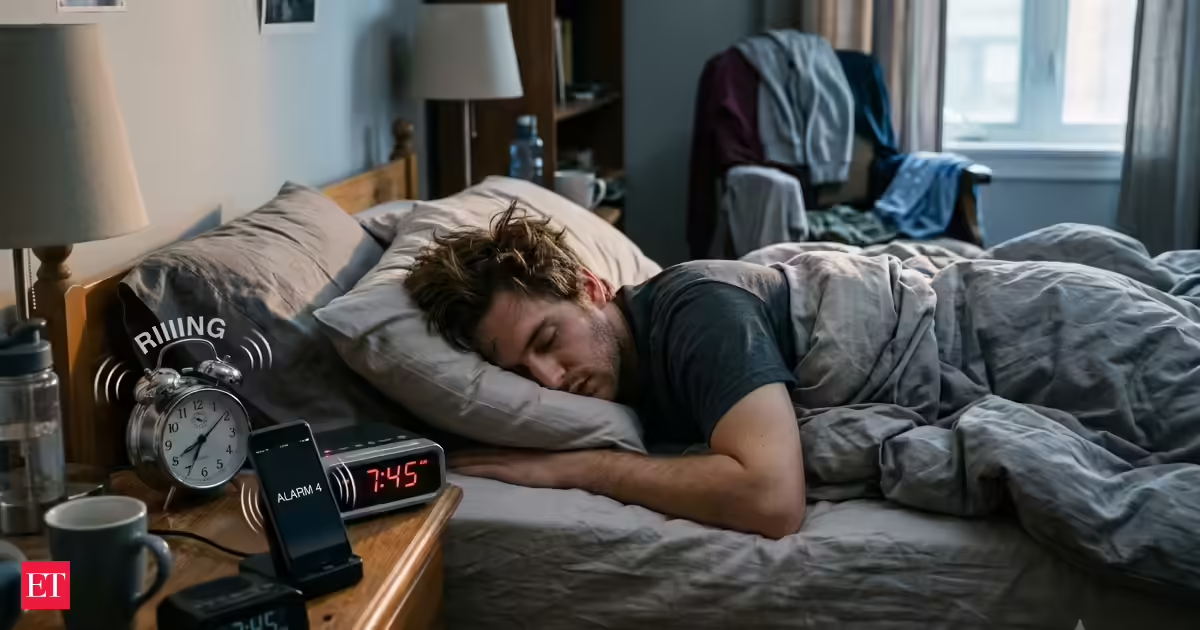
Apart from those who take their fitness very seriously, almost all of us hit the snooze button every morning to get a few minutes of extra sleep before getting started with our days.Snoozing the alarm leaves one less energetic in the morning. (Pexel)Also Read | Doctors explain why children are more vulnerable to severe malaria; highlight related risksHowever, according to Dr Kunal Sood, a Maryland-based physician in Anesthesiology and Interventional Pain Medicine, the habit is likely leaving us feeling more tired than well-rested in the morning. Taking to Instagram on June 29, he explained why that is so.Incomplete sleep cycleAfter hitting the snooze button, one typically gets to sleep for an extra few minutes. That is far less than what is needed to complete a full sleep cycle.“Normal sleep occurs in cycles lasting roughly 90 to 110 minutes,” explained Dr Sood. “When you hit snooze, the brain often tries to fall asleep again, but the next alarm usually interrupts that process before a meaningful cycle can occur.”Experiencing sleep inertiaThe main reason for feeling discombobulated just after waking up is sleep inertia. In the words of Dr Sood, “Sleep inertia is the temporary period of reduced alertness, slower reaction time, mental fog, and impaired decision-making that occurs after waking. Research suggests repeated snooze alarms may prolong this state by forcing the brain to repeatedly wake up and fall asleep again.”Brain receiving mixed signalsWaking up and then trying to sleep again gives mixed signals to the brain. When the alarm starts to ring, the body begins activating wake-promoting systems. This includes the cortisol awakening response, shared Dr Sood.“Hitting snooze forces the brain to alternate between sleep-promoting and wake-promoting signals, creating a physiological tug-of-war,” he explained.Fragmented sleep is less restorativeOn rare occasions, one may get to sleep for a significantly long time after hitting the snooze button. While they might be able to increase the total sleep time, the fact that the sleep got fragmented will reduce its restorative power.In the words of Dr Sood, “Even if total sleep time becomes slightly longer, fragmented sleep is generally less restorative than uninterrupted sleep. The extra minutes gained from snoozing are usually spent in light sleep that gets interrupted before deeper restorative stages can occur.”Morning functioning gets affectedMaking a habit of hitting the snooze button every morning can affect how an individual functions in the morning.As Dr Sood explained, “Habitual snoozing has been linked with prolonged grogginess, slower reaction times, reduced concentration, lower mental sharpness, and reduced subjective energy levels after waking.”Note to readers: This article is for informational purposes only and not a substitute for professional medical advice. Always seek the advice of your doctor with any questions about a medical condition.This report is based on user-generated content from social media. HT.com has not independently verified the claims and does not endorse them.
Did you know sleeping a little longer by snoozing the alarm can leave you more tired? Doctor explains
It is very tempting to hit the snooze button every morning to get a few extra minutes of shut eye, but the habit is doing more harm than good, says Dr Sood. | Health
469 words~2 min read