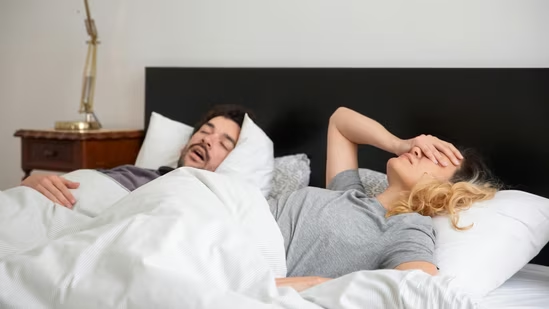
A poor sleeping pattern not only makes you cranky when you wake up and affects your memory in diverse ways; it can also raise your risk of developing heart disease, stroke and obesity. However, obesity itself is already a risk factor for becoming a snorer, so its presence in an individual’s life can help propagate the further development of obesity.
In the United States, where statistics exist for everything, an estimated 22 million people suffer from sleep apnoea, which is marked by interrupted breathing during sleep, leading people to wake up frequently. However, it is likely an underdiagnosed medical condition that plagues many more people.
The presence of snoring during sleep is one of the hallmarks of sleep apnoea, and it is not necessary for the snoring to be loud before the condition is diagnosed. In women, in particular, snoring can occur at a low level and may even be inaudible, but its presence during sleep helps guarantee that its effects, such as those itemised above, will also be present. For such people, therefore, it is often a struggle to convince them that even though they do not snore loudly, there is nonetheless a problem requiring attention.
Even among people who have had surgery for enlarged adenoids or tonsils, silent sleep apnoea can still be present, thereby putting them at risk of developing any of the adverse health effects discussed earlier. Such people may no longer snore but continue to experience sleep apnoea.