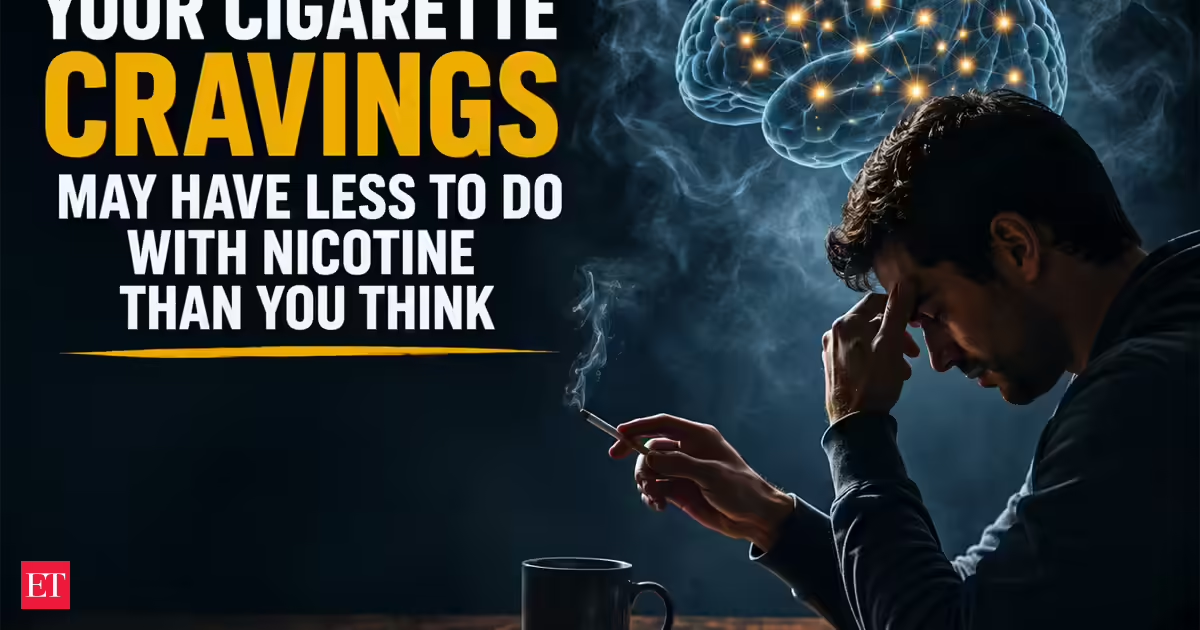
Stress has a powerful effect on the human brain. During difficult moments, many people feel a stronger desire for habits that seem comforting and familiar. For smokers, cigarettes can feel like a quick escape from anxiety, work pressure, emotional problems, or overwhelming situations. Many describe smoking as something that helps them calm down or 'take the edge off'. However, psychologists and neuroscientists say the brain is responding to much more than a simple desire for nicotine. Research suggests that stress changes how the brain processes emotions, rewards, and decision-making. During emotional strain, the brain often searches for immediate relief and falls back on behaviors that previously created a sense of comfort. Over time, cigarettes can become linked to emotional coping. This creates a cycle where stress increases cravings, smoking provides temporary relief, and the brain starts expecting nicotine during every stressful situation. Studies by researchers in psychology and neuroscience reveal that several brain mechanisms help explain why cigarettes become especially difficult to resist during periods of stress.STRESS PUSHES THE BRAIN TO SEEK FAST REWARDSPsychologists explain that when people are under stress, the brain naturally looks for something that can quickly reduce discomfort. Nicotine reaches the brain within seconds and activates reward systems linked with dopamine, a chemical associated with pleasure and motivation. A 2019 study led by researcher Eric A. Woodcock and colleagues from Wayne State University School of Medicine examined how stress influences smoking behavior. The researchers found that acute stress increased nicotine-seeking behavior among smokers and disrupted areas of the brain connected to self-control. Their findings suggested that stress made participants more likely to seek cigarettes as a quick source of relief. This may explain why stressful moments can suddenly trigger intense cravings.STRESS CAN WEAKEN SELF-CONTROL SYSTEMS IN THE BRAINThe brain's prefrontal cortex plays a major role in decision-making and impulse control. Under stress, this region may not function as effectively, making it harder to resist habits. Research by Sherry A. McKee, Marc N. Potenza, Rajita Sinha, and their team explored the connection between stress and smoking behavior. Their work showed that stress-related changes in prefrontal brain activity can increase smoking urges and reduce cognitive control. In simple terms, stress can make the brain less effective at saying 'stop' and more likely to follow familiar patterns.THE BRAIN LEARNS TO CONNECT STRESS WITH SMOKINGPsychologists describe smoking as a learned behavior as much as a chemical addiction. If someone repeatedly smokes during stressful situations, the brain begins creating a mental connection between anxiety and cigarettes. Research by Craig A. Schiltz, Ann E. Kelley, and Charles F. Landry found that stress combined with nicotine-related cues created stronger brain responses than either factor alone. Their findings suggested that environmental signals and stress can work together to strengthen smoking behavior. Over time, stress itself can become a trigger. The brain starts expecting nicotine whenever pressure appears, making cravings feel automatic rather than intentional. Understanding these psychological patterns may help explain why smoking often feels connected to stress, even when the relationship is more complex than it seems.
Psychology says your cigarette cravings may have less to do with nicotine than you think
Stress significantly impacts the brain, driving smokers to seek comfort in cigarettes for quick relief from anxiety and pressure. Neuroscientific research reveals that stress alters emotional processing and decision-making, making the brain more susceptible to immediate gratification. This creates a cycle where stress triggers cravings, nicotine offers temporary solace, and the brain learns to associate smoking with coping mechanisms, weakening self-control and reinforcing the habit.
504 words~2 min read