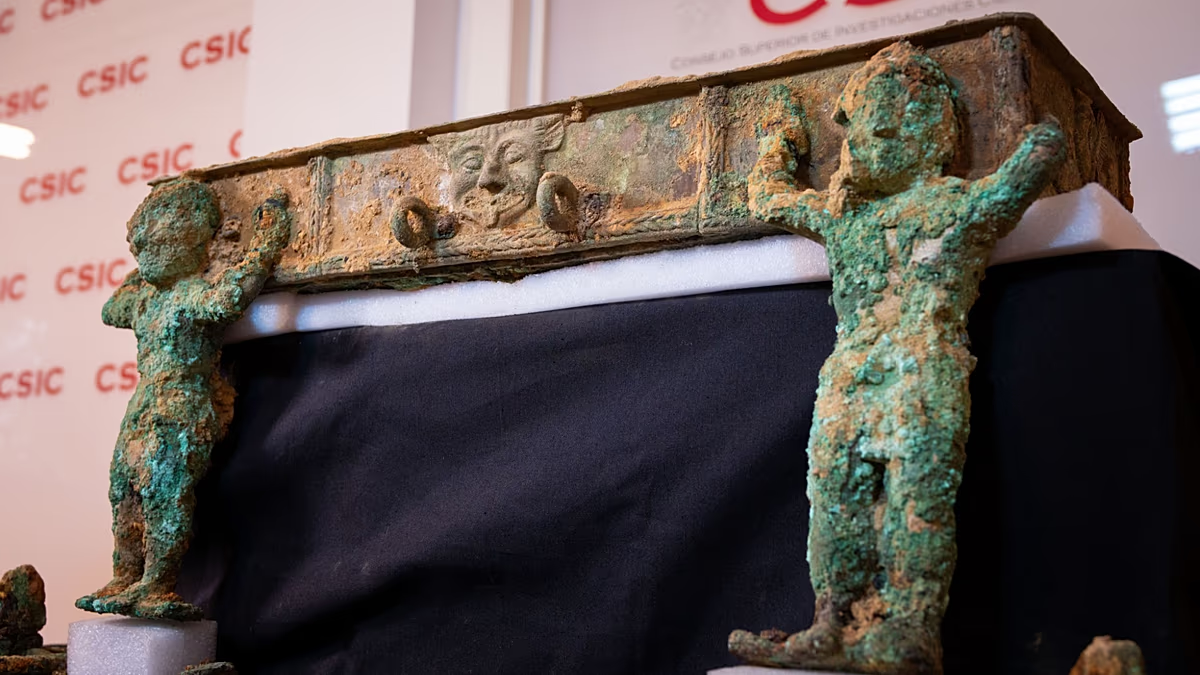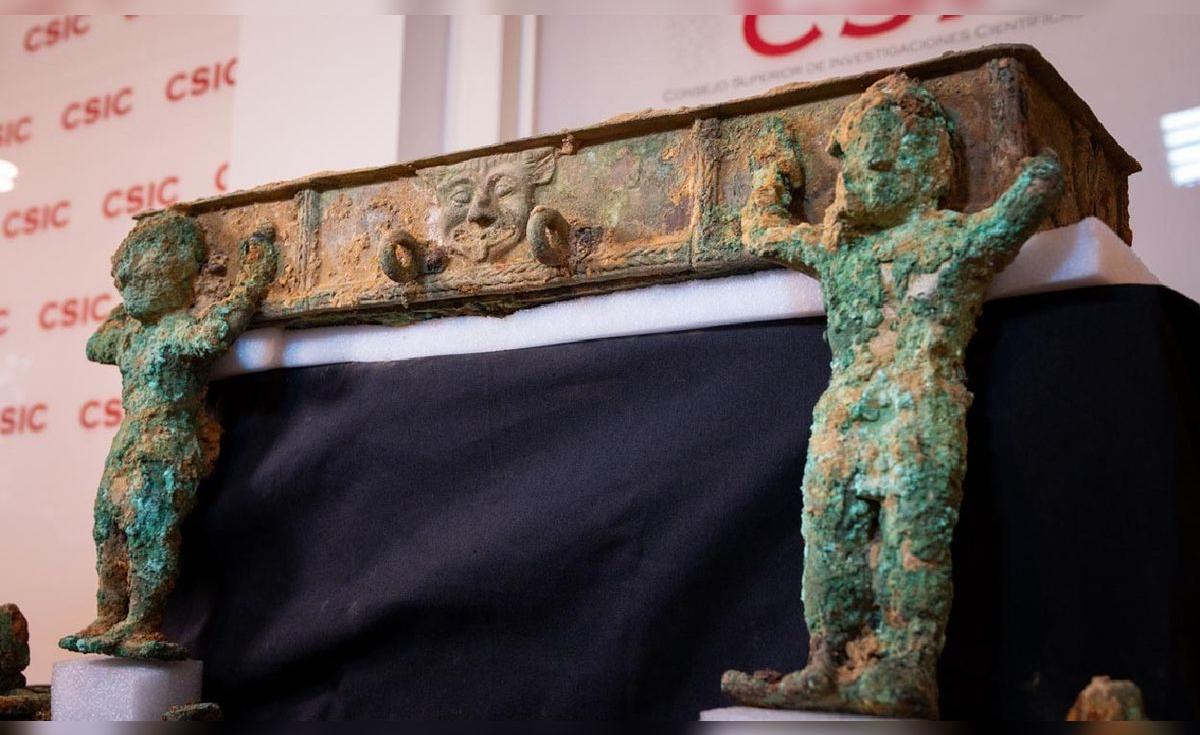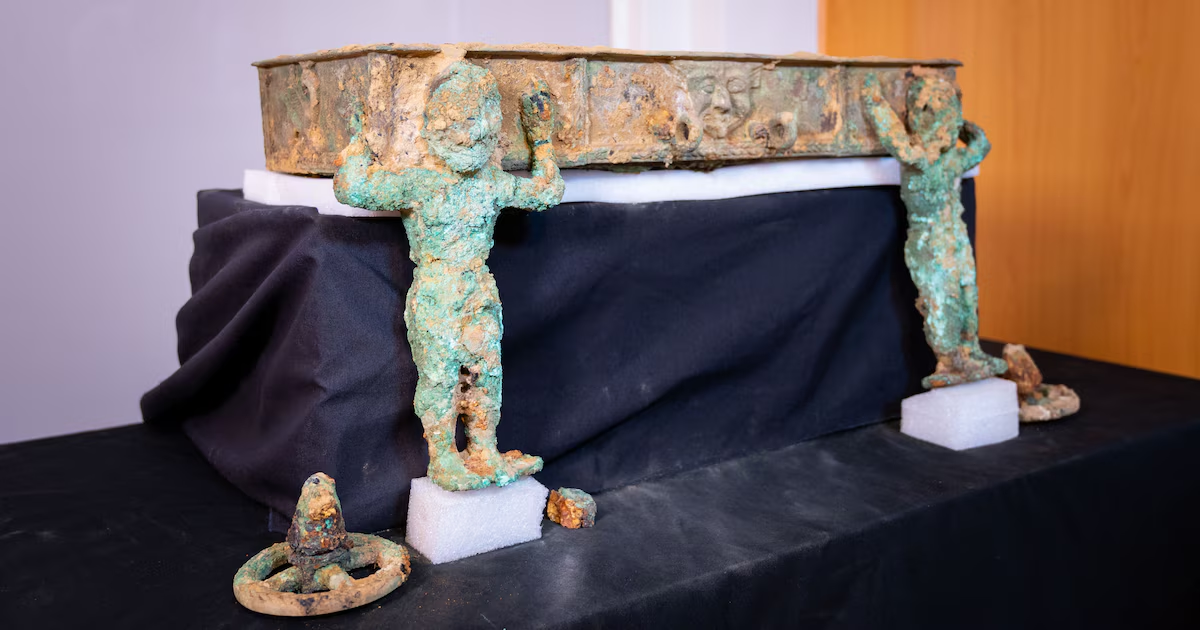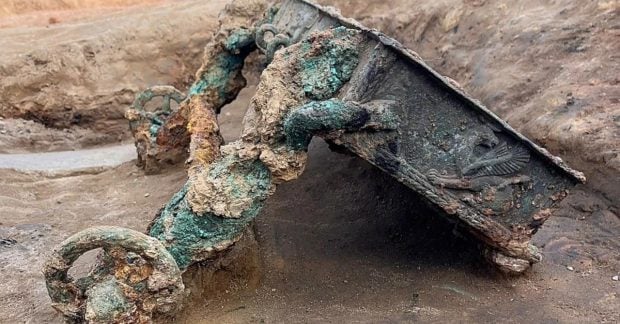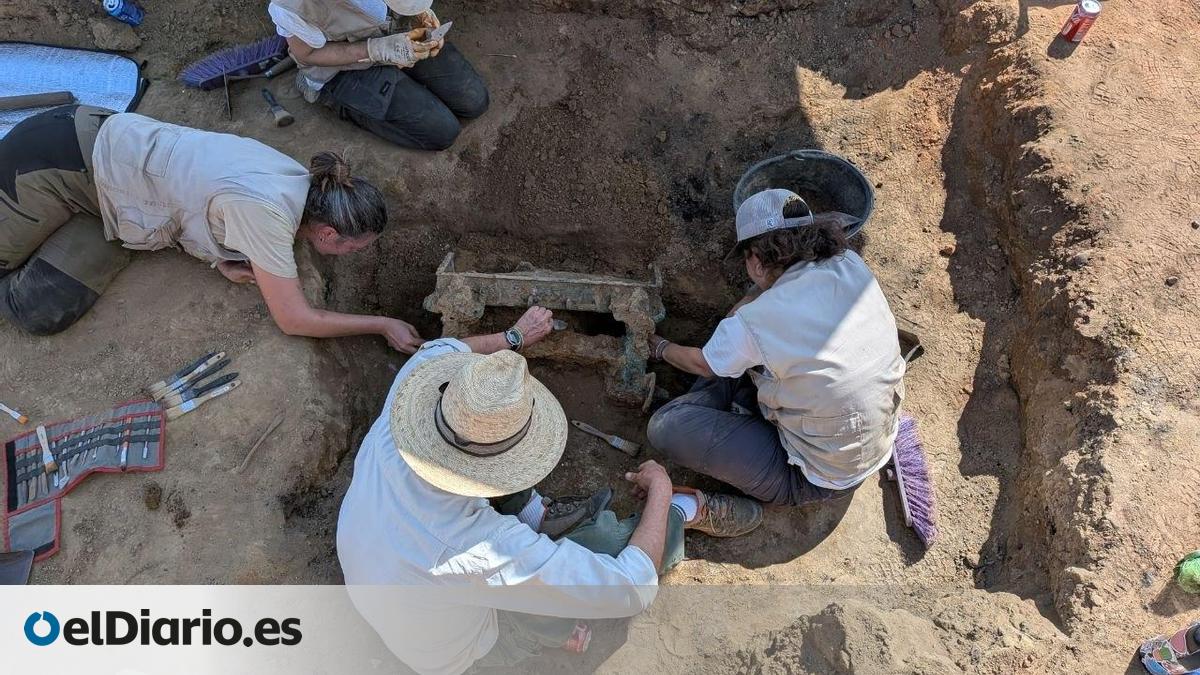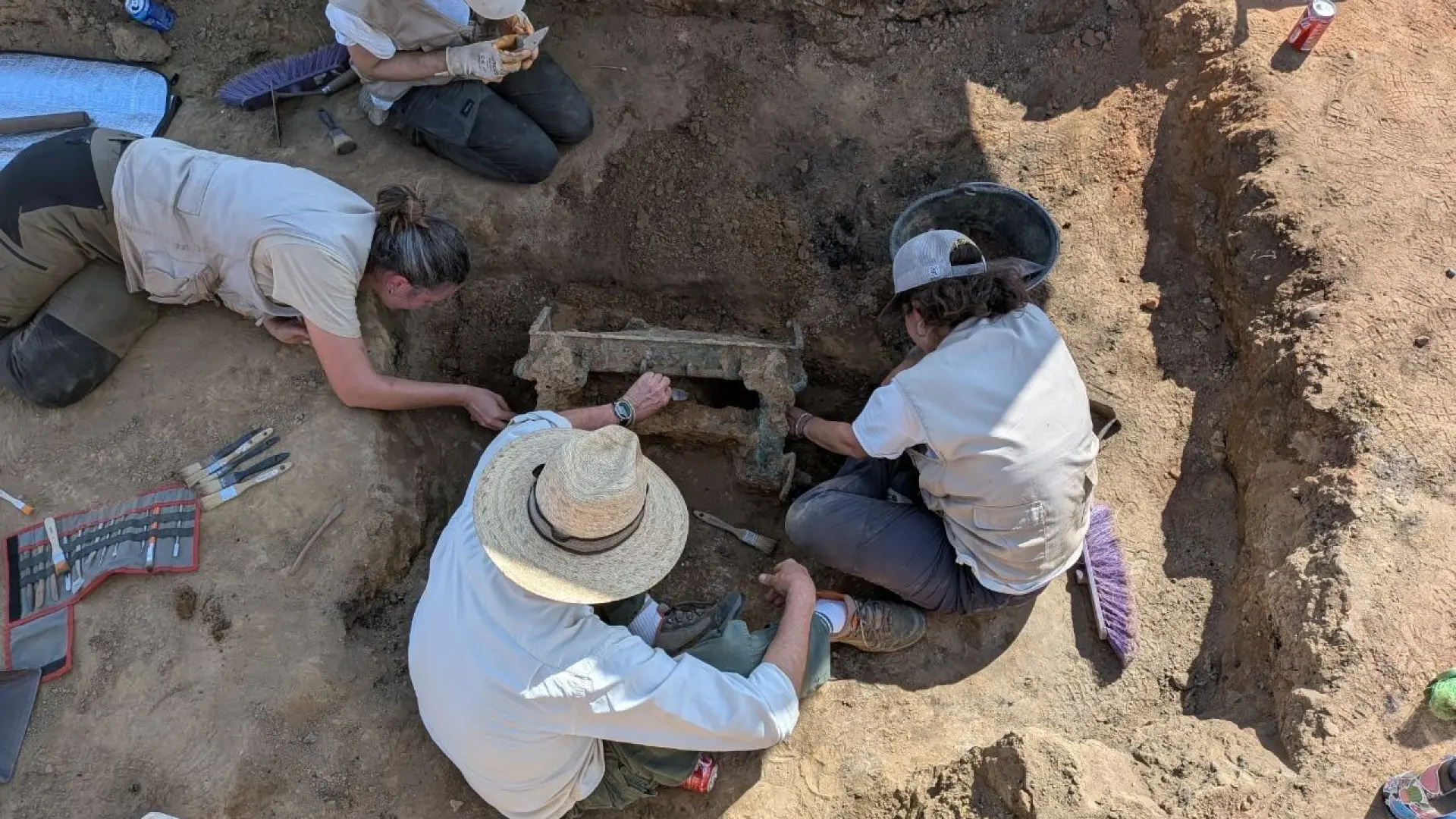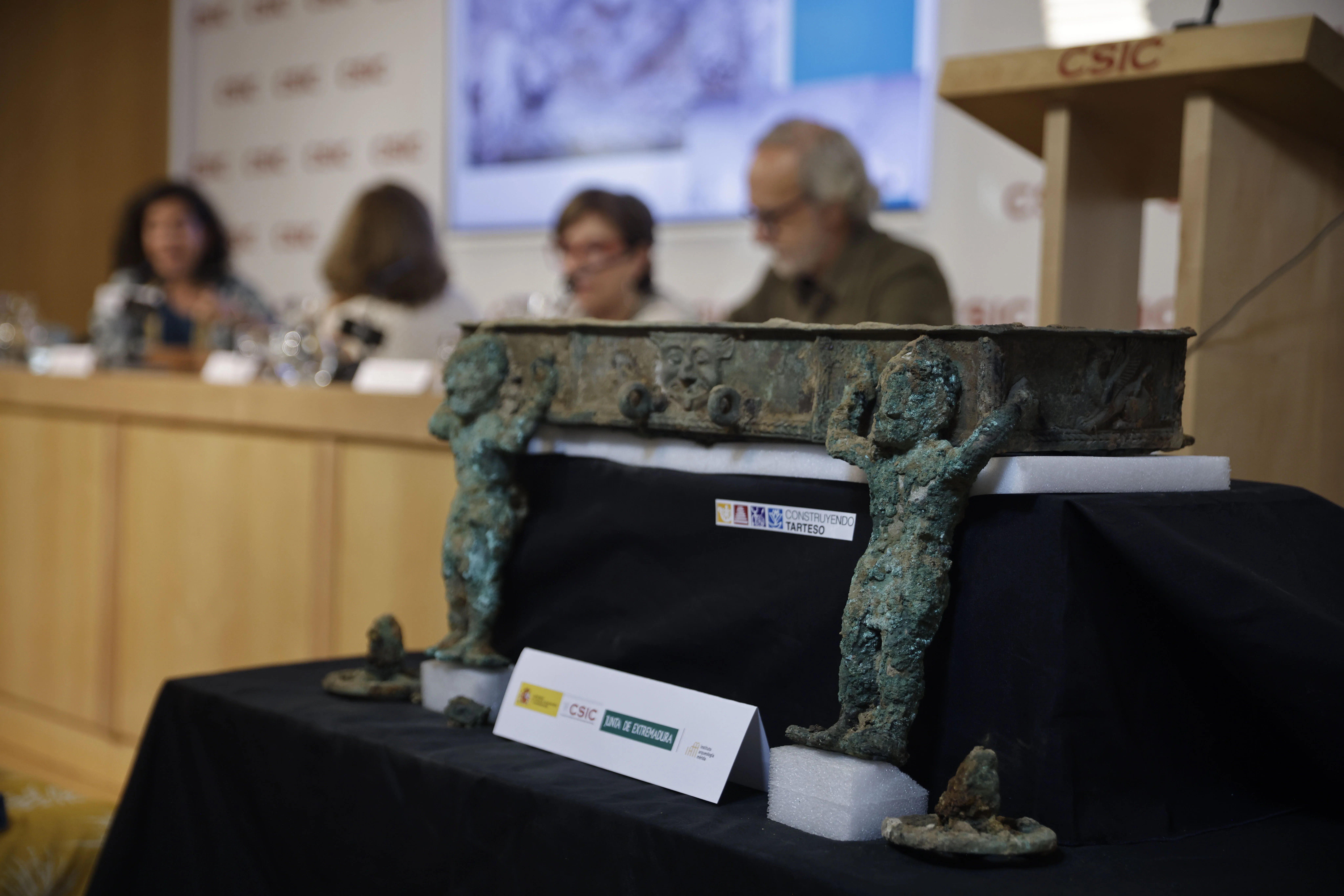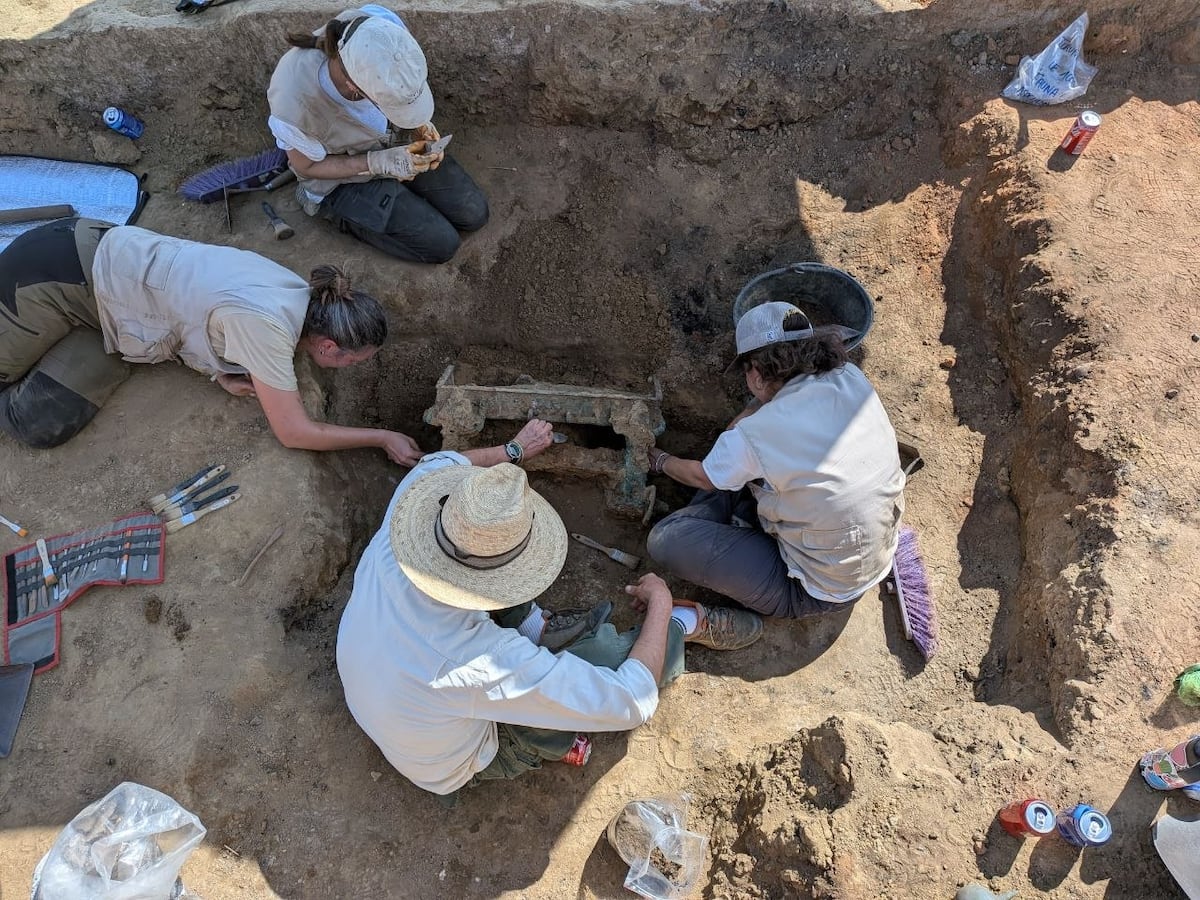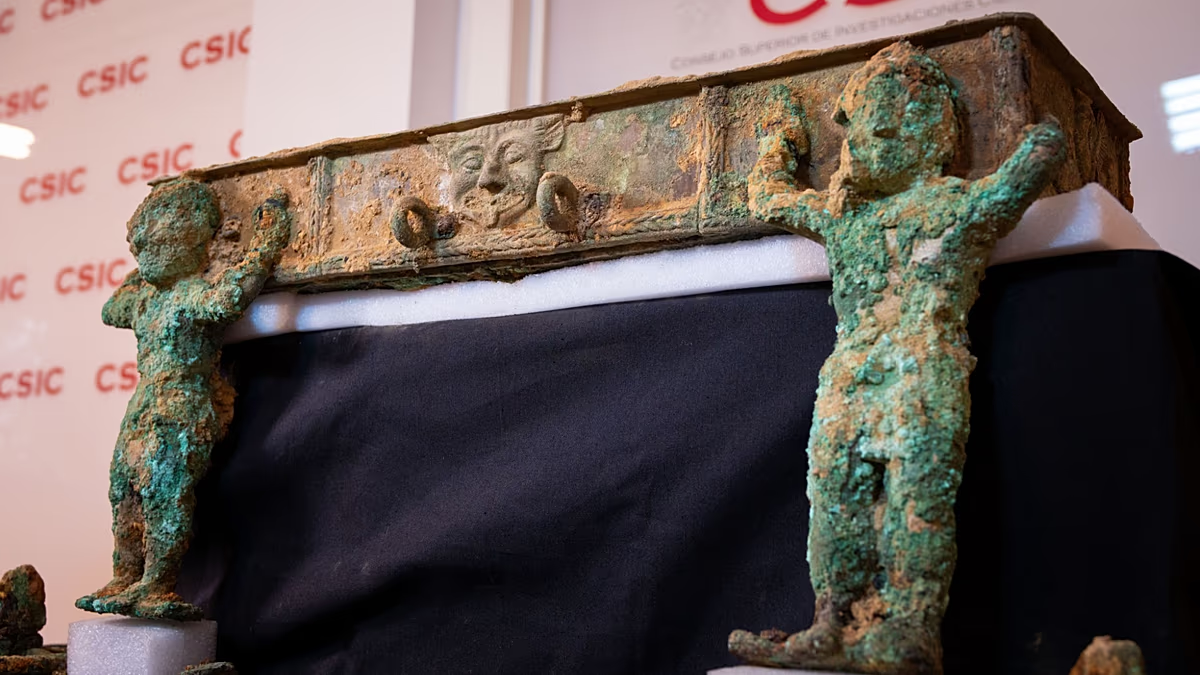
Inside the burial mound of Casas del Turuñuelo, in the Badajoz town of Guareña, in the Vegas Altas del Guadiana region, the eighth excavation campaign of the Construyendo Tarteso project has brought to light a bronze chariot with no known equivalent in the Iberian Peninsula.
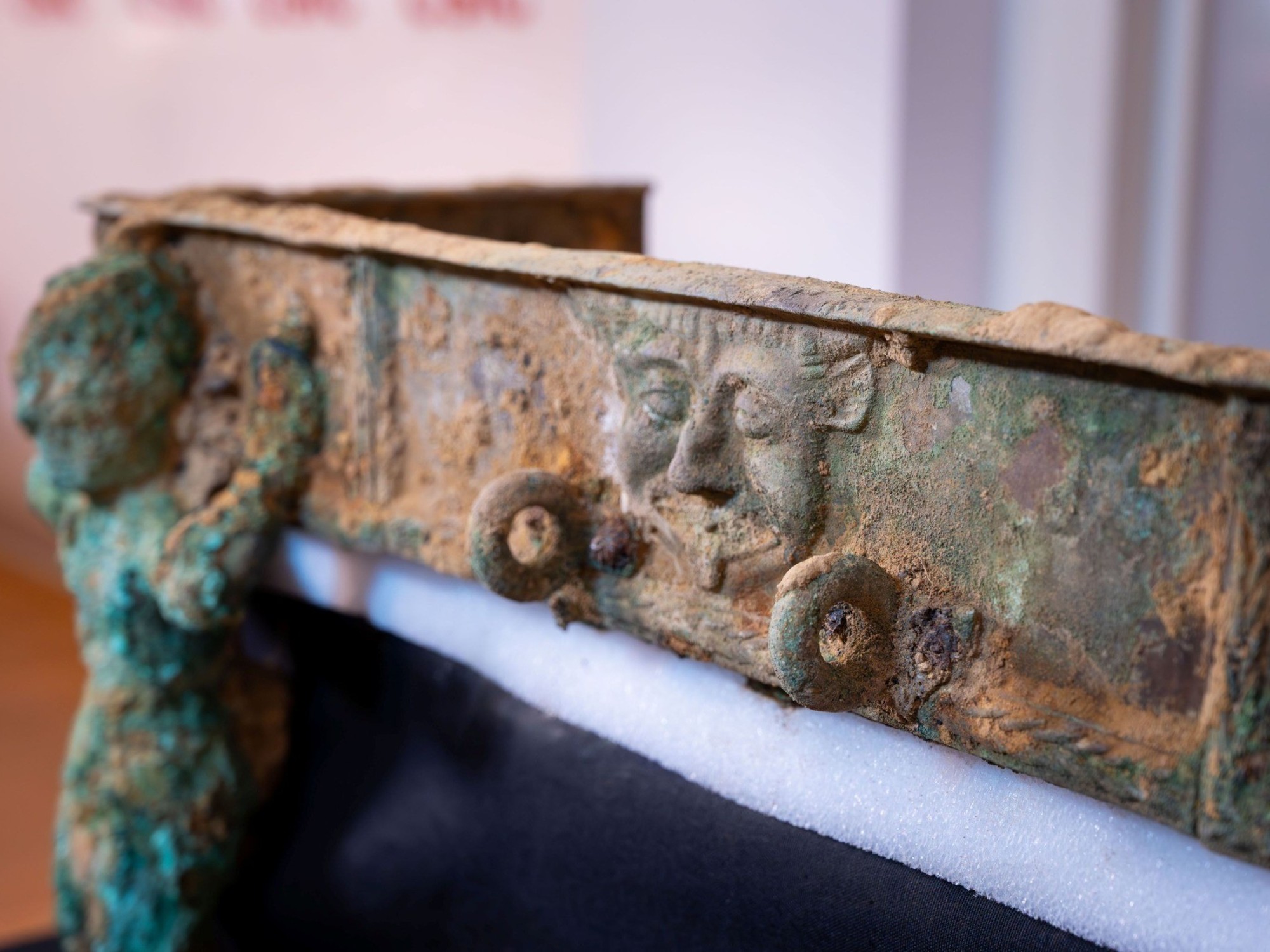
The piece has a box decorated with figures in relief: on the front, Achelous, a river deity associated with the underworld; on the sides, two griffins with eagle heads and lion bodies; and at the ends, two human figures with raised arms supporting the whole structure, which rests on two similarly ornamented wheels.
"It is one of the most significant finds made to date at this Tartessian site," emphasised Esther Rodríguez, co-director of the excavations.
The piece was recovered in the southern sector of the main building, whose excavation began in 2015. The research team from the Institute of Archaeology of Mérida, a joint centre of the Spanish National Research Council (CSIC) and the regional government of Extremadura, point out that the only documented parallels belong to the Etruscan civilisation, which reached its peak in central Italy between the 8th and 5th centuries BC.
This supports the hypothesis that the object reached the south-west of the peninsula via the same exchange networks that linked Tartessos with the rest of the Mediterranean. As for its function, co-director Sebastián Celestino suggested that it may be associated with feasting rituals: the chariot was found next to the room where the Turuñuelo community is thought to have held a final banquet before deliberately sealing the building at the end of the 5th century BC.