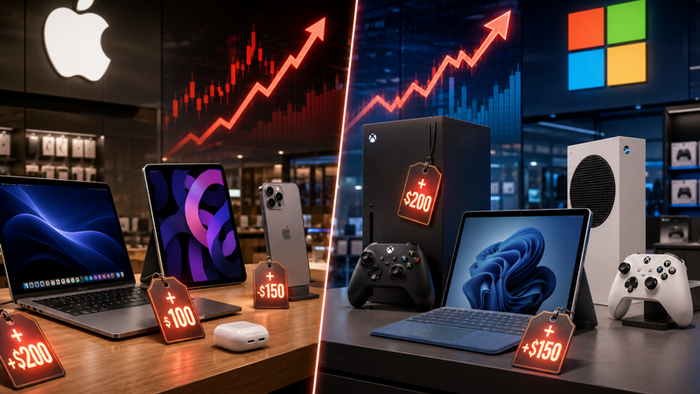
Consumers may not want to upgrade their laptops, tablets or game consoles anytime soon.Many major electronics brands have recently announced significant price hikes on their products. Apple this month raised prices on MacBooks and iPads, some by as much as $300, due to price increases in memory and storage chips. The one-terabyte MacBook Pro jumped from $1,699 to $1,999, while the entry-level MacBook Neo rose from $599 to $699. Microsoft, on the same day, announced it would raise the price of Xbox game consoles by $150-$200 in August due to memory and console storage prices, depending on the model. Nintendo also said in May the price of its Nintendo Switch 2 game console will increase in September from $449.99 to $499.99, blaming “changes in market conditions.”
These price hikes come as the memory chip industry lacks sufficient supply to meet demand from companies building AI data centers, according to a report from the Deutsche Bank Research Institute.
“For every wafer devoted to [high-bandwidth memory] stacks for AI servers, others are unavailable for smartphones, PCs or vehicles,” the researchers wrote. “And because the shortage will reverberate across key economic systems well beyond AI — hurting the average consumer via memory-cost inflation — memory chips have transitioned from a pure commodity to a distinctly macroeconomic variable.”