Japan’s industrial production climbed in April, snapping a two-month losing streak as manufacturers found ways to work around the supply chain chaos unleashed by the Iran war. Output rose between 0.5% and 0.8% month-on-month, a meaningful reversal from March’s 0.5% decline and February’s steeper 2.0% drop.
For a country that sources roughly 90% to 95% of its crude oil from the Middle East, with the Strait of Hormuz serving as the critical chokepoint for those imports, any sign of manufacturing resilience is worth paying attention to. The government data, released on May 29, painted a broader picture of economic stability: retail sales improved and unemployment ticked down to 2.5%.
The numbers behind the recovery
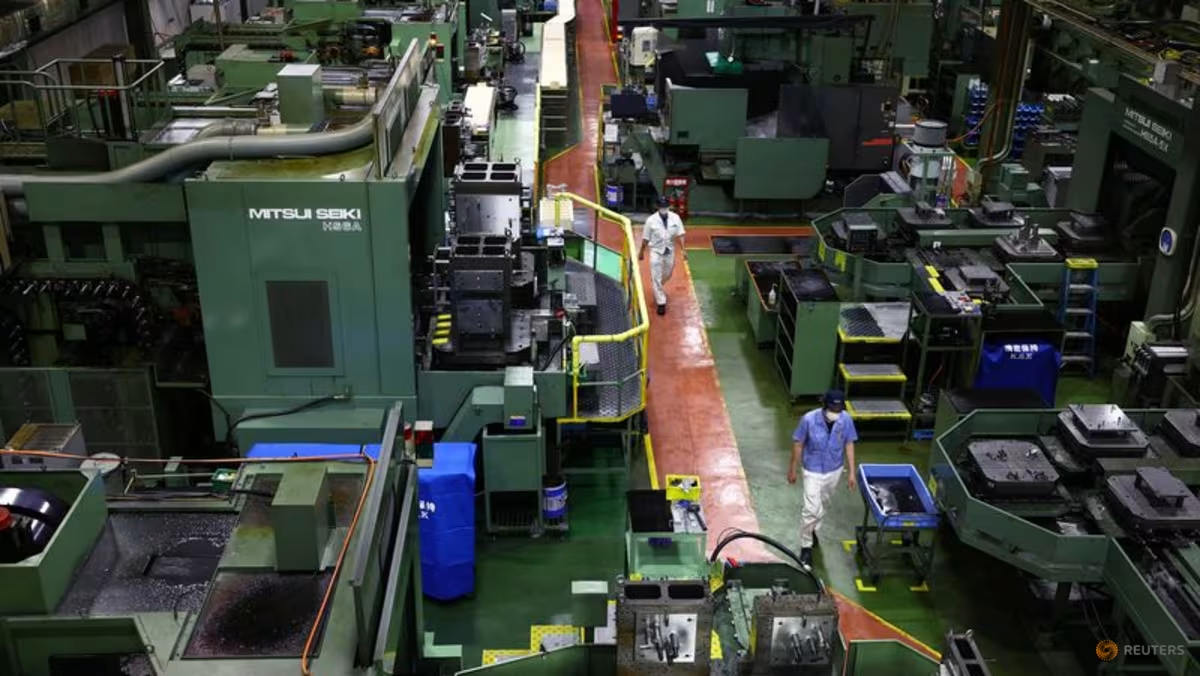
Machinery production drove much of the rebound, suggesting that capital goods demand remains intact despite elevated energy costs.
Other corners of the manufacturing sector are still getting hammered. Polyethylene production fell 27%, and polypropylene output dropped 15%. Both are oil-derived materials, and both shortages are rippling through consumer goods companies. Firms like Mizkan and Calbee, which rely on these plastics for packaging and production inputs, have been caught in the crossfire of a conflict thousands of miles from their factories.