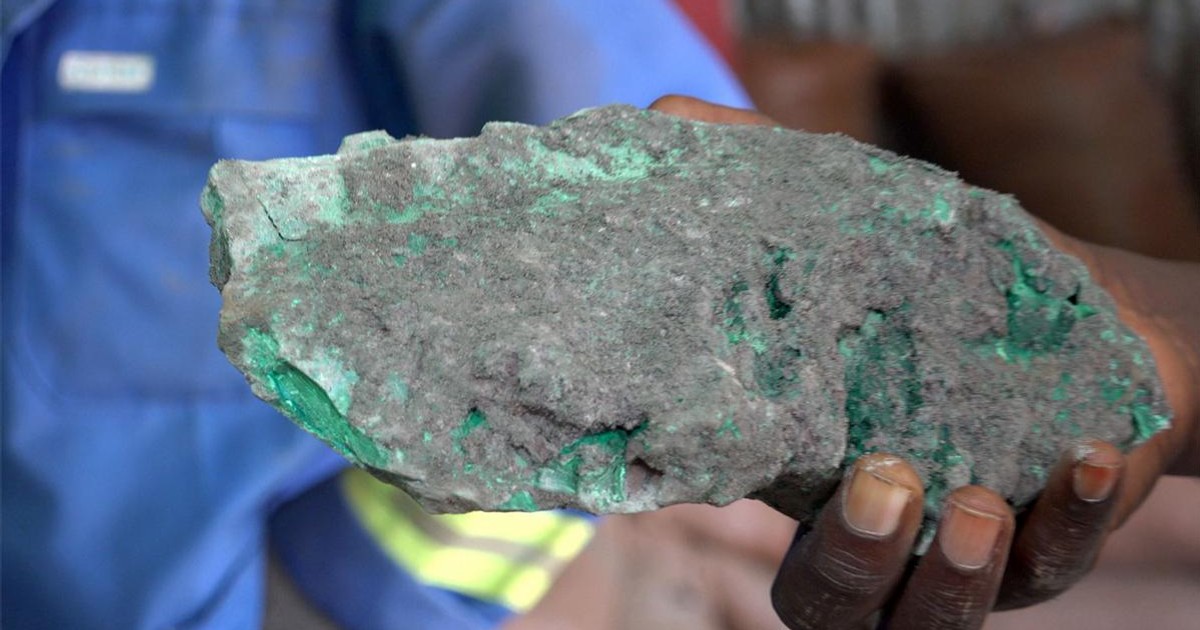
The global push for a transition to green energy has sparked demand for critical minerals such as lithium, vanadium, copper and cobalt. These are needed for electric vehicles, wind turbines and solar panels. Sub-Saharan Africa hosts about 30% of the world's mineral reserves, including huge quantities of critical minerals: 92% of all platinum, 36% of all chromium, 54% of all manganese and 56% of all cobalt.
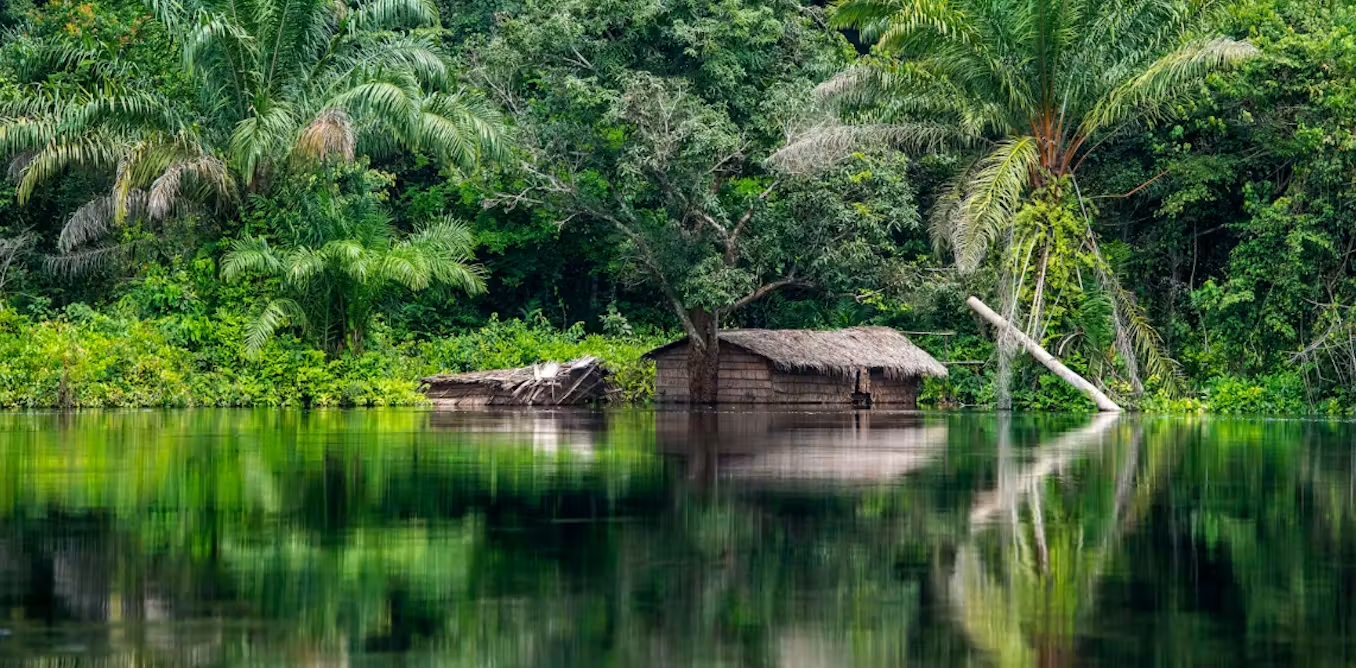
Many critical minerals are concentrated beneath the continent's biodiverse forests.
We are conservation scientists researching the impacts on the environment when resources such as timber, minerals or animal species are extracted and used by people. We have spent years tracking how resource demand can reshape fragile ecosystems.
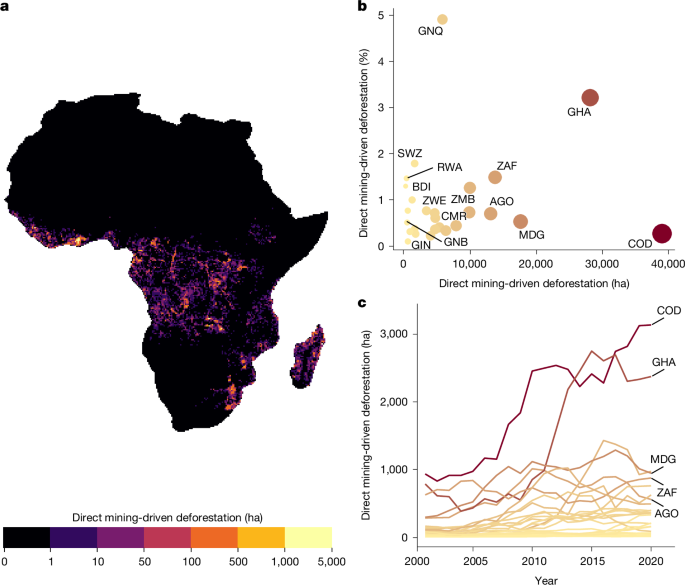
In our most recent study, we set out to track exactly how much forest had been lost because of mining across sub-Saharan Africa over 20 years.
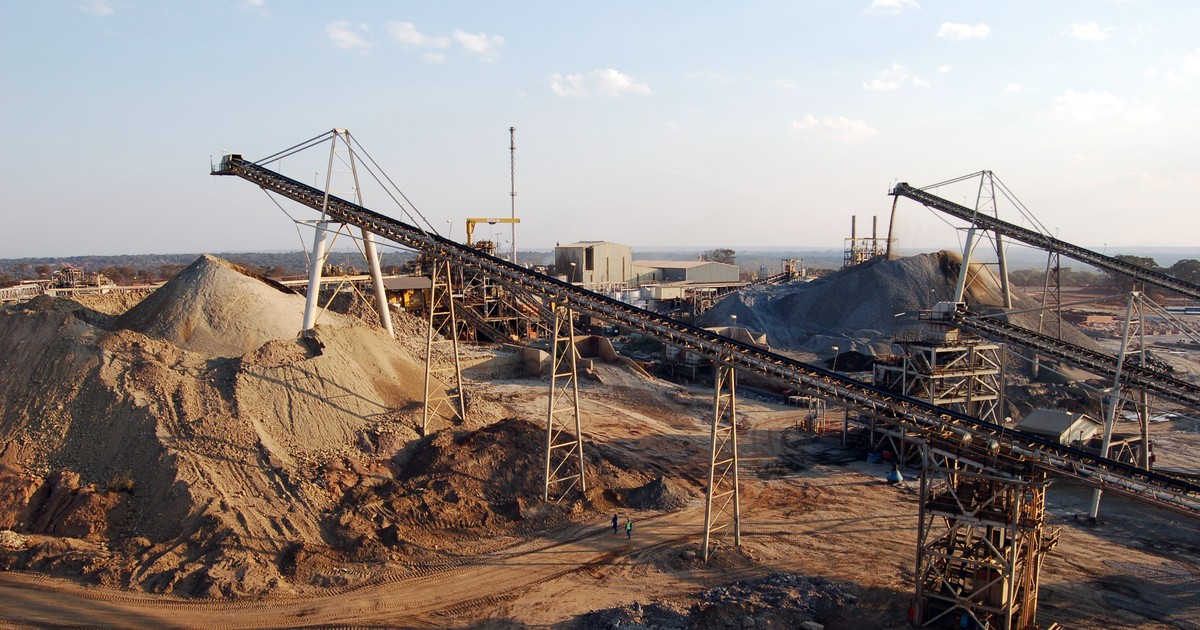
We used satellite data to identify 16,627 mining areas in the region. We tracked what happened to the land surrounding the mines between 2001 and 2020. We then compared places where mining was already taking place with similar areas that had not yet been mined but would be in the future. This allowed us to estimate how much deforestation was caused purely by a new mine setting up, rather than by other factors, such as the expansion of farms.