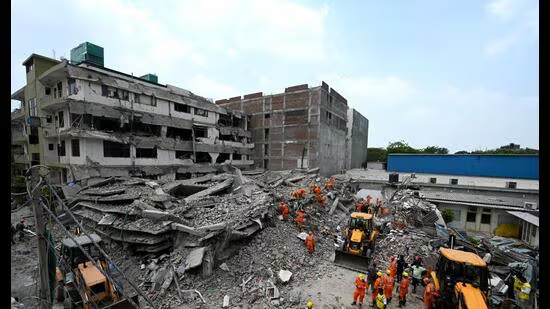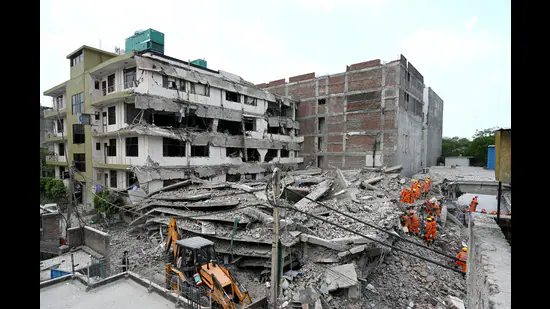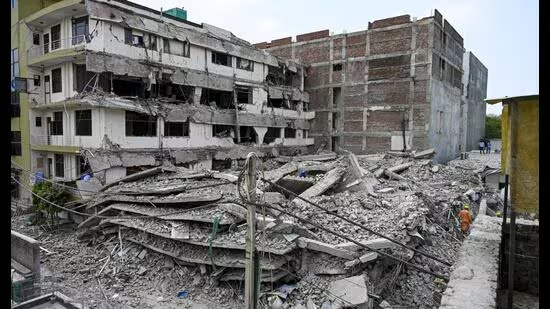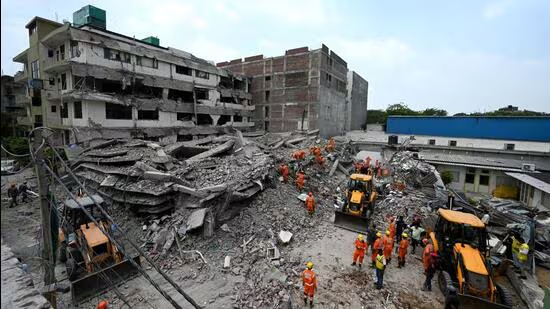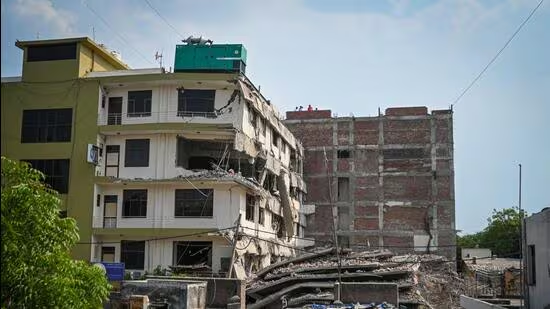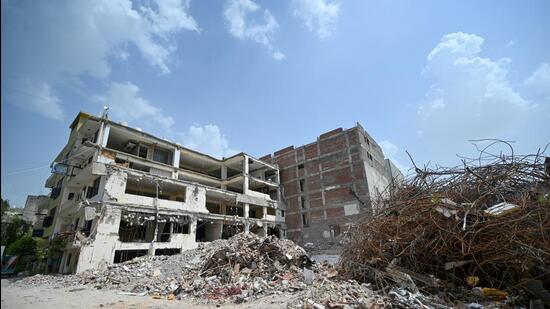
A month after a six-storey building in south Delhi’s Saidulajab village collapsed, killing six people and trapping more than 15 others beneath the rubble, the narrow lane where the building was located still bears the imprint of the tragedy.The Saidulajab site nearly one month after the building collapsed. (Sanchit Khanna/HT Photo)Mounds of debris, twisted iron rods, broken furniture and damaged personal belongings still lie where rescuers spent more than two days searching for survivors. Around them stand rows of tightly packed multi-storey buildings, many still occupied despite the recent disaster.The six victims were Ravi Prakash (26), a doctor; Ekta (23); BTech graduates Kapil (26), Alok Verma (23) and Nalin Rai (23); and Parvati Ojha (39), who ran a small eatery. Police suspect the building’s weak foundation, coupled with multiple violations during an illegal expansion, caused the collapse.The two neighbouring four-storey buildings, which housed multiple offices, eateries, sports centres and coaching institutes, now stand sealedand vacant. But just a few lanes away, coaching centres, libraries, eateries and offices continue to function in similar five- and six-storey buildings.“Alok was my friend. We went to the same coaching centre,” said Devesh Rai, a BTech student who lives in a nearby [aying guest accommodation. “My parents still worry every time they hear about another fire or building collapse. I met Alok’s family after the incident. They still haven’t come to terms with his death. For a while, authorities searched buildings and promised action. Libraries and coaching centres shut briefly. Now everything is running again as if nothing happened. My parents simply ask me to stay safe.”Students said the fear has not gone away.“Our classes stopped for a week and later shifted to another four-storey building,” said NEET aspirant Niharika Sharma. “We still feel scared because it’s the same kind of building, without fire exits or proper safety measures.”HT found at least one ground-plus-six-storey building housing a coaching centre and co-working space that had neither been sealed nor inspected.A tenant there said they had spent heavily on interiors, wiring and fire safety equipment but remained anxious because the landlord lacked proper documents. “For one floor, we are paying a rent of ₹4.5 lakh a month. We invested in the best layout and furniture, upgraded the electrical system, installed branded wiring and meters, and ensured all fire safety equipment was in place. We’re afraid, but what can we do? Our investment is all here.”THE PROBEPolice have approached IIT-Delhi for a structural assessment of the site, though the inspection was delayed by administrative clearances. Investigators are also awaiting Municipal Corporation of Delhi (MCD)’s report on why action was not taken despite police flagging unauthorised construction at the property twice — in March and April this year.“We have again sought the MCD’s action taken report, including whether officials inspected the property, stopped the construction or booked the owner,” said a senior officer.Besides 71-year-old owner Karamveer Singh, police have arrested builders Avinash Gupta and Manish Khatri for allegedly carrying out unauthorised construction without the required permissions or structural audit. Soil and construction samples have been collected for forensic analysis and will be examined after IIT-Delhi submits its findings, an investigator said.Police will also question the owner’s brothers because the land remains in their late father’s name. Investigators said Karamveer was arrested after records showed the electricity connection was in his name and he had been collecting rent from the property.For the victims’ families, however, little has changed.Parvati Ojha, who ran the eatery “Aunty Ka Paratha”, is survived by her husband and two children.“The area is still the same. Illegal eateries, cloud kitchens, coaching centres and libraries continue to operate,” said her son-in-law, Aniket. “The government is still playing with people’s lives. We were called for meetings, even with the chief minister, but we still haven’t received compensation. She was the breadwinner. Who will help us now?”
A month after Saidulajab collapse, risky buildings stay open in locality
One month after a building collapse in Delhi killed six, debris remains. Families demand action against illegal constructions, fearing further tragedies. | Latest News Delhi
637 words~3 min read