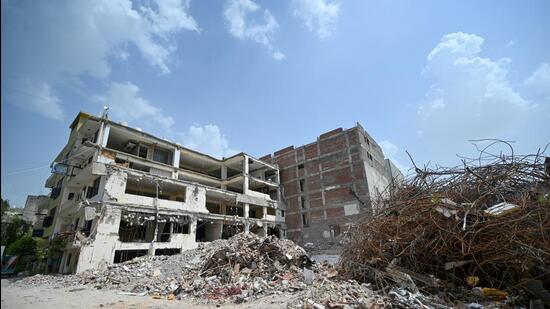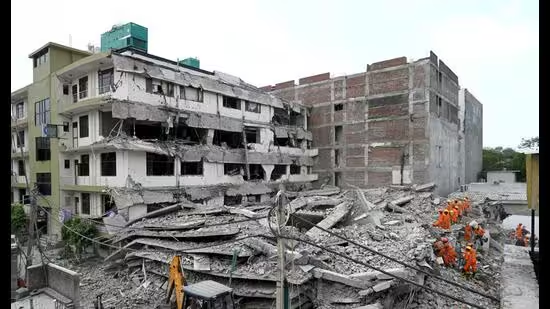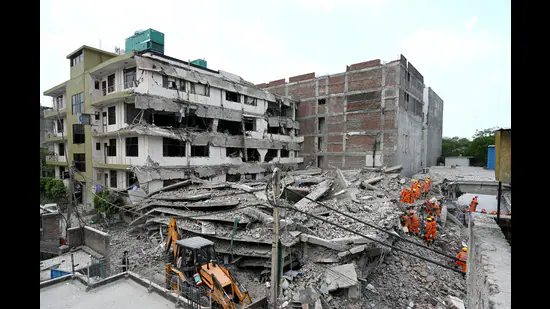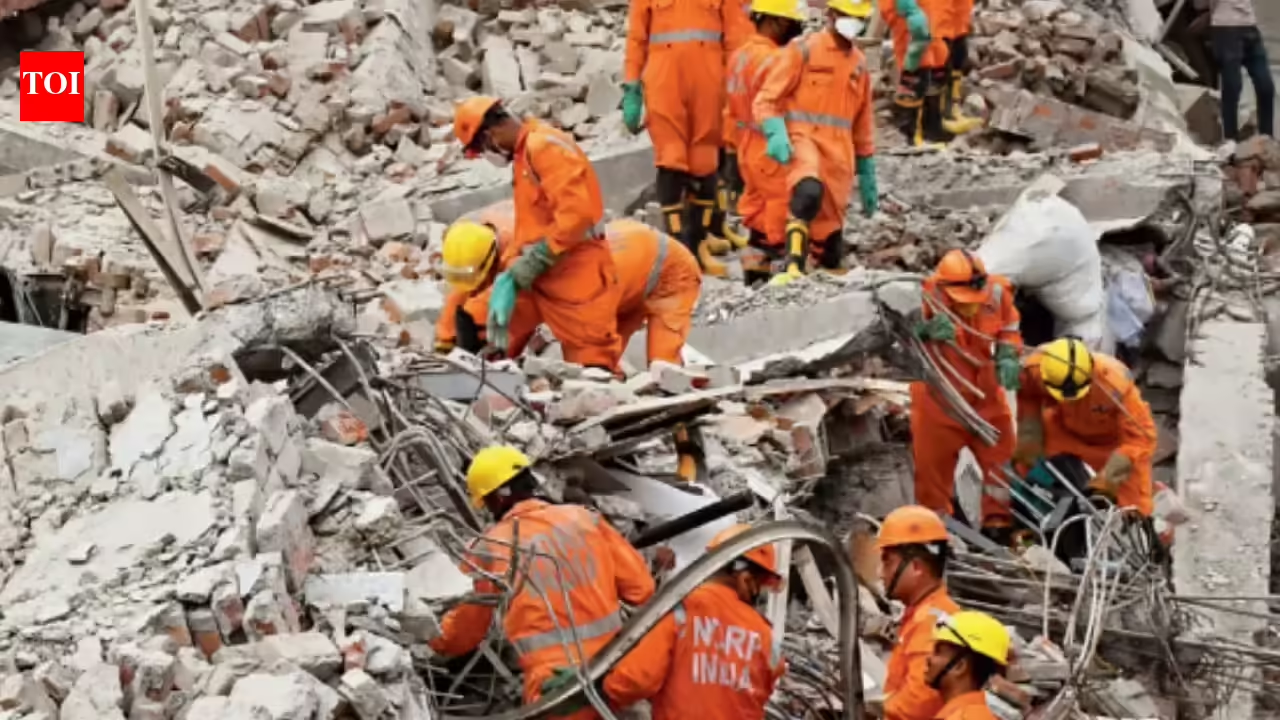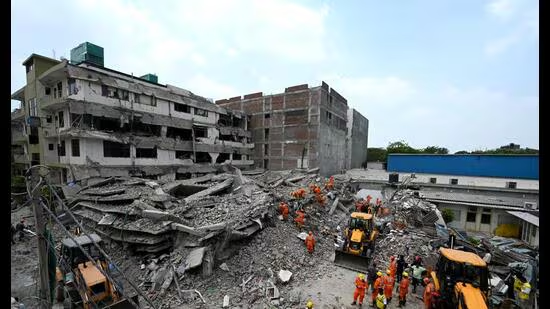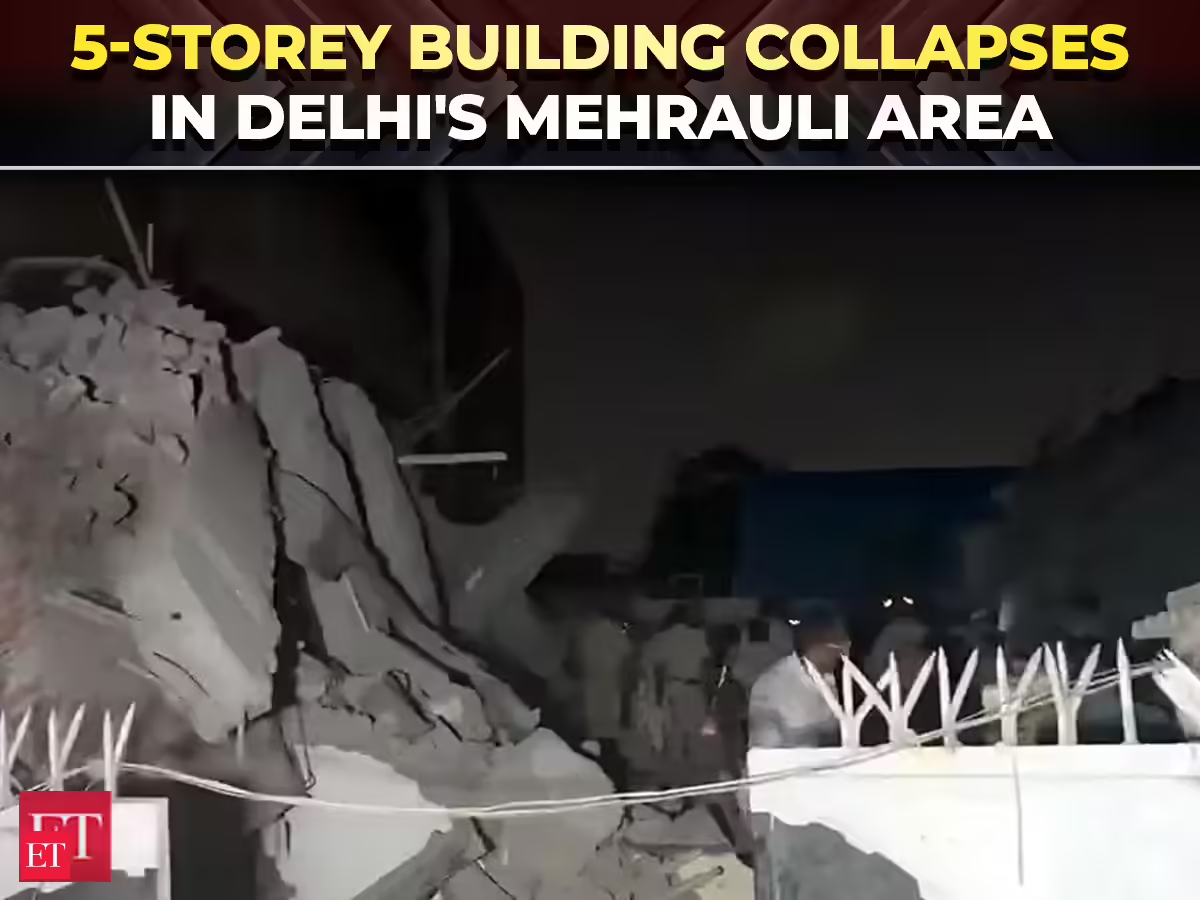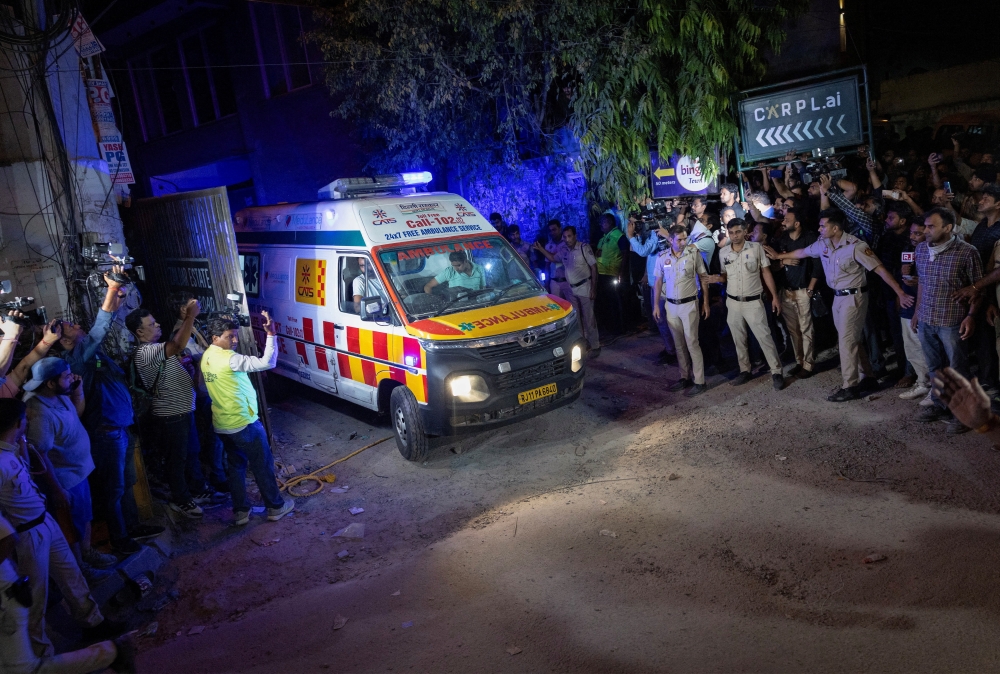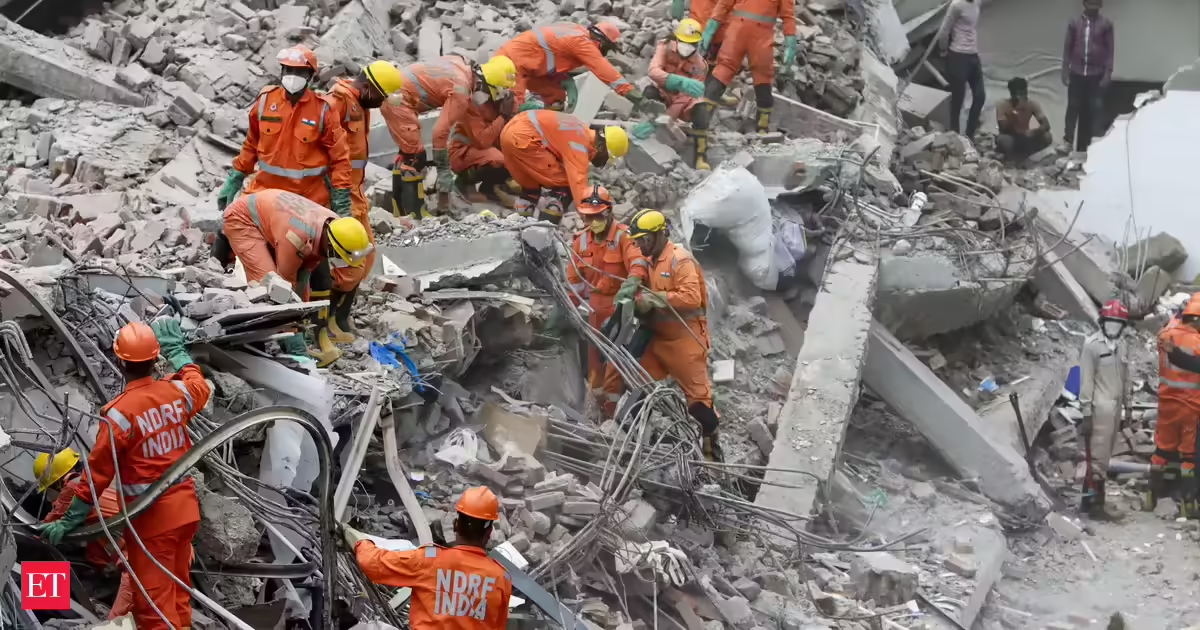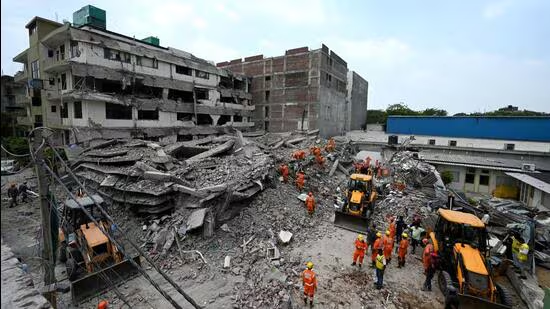
The collapse of a building in Saidulajab on Saturday, which killed at least six people, is not an isolated accident. Experts, officials and past records suggest it is a manifestation of a much larger crisis unfolding across Delhi, where hundreds of unauthorised colonies and urban villages are dotted with buildings that flout norms, leaving millions of people vulnerable to disaster in the very houses they live in.NDRF team conduct a rescue operation as the building collapsed in Saidulajab, Saket, on Sunday. (Ishant Chauhan/ HT Photo)The six-storey structure, where two additional floors were allegedly being constructed atop an existing building, came crashing down beside a dining mess frequented by postgraduate students, including doctors and engineers. Locals said the building housed offices and co-working spaces on its lower floors, while construction activity was underway above.Also Read: 'He was to come home for holidays': Dreams cut short as Delhi building collapse kills two friendsCivic officials said the structure stood in an unauthorised colony where no new construction should have been permitted in the first place. “There are no approved layout plans or building plans in this area. It is an unauthorised colony that has developed on agricultural land,” a civic official said.In the hours after the collapse, an all-too-familiar script unfolded. The Municipal Corporation of Delhi (MCD) suspended two of its engineers, the Delhi government ordered an inquiry, and the chief minister promised that “strict action will be taken against all unauthorised constructions.”Yet an HT visit showed several similar multi-storey buildings in the area where fresh construction was ongoing. More importantly, Saidulajab is far from an exception. Across Delhi’s unauthorised colonies and urban villages, buildings routinely rise beyond sanctioned limits, often without approved plans, structural audits or adequate foundations.This reality is reflected in the frequency of building collapses in the Capital.Delhi Fire Services (DFS) records show that the department received 76 calls related to house collapses in the first five months of this year – 17 in January, 10 in February, 15 in March, 20 in April and 14 in May. The department recorded 544 such incidents in 2025 and another 464 in 2024. A total of 46 people lost their lives in building collapses between January 2024 and December 2025.In August last year, seven people died when a building collapsed in Jaitpur’s Hari Nagar area. A month earlier, six people, including a toddler, were killed when a four-storey residential structure gave way. In April 2025, 11 people, including four children, died in another collapse.Also Read: Delhi CM orders action following building collapse in SaidulajabPerhaps the most devastating reminder remains the November 2010 Lalita Park disaster in East Delhi, where a five-storey building collapsed, killing 70 people and injuring 77 others. Yet nearly eight years later, the concerned junior engineer was penalised with a fine of only ₹21,000.Urban planners stressed that the pattern has remained largely unchanged despite repeated tragedies.Jagdish Mamgain, former chairman of the works committee in the unified MCD and an urban planning expert, said Delhi’s collapse problem is rooted in a combination of unchecked vertical growth, weak foundations and systemic corruption. “After the Lalita Park collapse, around 3,000 buildings were surveyed and hundreds were found to have weak foundations built on sandy and moisture-laden soil,” he said.“While old illegal structures have repeatedly received protection through regularisation and amnesty measures, new floors continue to be added in connivance with civic officials. In almost every urban village and unauthorised colony, you can find five-, six- and seven-storey buildings standing on rickety foundations,” he said.According to Mamgain, the Saidulajab collapse appears to fit into this broader pattern of incremental and largely unchecked additions to existing structures.Structural safety has been at the centre of multiple court judgments, but hardly anything has changed on the ground. In June 2020, based on high court directives, the three erstwhile municipal corporations fixed a deadline of six months for obtaining a structural safety certificate for high-risk buildings and older structures that came up before seismic provisions were incorporated into Delhi’s building by-laws. But six years later, compliance is minimal.Arpit Bhargava, the petitioner in that case, said he has been fighting this case for almost a decade. “It is a complete failure of the administration. People are losing their lives. In 2019, a five-year action plan was made, but it was never implemented. There are millions of buildings in Delhi, but the corporation doesn’t even have enough empanelled structural engineers. Even the high-risk buildings did not comply with structural safety norms,” he added.Also Read: Delhi building collapse caught on camera: 6 dead, 10 injured so far in incident near Saket metro stationScale of the problemThe Tejendra Khanna Committee, set up in 2006 to look into various aspects of unauthorised construction and misuse of premises in the city, found that 70-80% of structures had violated building norms. Unauthorised colonies and urban villages form the bulk of these unplanned enclaves. The 357 lal dora habitations – named as the British once inscribed them within red lines on maps to separate populated villages from agricultural land – continue to face the challenge of planned urbanisation.In 1957, administrators exempted these spaces from regulation under the Delhi Municipal Act, and six years later, the erstwhile MCD decreed that these areas need not adhere to building regulations. Consequently, lal dora areas remain chaotic and underserved by civic utilities.Mamgain said that in suggestions for MPD-2041, he had submitted to the DDA that out of 5.5 million buildings, barely 200,000 have building plans. In these cases, alterations and additional floors have been made in many instances. “The least MCD can do is ensure the foundations can bear the load of these structures,” he added.A senior MCD official said the scale of illegal construction undertaken without following unified building byelaws is so large that it poses practical problems in ensuring compliance. “In many cases, we issue notices, but people do not respond. If we take harsh actions like cutting power or water supply, it leads to public outcry. The scale of the problem is very large, and this needs a political call and a citywide policy,” he added.
Delhi’s fragile foundation: Repeated house collapse, unchecked expansion of the city
The six-storey structure came crashing down beside a dining mess frequented by postgraduate students, including doctors and engineers. | Latest News Delhi
1,010 words~5 min read