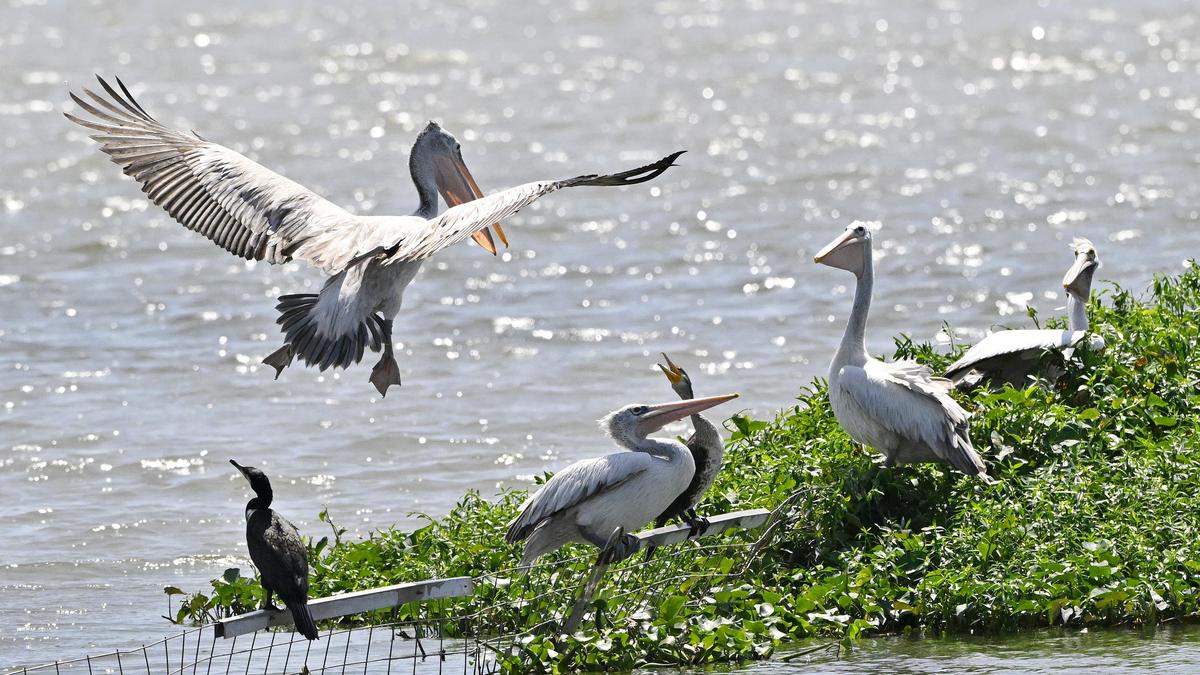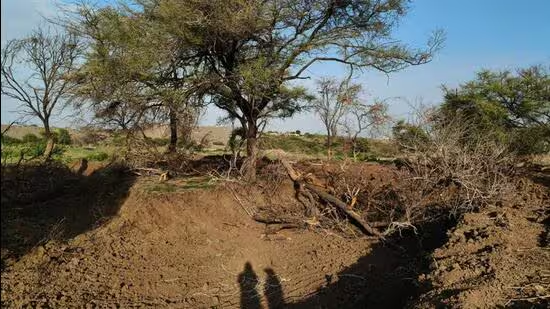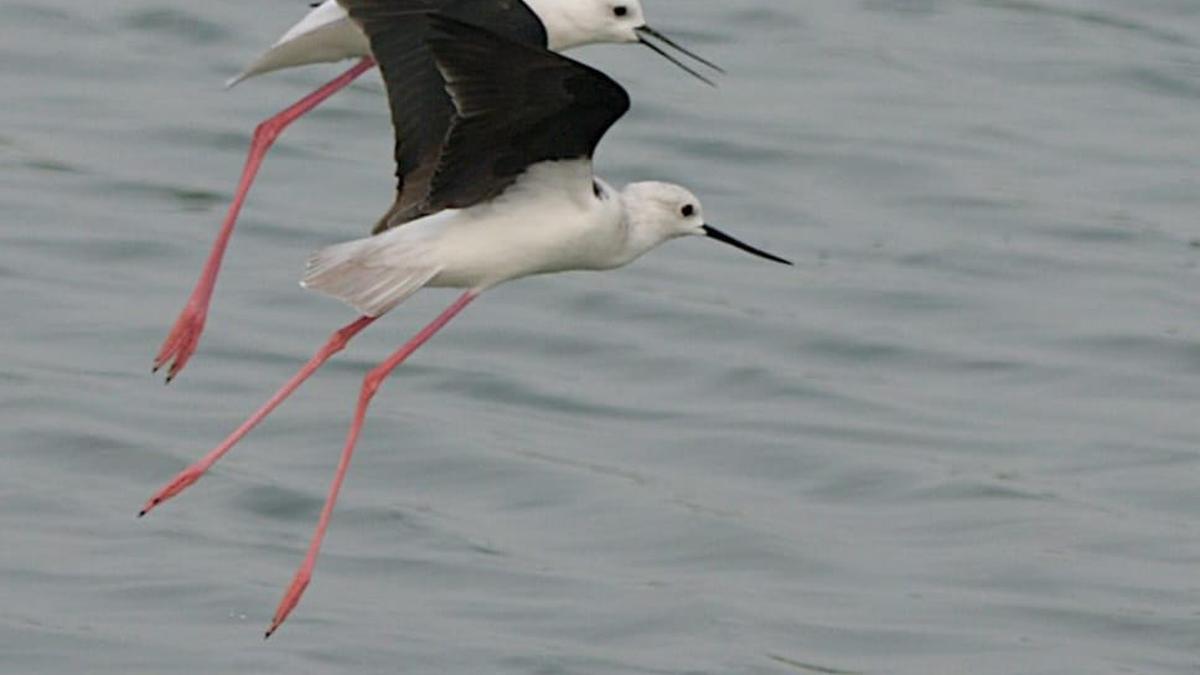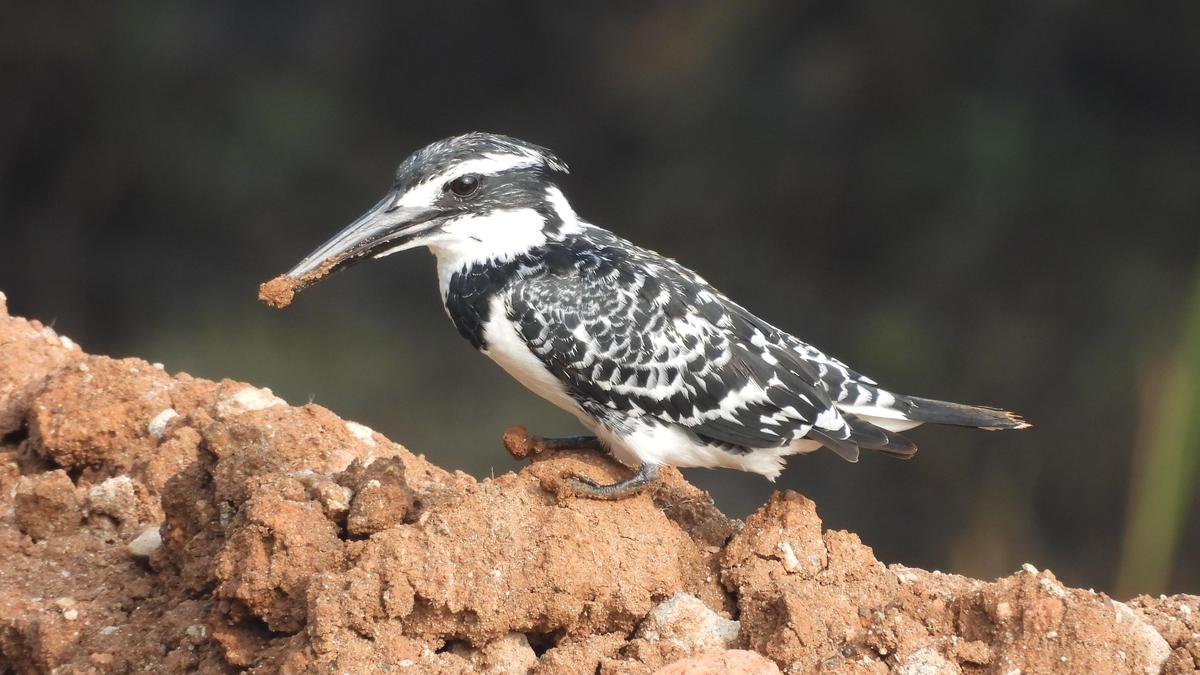
A Pied Kingfisher at Sengulam tank in Coimbatore. A nesting burrow of Pied Kingfisher was found destroyed due to a road work during the survey period.
| Photo Credit: Naveen Kumar S.
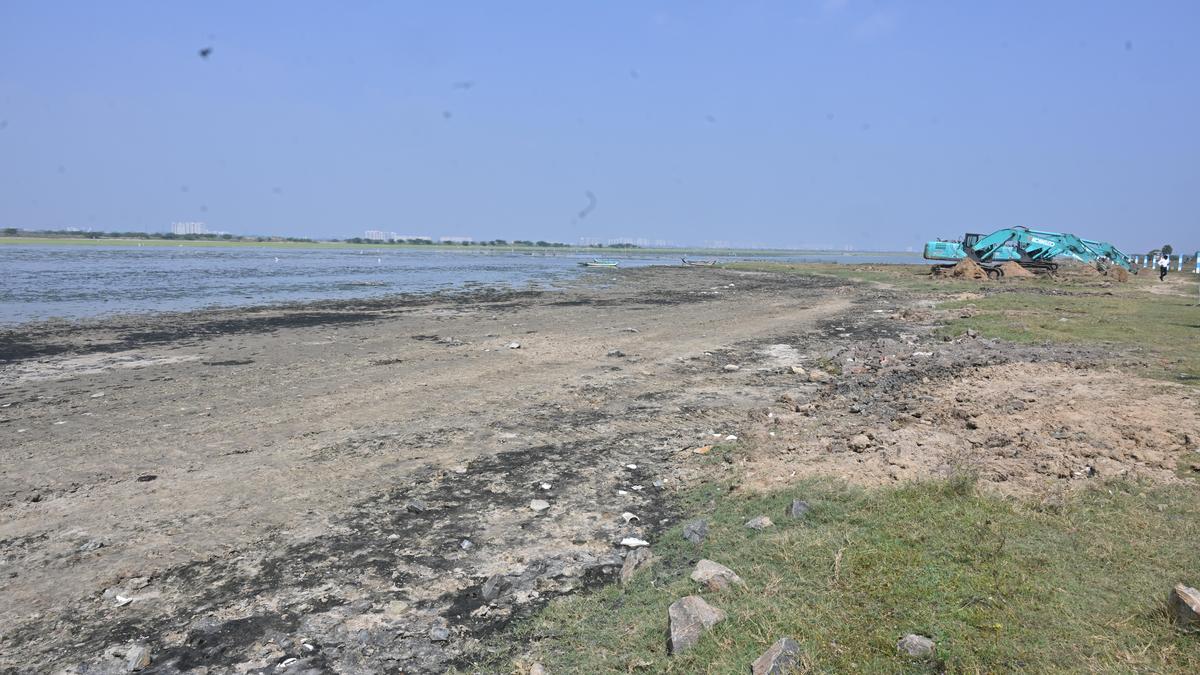
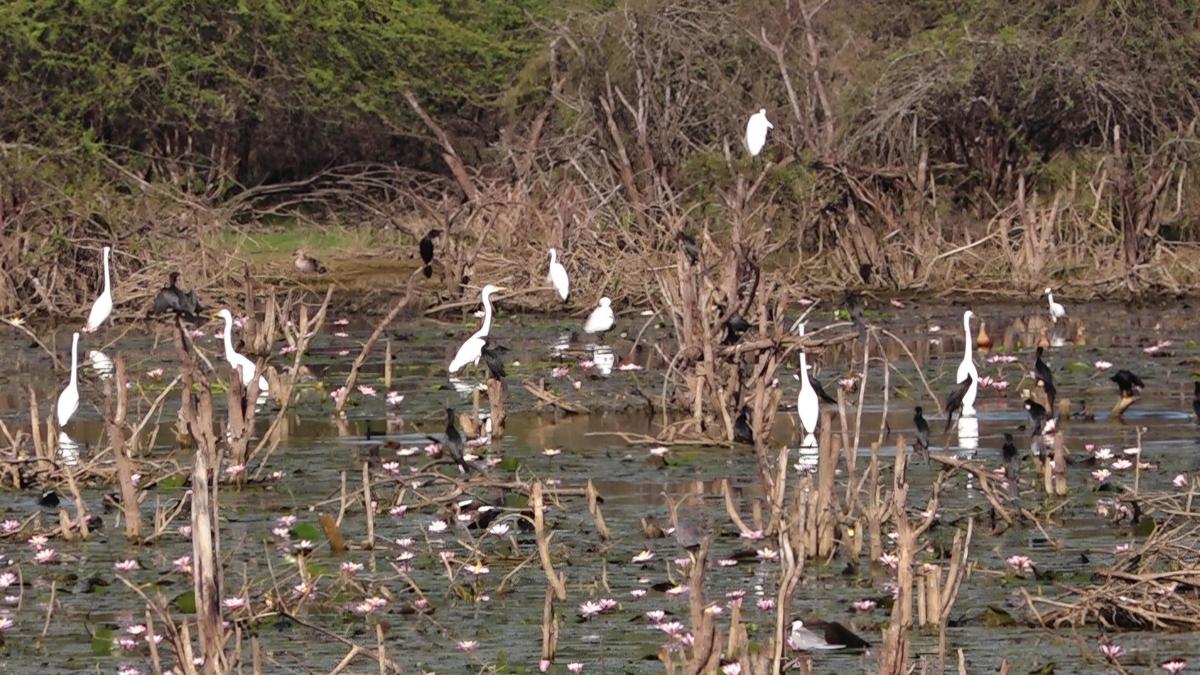
A year-long study of Noyyal river basin tank Sengulam near Kuniyamuthur in Coimbatore has revealed that the urban wetland ecosystem supported 151 species of birds amid mounting anthropogenic pressures.Out of the 151 species recorded from March 2025 to February 2026, 110 were resident birds, 36 winter migrants and five local migrants. A total of 1,600 birds of 119 species were recorded during December 2025 alone.The study team comprising birdwatchers Naveen Kumar S., K. Sureshbabu, S. Ravi Krishna and G.J. Miller from the Coimbatore Nature Society and researchers H. Maitreyi and H. Byju from the Centre of Advanced Study in Marine Biology at Annamalai University recorded birds across seasons through systematic fortnightly surveys, documenting Sengulam both as a year-round habitat and an important seasonal refuge. The findings were published in the journal AgroEnvironmental Sustainability recently.The checklist included birds of conservation importance, namely Indian Roller, Asian Woolly-neck and River Tern, with the latter classified as ‘Vulnerable’ in the IUCN Red List of Threatened Species. Active breeding of Indian Spot-billed Duck, Lesser Whistling Duck, Eurasian Coot, Grey-headed Swamphen, Little Ringed Plover, Indian Grey Hornbill and Coppersmith Barbet were also recorded. According to the team, breeding records are significant as they indicate that a habitat is not merely a stopover, but a functioning reproductive landscape in urban ecology.As per the study, the wetland was facing threats in the forms of untreated sewage, garbage dumping, plastic pollution, invasive water hyacinth choking open water, recreational disturbance, stray dogs and high-decibel events along the bank that alter feeding patterns of bird. These disturbances affect nesting success and displace of migratory birds.The team found that infrastructure development around the tank in the form of road construction, bund modification and removal of vegetation increased human accessibility and habitat fragmentation. A Pied Kingfisher nesting burrow was destroyed during a roadwork. As kingfishers depend on undisturbed earthen banks for nesting, alteration of tank bund could directly eliminate breeding sites.“Maintaining trees and earthen banks for nesting would support habitat specialists like hornbills and kingfishers”, the study notes.Further, installation of streetlights along the edges of the tank may disrupt nocturnal ecological processes and alter bird behaviour.Fed by channels from the Thenkarai anaicut across Noyyal, Sengulam acts as a rare river-link barrage connecting the east-flowing Noyyal to the west-flowing Kumittipathi river, occupying a unique hydrological position, the study highlights. Published - June 29, 2026 07:54 pm IST