River-current turbines can work, but cheap baseload depends on the whole river-to-grid system.
Support CleanTechnica's work through a Substack subscription or on Stripe.
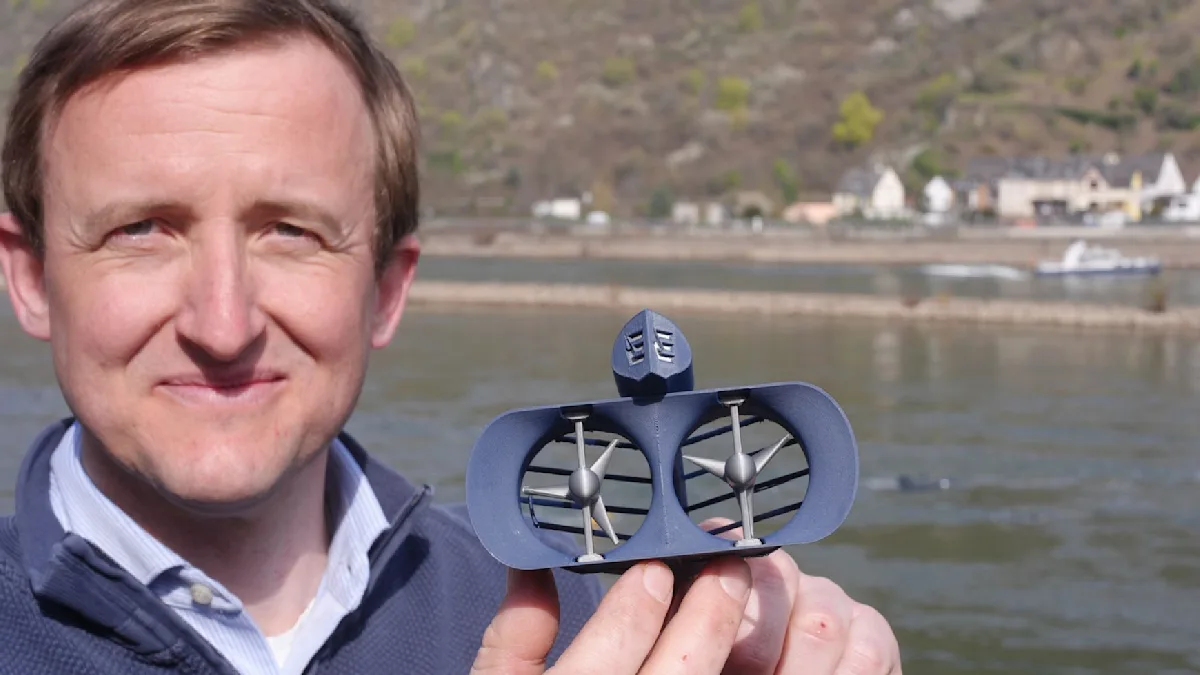
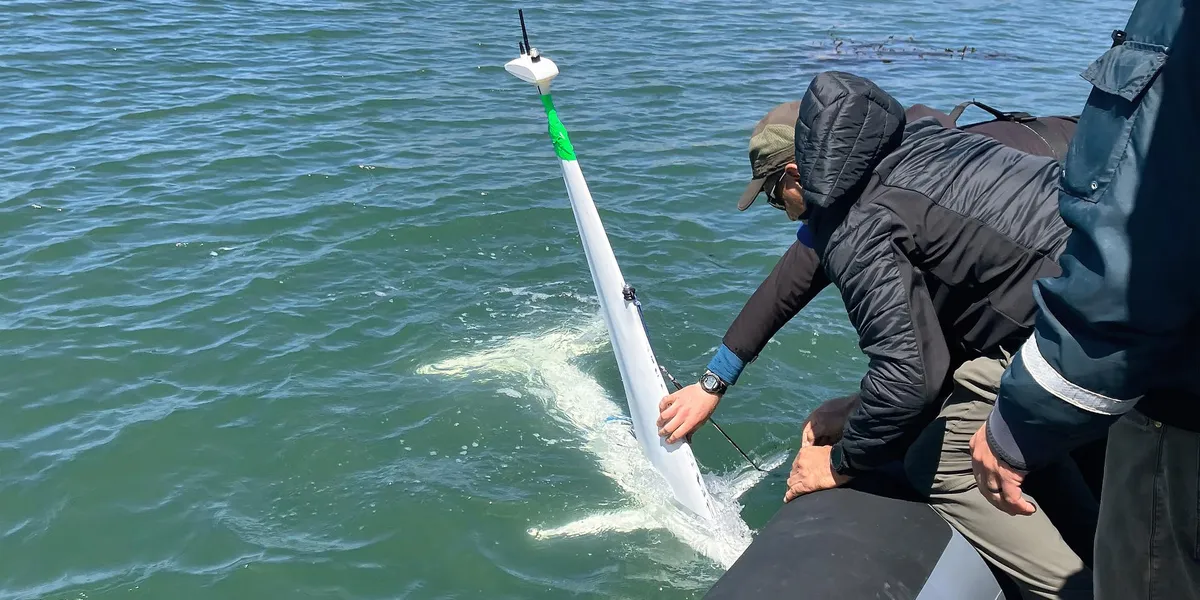
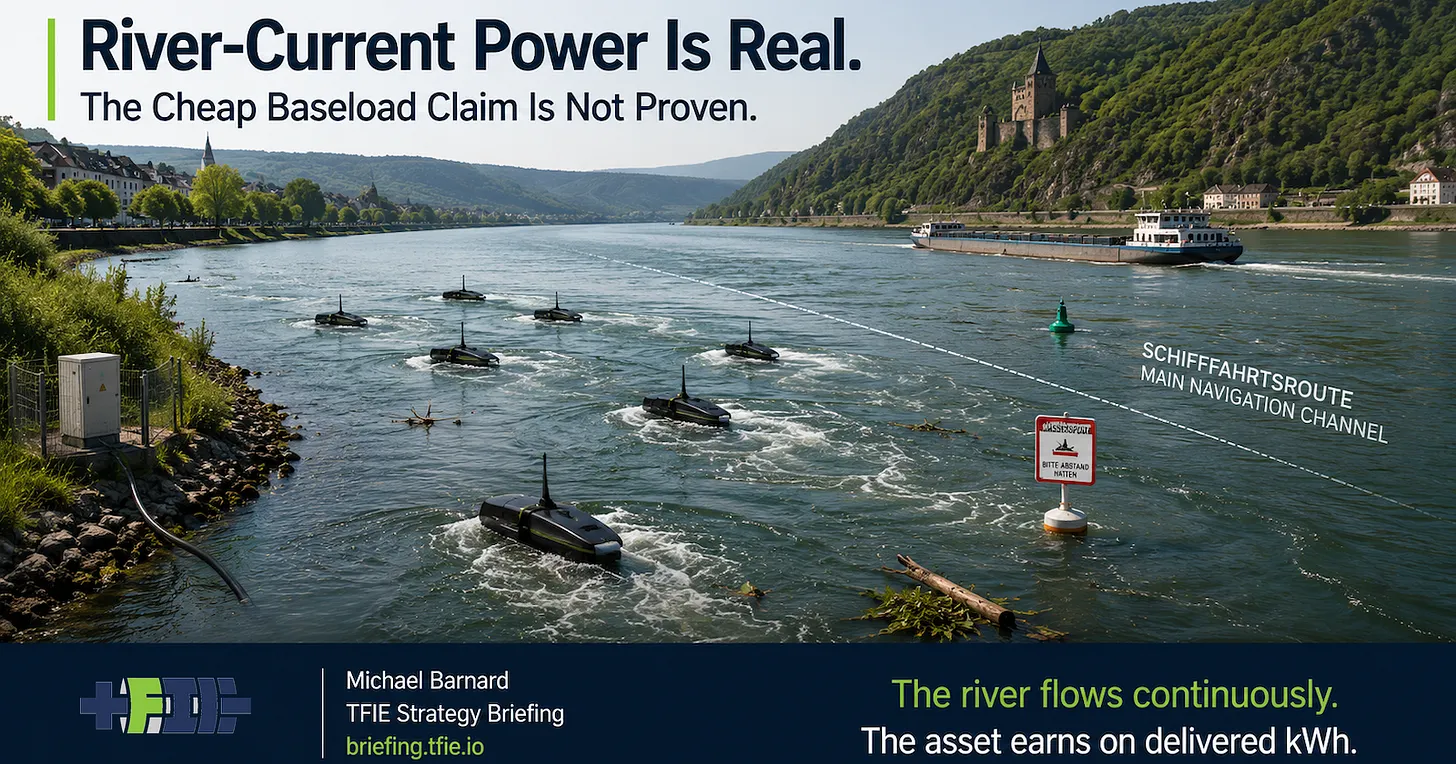
Energyminer has something much better than a rendering. Its Energyfish is a small floating hydrokinetic turbine, mostly underwater, anchored in a river current, sending power to shore through a cable and feeding a land-side power box for grid-compliant electricity. It is not a dam, not a conventional run-of-river hydro plant and not another laboratory device looking for a market. The company has hardware in the water and a first larger project underway on the Rhine.
That makes it worth taking seriously. Energyminer describes each Energyfish unit as about 2.8 meters long, 2.4 meters wide and 1.4 meters high, weighing about 80 kg, with a maximum output of 6 kW and an average output of 1.8 kW. It needs at least one meter of water depth and at least one meter per second of current, with maximum output at about 2.5 meters per second. The company claims roughly 15 MWh per year from one unit, and about 1.5 GWh per year from a 100-unit swarm, enough for roughly 470 households.
The project status is also material. Energyminer says 124 Energyfish units are being installed at St. Goar on the Rhine, which would make it the first swarm power plant of its kind at that scale. German reporting said the first three units had been installed and another 121 were planned, with electricity feeding into the grid. The company also points to a Munich pilot in the Auer Mühlbach, near a conventional hydro plant, as an earlier demonstration site.