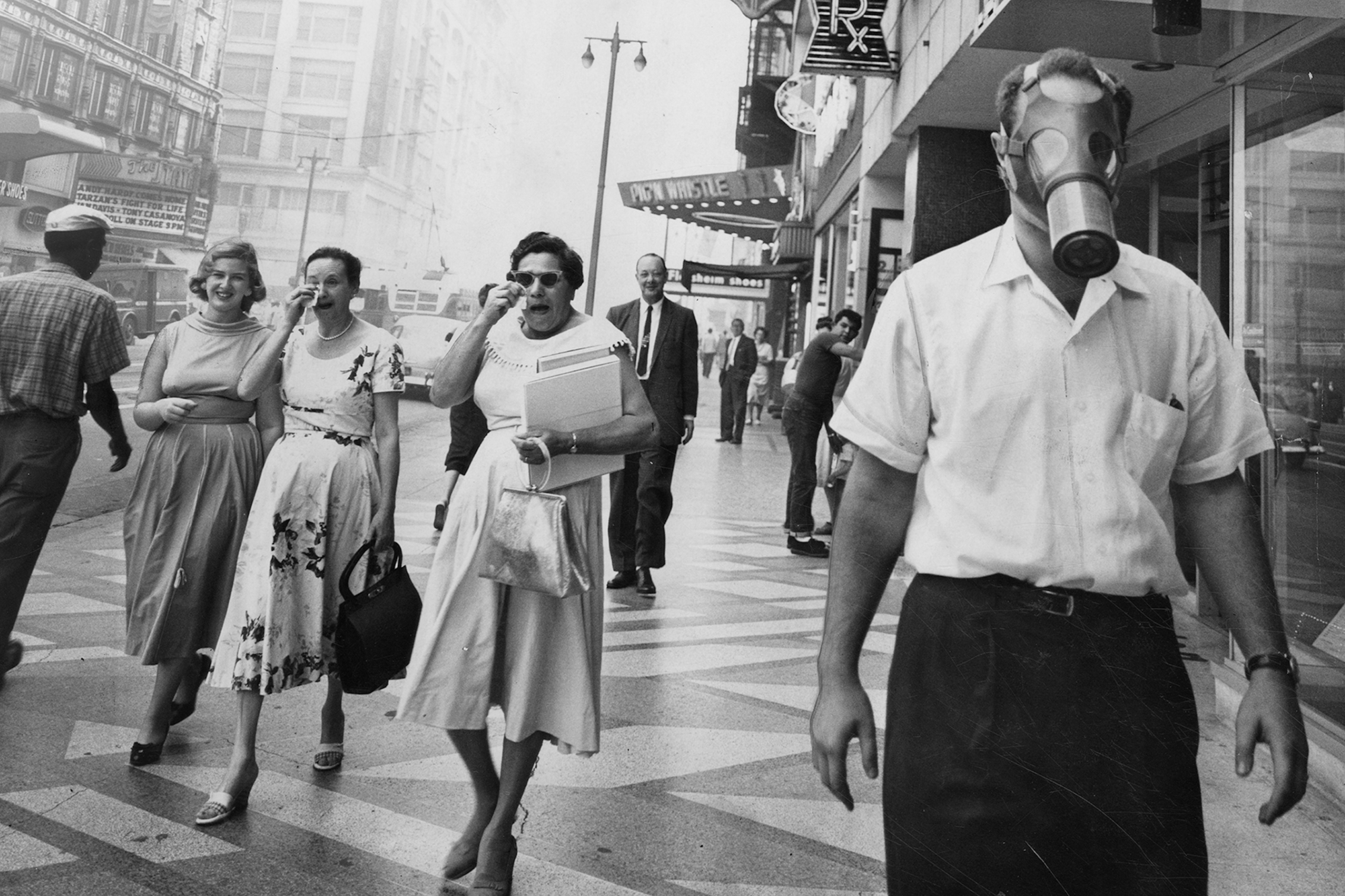
In July 1943, while Americans were invading Sicily and island-hopping across the Southwest Pacific, residents of Los Angeles thought they were targets of a Japanese chemical warfare attack. The air smelled like bleach and corroded rubber tires. Pilots could not see through brown clouds to land their planes safely.
Los Angelenos were indeed victims of a surprise chemical attack, but it was not Japanese. Rather, it was photochemical smog, an attack of their own making. The wartime boom had brought more people, cars, and industry to greater Los Angeles. Tailpipe and smokestack emissions combined with sunshine to brew up thick smog that obscured the sky, gnawed tires, and irritated raspy throats and itchy eyes.
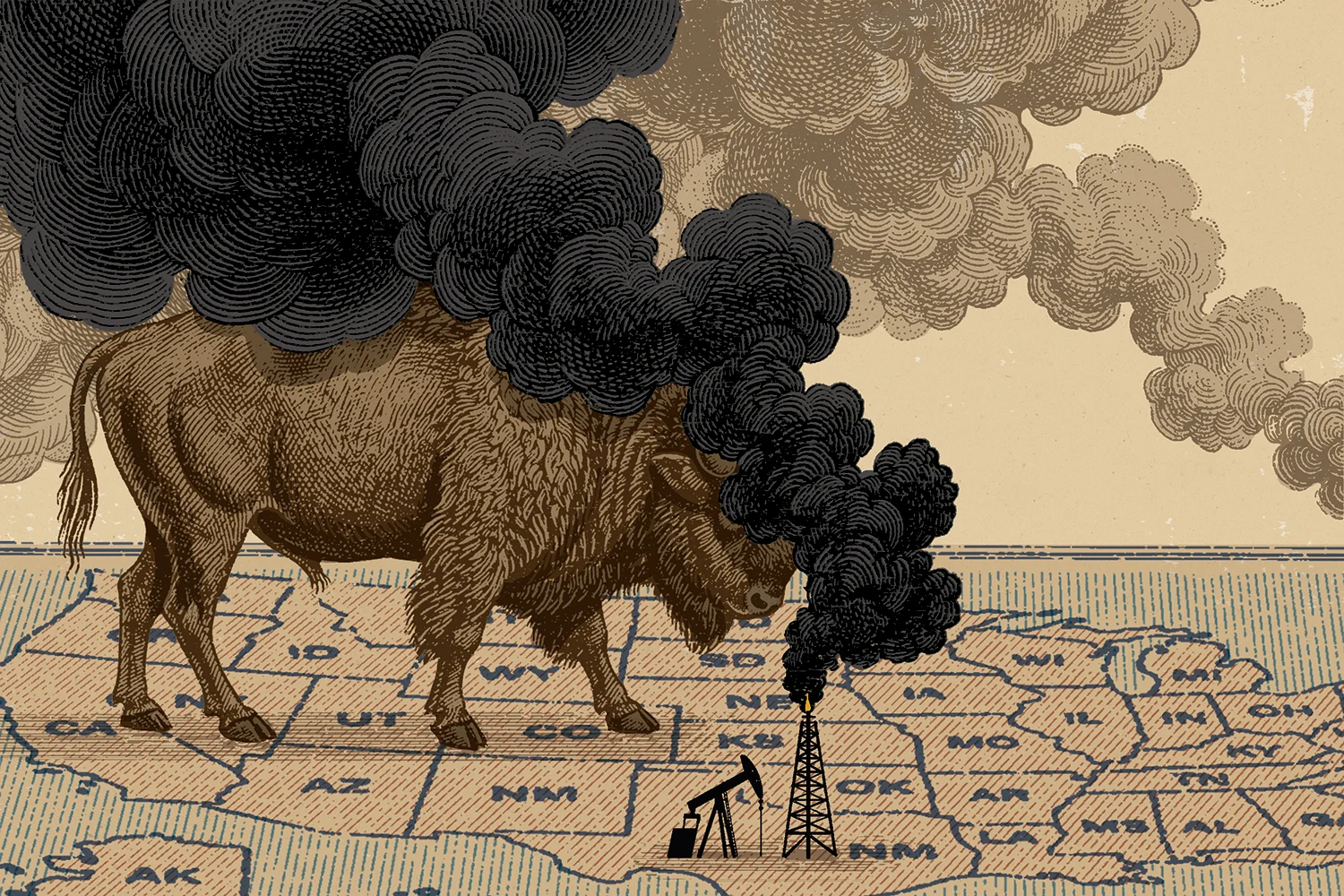
The United States has had an outsized impact on world affairs at least since World War II, if not earlier. It has also had an outsized impact on the planet itself, its ecosystems, biota, and climate. This is partly because the United States was, already by the 19th century, a big country that mobilized a lot of resources, from beaver fur and bison leather to oil and steel. And it is partly because the United States pioneered some innovative models—including car culture, industrial farming, and national parks—that had profound ecological consequences.