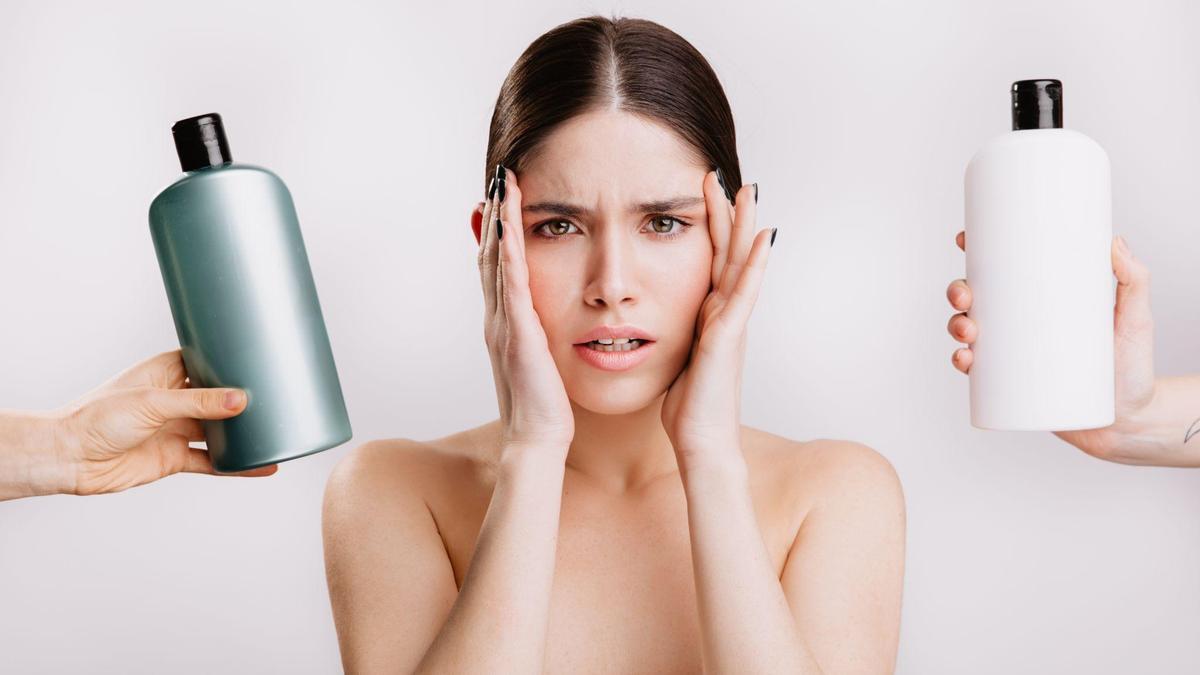
There’s a quiet shift happening in bathroom cabinets across the country. More adult women are quietly swapping out their regular shampoos for gentler, milder formulas — and it’s not just a passing trend. For many, it comes after years of damaged hair, a sensitive scalp, or simply noticing that their hair feels worse after washing than before.If you’ve ever wondered why your scalp feels tight, itchy, or dry after shampooing, the answer might be sitting right there in your shower.What Most Regular Shampoos Actually Do to Your HairMost mainstream shampoos are built around one goal: producing a rich lather that makes hair feel “clean.” To do this, they rely heavily on sulfates — specifically sodium lauryl sulfate (SLS) and sodium laureth sulfate (SLES). These are powerful surfactants that strip away oil, dirt, and buildup efficiently.The problem is they don’t stop there.Your scalp has a natural lipid barrier — a thin layer of oils, proteins, and moisture that keeps the scalp balanced and the hair shaft protected. Sulfates break through this barrier. Over time, repeated exposure disrupts the scalp’s pH, strips away protective sebum, and leaves the scalp in a state of chronic irritation. For some women, this shows up as dryness. For others, it paradoxically triggers excess oil production as the scalp tries to compensate for what’s being stripped away.Fragrances, silicones, and preservatives commonly found in these formulas add another layer of chemical exposure — one that sensitive or already-compromised scalps often struggle to handle.Why Adult Women Are Particularly AffectedHormonal changes play a significant role in scalp sensitivity. Women going through perimenopause, postpartum recovery, or even regular hormonal fluctuations across their cycle often notice increased scalp sensitivity, dryness, or reactivity. At these stages, the scalp’s tolerance for harsh ingredients drops considerably.Women who color, heat-style, or chemically treat their hair are also working with a weakened hair cuticle already. Using a stripping shampoo on top of that creates a compounding effect — each wash taking more than it gives back.There’s also the simple fact of awareness. Women today are reading ingredient labels more carefully. When you start researching what’s actually inside your shampoo bottle, the list can be unsettling.The Logic Behind Switching to Gentler FormulasGentler shampoos typically use mild surfactants like cocamidopropyl betaine or sodium cocoyl isethionate, which cleanse without aggressively stripping the scalp. They maintain a pH closer to that of the scalp (around 4.5–5.5), which helps keep the cuticle smooth and the barrier intact.Some women have started looking at formulas originally designed for more delicate needs — including, interestingly enough, baby shampoo for women, which has gained attention for its ultra-mild surfactant profile and absence of harsh additives. While it’s not a one-size-fits-all solution, the underlying principle is the same: less aggressive cleansing can allow a struggling scalp to recover and stabilize.Gentler doesn’t mean ineffective. It means purposeful.What to Look for When Choosing a Milder ShampooMaking the switch isn’t just about grabbing anything labeled “gentle” or “natural.” Here’s what actually matters:• Sulfate-free is a good start, but check the full surfactant list• Look for a pH-balanced formula — most brands now mention this• Fragrance-free or naturally scented formulas are better for reactive scalps• Avoid silicone-heavy formulas if you’re dealing with buildup or scalp congestion• Short ingredient lists generally mean fewer potential irritantsIt’s also worth noting that switching shampoos alone may not resolve deeper hair or scalp issues. Nutrient deficiencies, stress, hormonal imbalance, and gut health all feed directly into scalp and hair health in ways that no topical product can fully address.Understanding Root Cause Is What Changes the OutcomeBrands like Traya have built their approach around this idea — that sustainable hair health requires understanding what’s happening internally, not just changing what you put on externally. That shift in thinking is part of why so many women are becoming more intentional about every product they use, shampoo included.Final ThoughtsThe move toward gentler shampoos isn’t about being precious with haircare. It’s about understanding that the scalp is skin — living, reactive, and capable of healing when it’s treated with a little more respect. If your current shampoo is leaving your scalp irritated or your hair dull and brittle, it might not be a deficiency your hair needs. It might just be less of what’s already hurting it.“This article is part of the sponsored content programme.”Published on June 29, 2026
Why More Adult Women Are Switching to Gentler Shampoos
Why More Adult Women Are Switching to Gentler Shampoos
719 words~3 min read