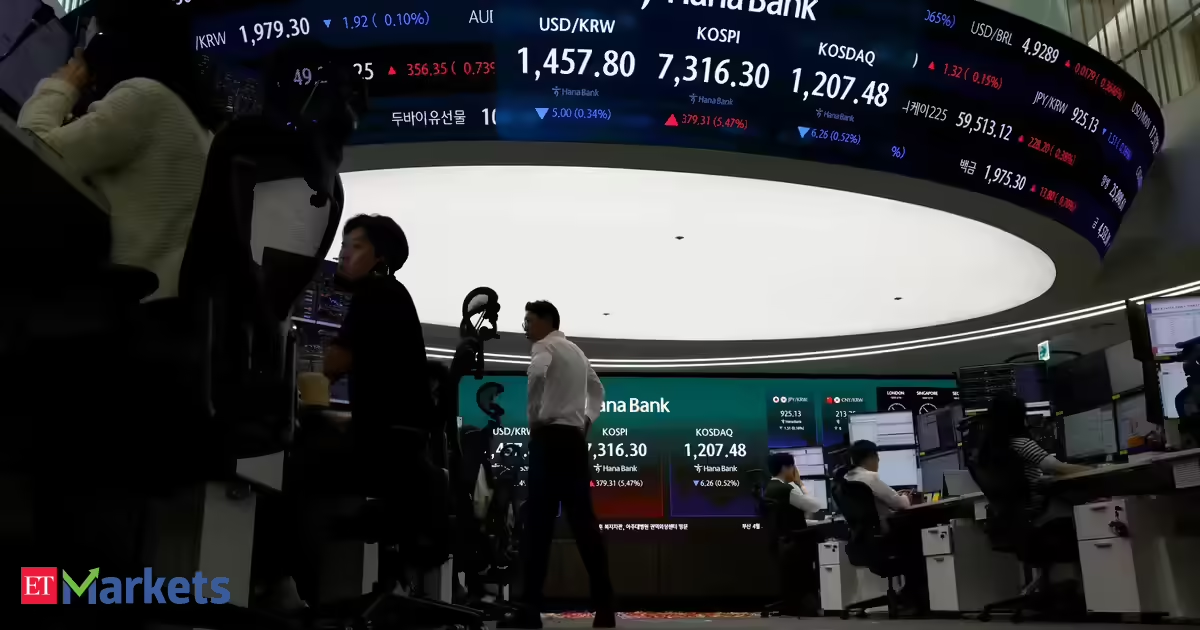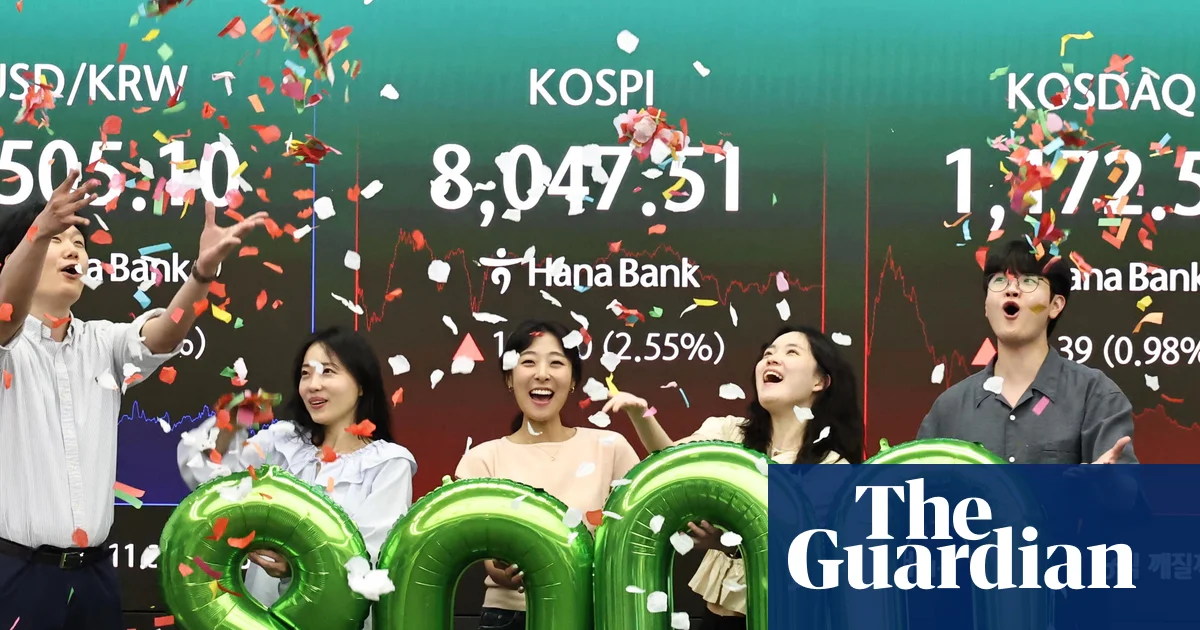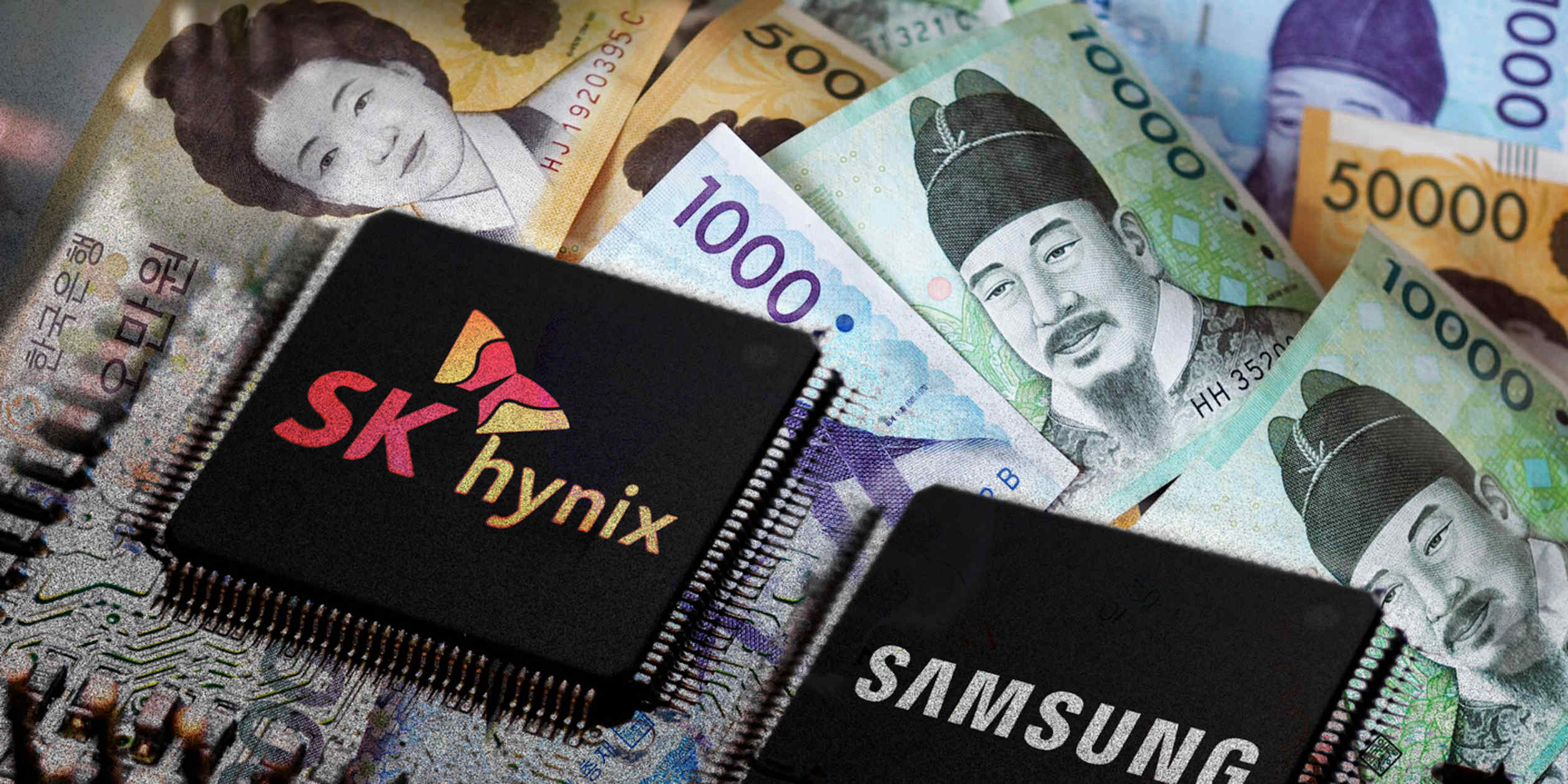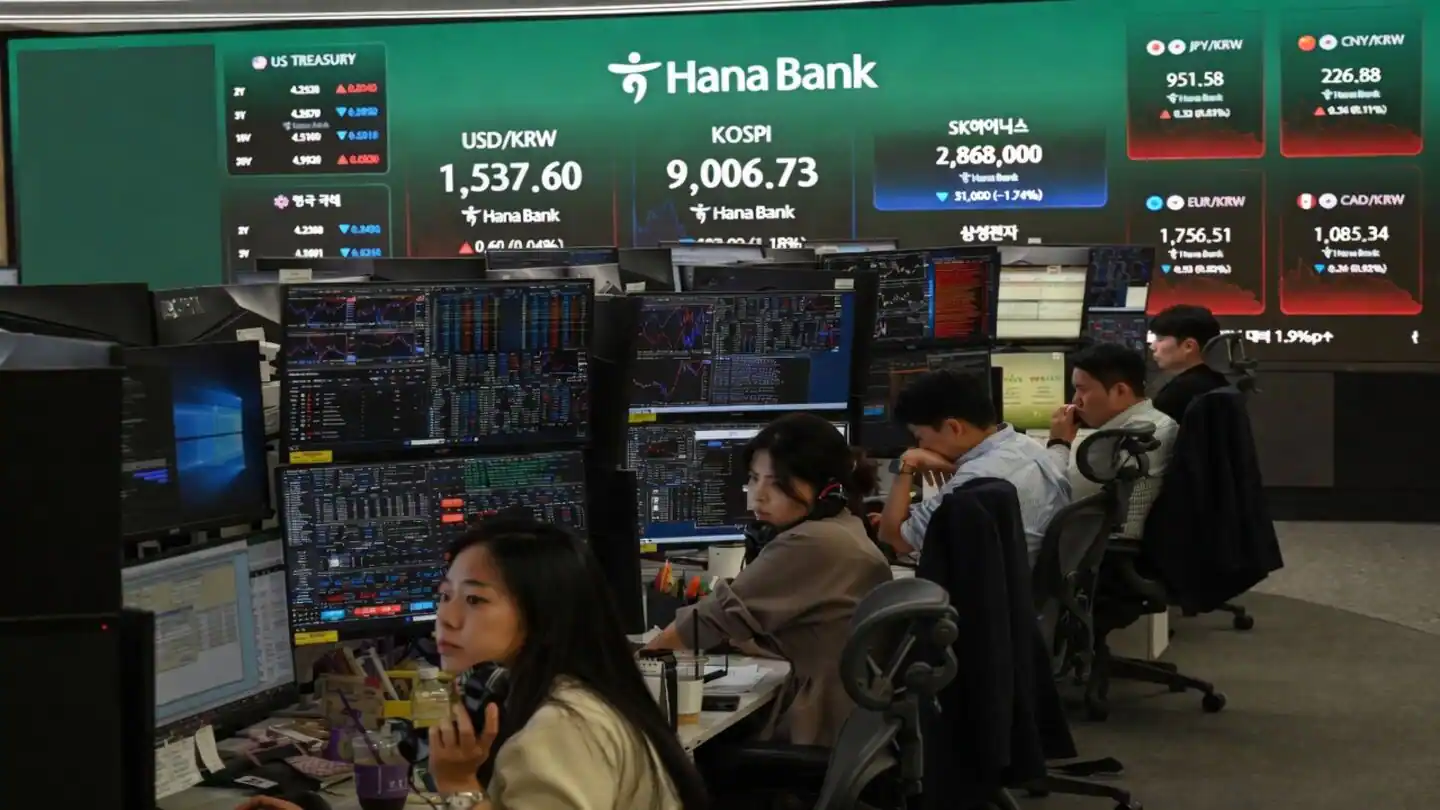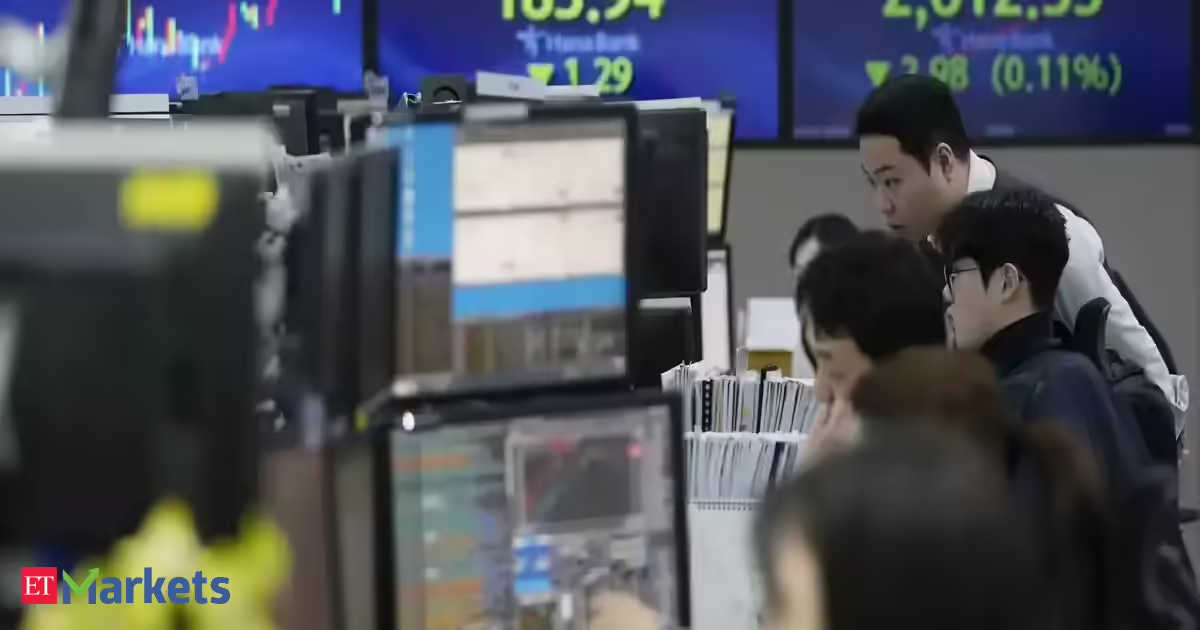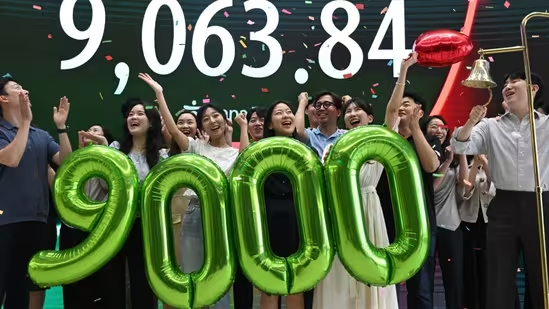
The global artificial-intelligence boom has made fortunes for investors in Samsung Electronics and SK Hynix as their share prices climbed to record highs this year. The rally has also exposed structural vulnerabilities in a Korean stock market unaccustomed to wild swings.South Korea's benchmark stock index, which fell 10% on Tuesday, topped 9,000 earlier in the month.SK Hynix and Samsung now make up a record 60% of South Korea’s Kospi, up from around 40% two years ago. Demand for the memory-chip makers’ stock has led the benchmark Kospi to nearly double in value this year and become the world’s best-performing market.But behind the stock-buying frenzy, alarm bells are ringing.Last week, regulators stepped in twice to pause trading on the Kospi and steady nerves after stocks dropped sharply. Officials have expressed regret at allowing new products that lean in to AI demand but have worsened volatility. Plans to offer options in large stocks including SK Hynix have been postponed.Concerns include individual investors using debt to buy Samsung and SK Hynix stock. That could expose individuals to margin calls—when a broker demands more cash when a share price falls below a certain level.Greater concentration of market risks in two stocks could also prompt institutional investors to pull back, amplifying a share-price downturn.SK Hynix and Samsung have become trillion-dollar companies this year as investors piled in. Samsung shares are close to tripling in value, while SK Hynix’s stock has roughly quadrupled.It means any significant pullback in global AI spending could be devastating for a market dependent on a single investment thesis.Daily price moves exceeding 5% in the MSCI Korea index have occurred on one-fifth of trading days this year. That compares with just 0.8% days in 2025, according to data from Julius Baer.“The latest market action provides an important reminder about concentration risk,” said Mathieu Racheter, head of equity research at the investment bank. “Periods of elevated volatility should be expected when investor positioning becomes crowded.”Those dangers were evident last week. The Kospi, driven by chip makers, fell 10% on Tuesday amid a global tech selloff before rebounding over the next two days. The market then sold off by 5.8% on Friday.In early trading Monday, Samsung and SK Hynix fell more than 5% each, dragging the Kospi at least 3% lower. The index has since erased the losses and was recently trading less than 1% higher.The level of concentration in Korea is striking when compared with some other markets along the AI supply chain. The two most valuable companies on the Nasdaq, Nvidia and Apple, currently account for around 20% of that index. Kioxia and Toyota make up less than 10% of Japan’s Nikkei Stock Average.According to Goldman Sachs’s Timothy Moe and John Kwon, an additional 1% increase in the combined weights of Samsung and SK Hynix could lead foreign investors to withdraw roughly $2 billion from Korea’s market due to diversification thresholds required by the U.S. Investment Company Act.Also, a massive influx of capital into leveraged exchange-traded funds, coupled with more options trading and margin-backed retail trading, creates a structural environment where daily price volatility far outstrips what corporate fundamentals can justify, Goldman said.Asset-management growth in Korea since last year has been driven by investment gains, not fresh capital. As valuations climb, institutional investors become more mechanically exposed to market movements, often tied to hedging strategies. This suggests even a modest market correction could trigger a cascade of forced selling.Morningstar highlights the rise in retail ownership of Samsung and SK Hynix, and record-high margin taken on their stock. “This amplifies stock price volatility tremendously, both on the uptrend and in drawdowns as margin calls force selling by investors,” analyst Jing Jie Yu said.Stocks become more sensitive to negative developments, such as regulators moving to rein in excessive speculation, Morningstar said. Friday’s selloff followed Apple raising product prices to cover higher memory costs.Regulators have responded with progressively firmer measures to address risk, including trading curbs and suspensions of options trading.The Korea Exchange’s activation of a 20-minute “circuit breaker” trading curb on Friday was its fifth this year. It also halted trading temporarily on Tuesday.The exchange has delayed the launch of weekly options tied to four large stocks, including Samsung Electronics and SK Hynix, due to market volatility.Financial Supervisory Service Gov. Lee Chan-jin expressed sorrow at failing to halt the launch of single-stock leveraged ETFs in May, saying it might have aggravated market swings.“I should have thrown myself down to block it. I’m having regrets,” said Lee.Write to Jason Chau at jason.chau@wsj.com
Korea’s Chips Rally Is Driving Its Stock Market Into a Danger Zone
The rally driven by the global artificial-intelligence boom has exposed structural vulnerabilities in a stock market unaccustomed to wild swings. | World News
747 words~3 min read