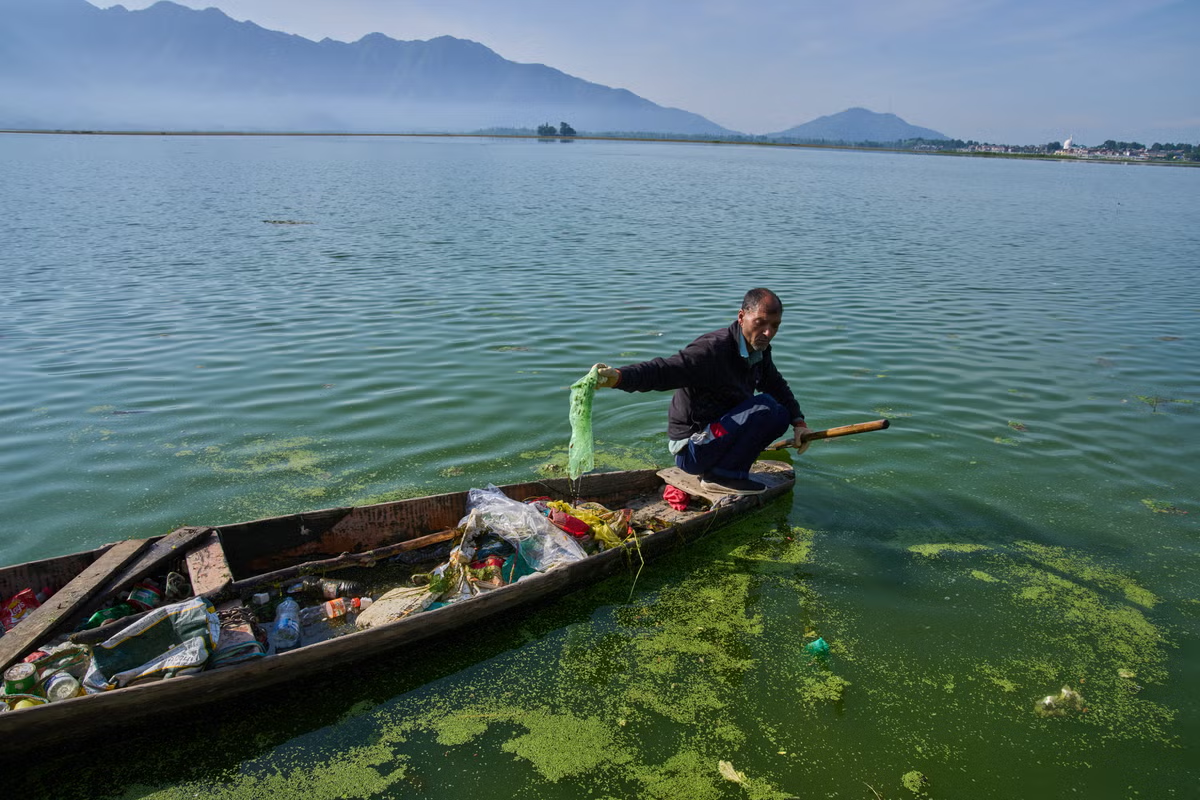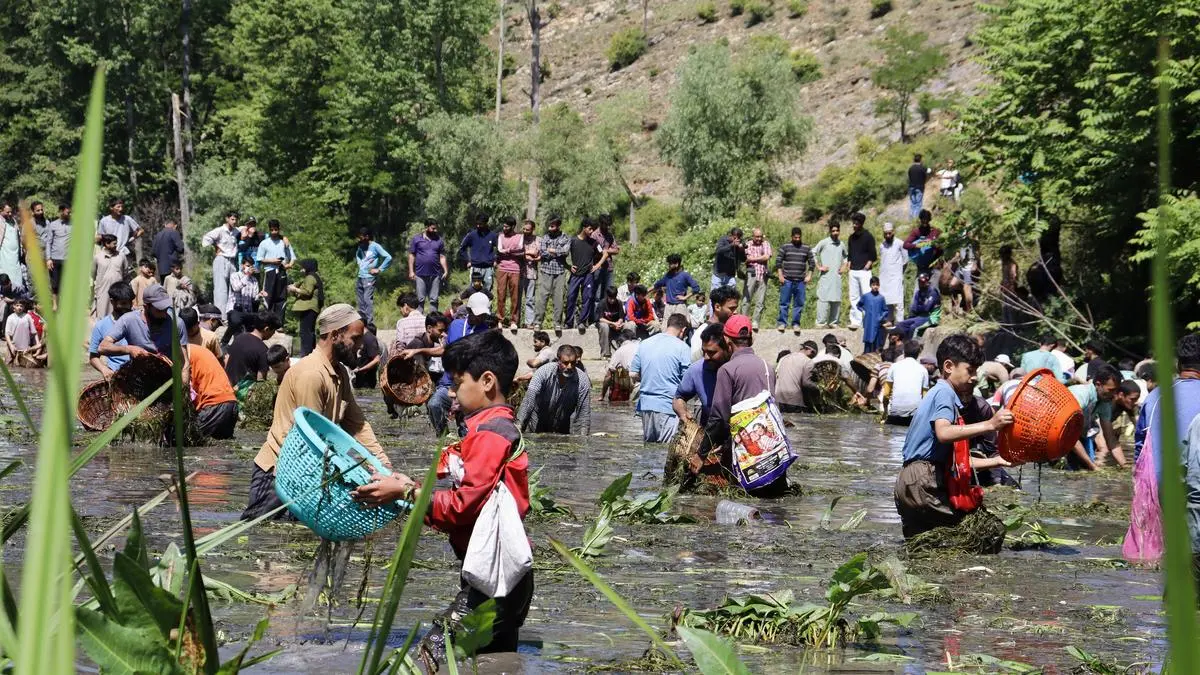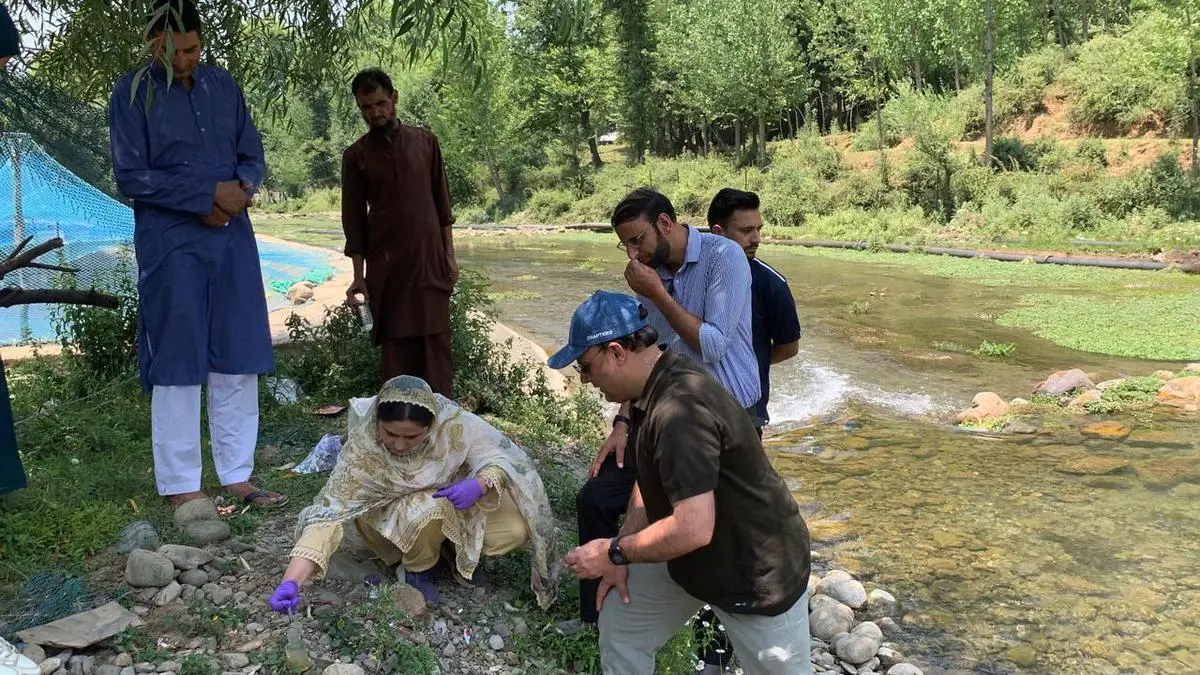
On Sunday, scores of villagers launched a cleanliness drive, clearing a stretch of the spring from Nagbal downstream and removing plastic waste and other pollutants.
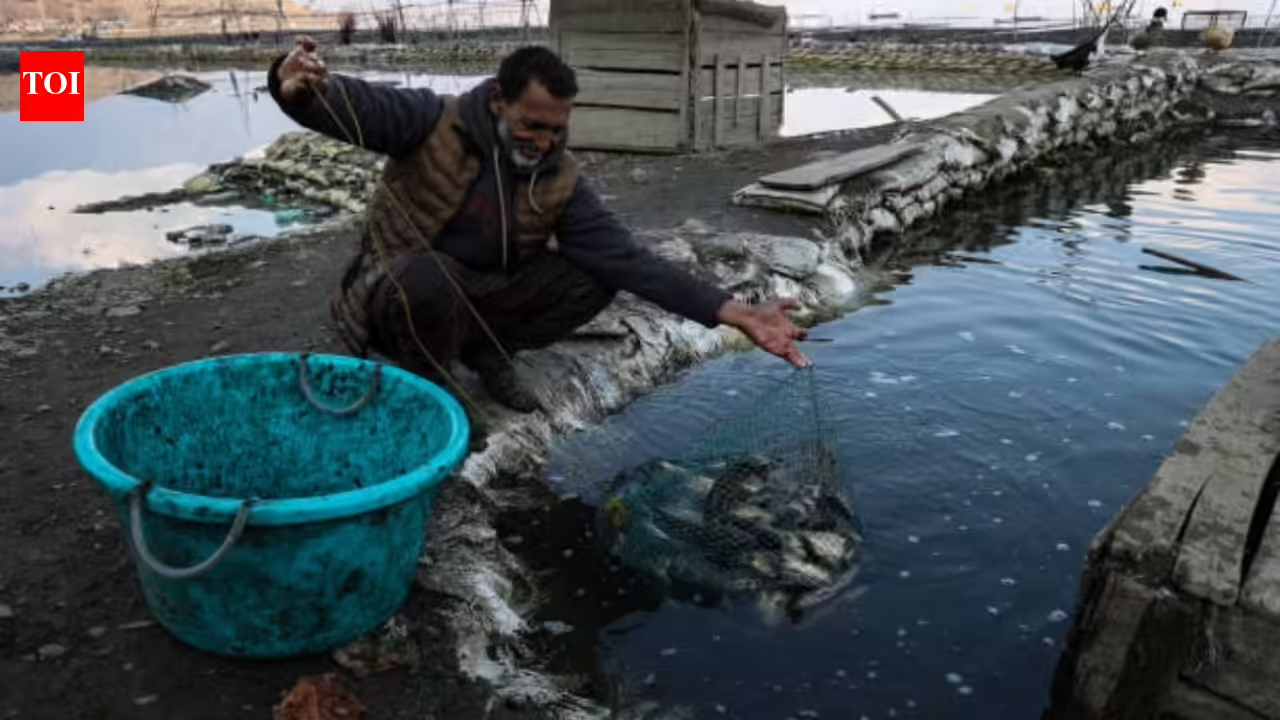
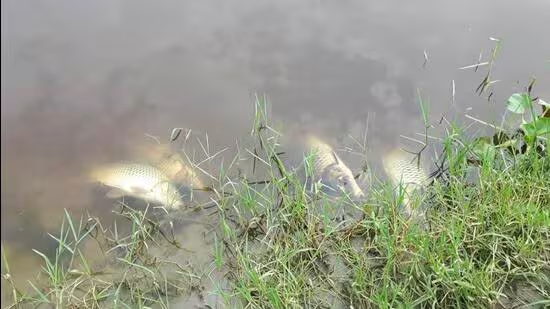
Weeks ago, residents of Panzath, a quaint village in south Kashmir’s Anantnag district known for its freshwater springs, noticed fish floating belly-up in one of the village’s famed springs. Over the following weeks, the deaths continued unabated, wiping out nearly 50 per cent of the fish population and triggering concern among locals and environmentalists alike.Although officials from the Fisheries Department had visited the site and attempted to treat the affected fish, the deaths could not be halted. While investigations are still underway to ascertain the exact cause, officials and experts believe the mortality is linked to pollution and fungal infection. Nisar Ahmad, an official of the Fisheries Department and In-charge of Panzath Circle, said pollution appears to be the primary cause of the fish deaths.“A team of experts from SKUAST visited the site and found that household sewage flowing into the stream, along with the dumping of non-biodegradable waste, is responsible for the fish mortality,” he said.He estimated that fish mortality in the spring was between 40 and 50 per cent.Ahmad said the experts have also suggested a series of measures to restore the spring’s ecological health.“Experts have recommended a public awareness campaign, regular cleaning of Panzath Spring, an immediate halt to the discharge of household and slaughterhouse waste into the stream, shifting of drinking water pipelines, and regular monitoring of water quality to restore the spring’s ecological health and prevent further fish mortality,” he said. Feroz Ahmad Bhat, Dean, Faculty of Fisheries, Rangil, Ganderbal, Sher-e-Kashmir University of Agricultural Sciences and Technology (SKUAST), said the fish mortality in the Panzath spring is linked to anthropogenic activities and the discharge of effluents into the downstream stretch.“Snow trout thrive in cold, crystal-clear waters with high levels of dissolved oxygen. Their preferred habitat typically has a bed of gravel, sand and stones. Any deterioration in water quality or habitat can severely affect their survival,” he said.On Sunday, scores of villagers launched a cleanliness drive, clearing a stretch of the spring from Nagbal downstream and removing plastic waste and other pollutants.“We decided to clean the spring and protect its aquatic life,” said Abid Ahmad Shah, a local resident who participated in the drive.The Group of Concerned Citizens (GCC), a civil society body comprising retired bureaucrats and judges, also visited the village on Sunday to commend the residents’ efforts to rid the spring of plastic waste and other pollutants.“The problem of dying fish was not known to us until we saw it on the spot,” said Khurshid Ahmad Ganai, retired IAS officer and chairman of the GCC.Ganai said villagers had brought the matter to the notice of the Fisheries Department, which sought assistance from experts at SKUAST to investigate the cause of the fish deaths and recommend remedial measures.sustained effortsHe said the incident underscores the need for sustained efforts to protect Kashmir’s fragile freshwater ecosystems. At a recent seminar in Srinagar, the GCC adopted the Srinagar Declaration, which advocated for a Chief Minister-led Commission on Water Security and Ecological Resilience and a dedicated mission to monitor glaciers, springs and watersheds across Jammu and Kashmir.The Panzath incident is the latest in a series of fish mortality events reported across the Valley. In April, mass fish deaths were reported from a spring in central Kashmir’s Ganderbal district, while similar incidents occurred in March in spring-fed ponds at Sherbagh in Anantnag, raising fresh concerns over the deteriorating health of Kashmir’s freshwater bodies.Published on June 29, 2026