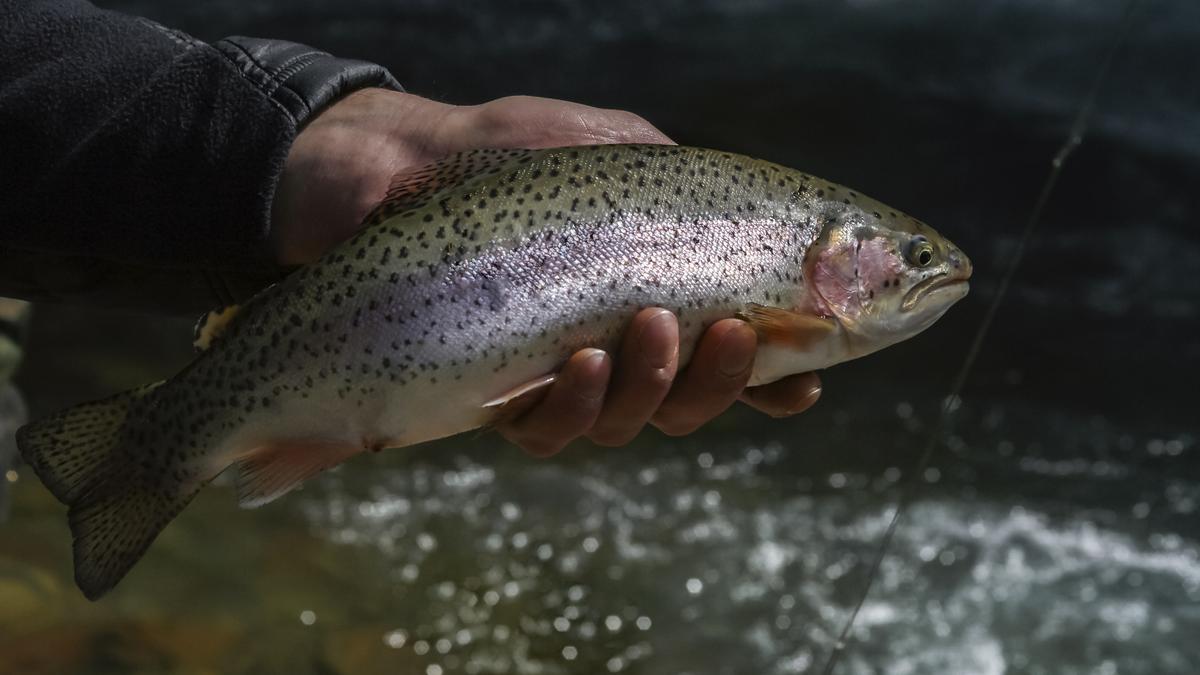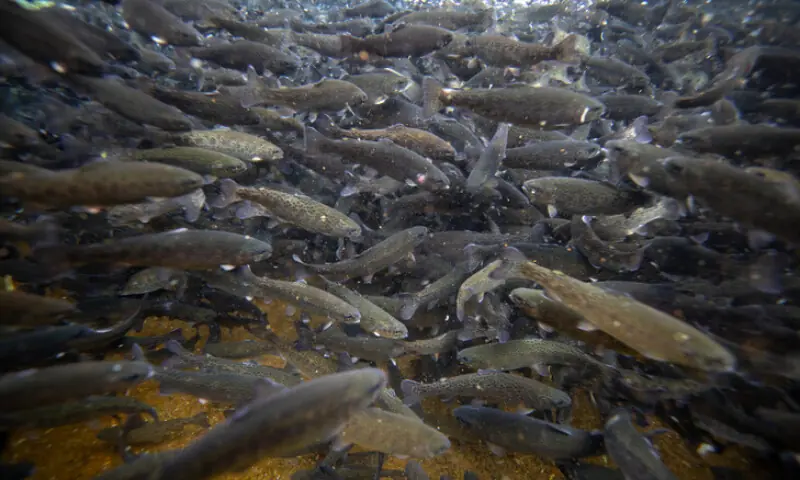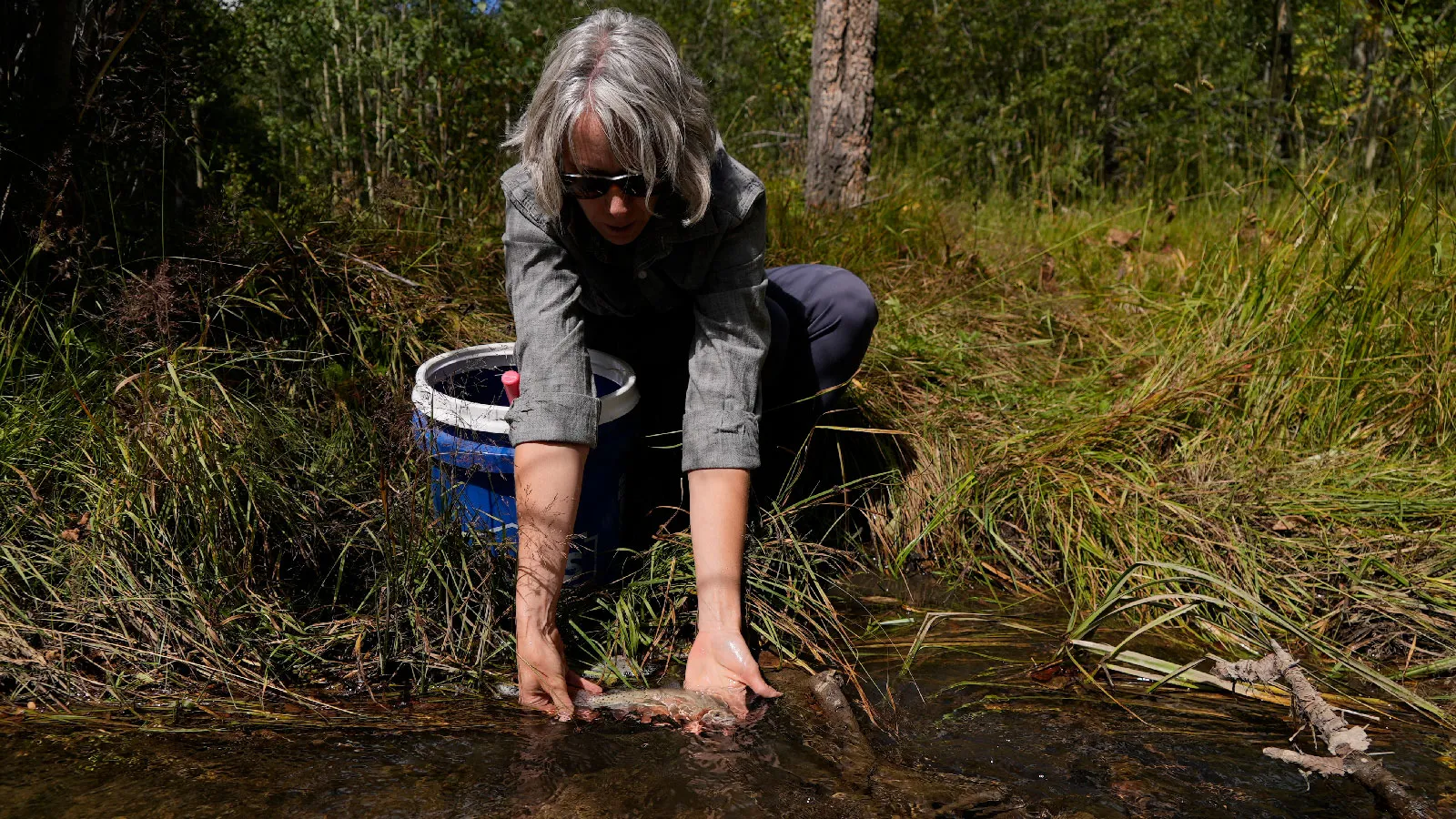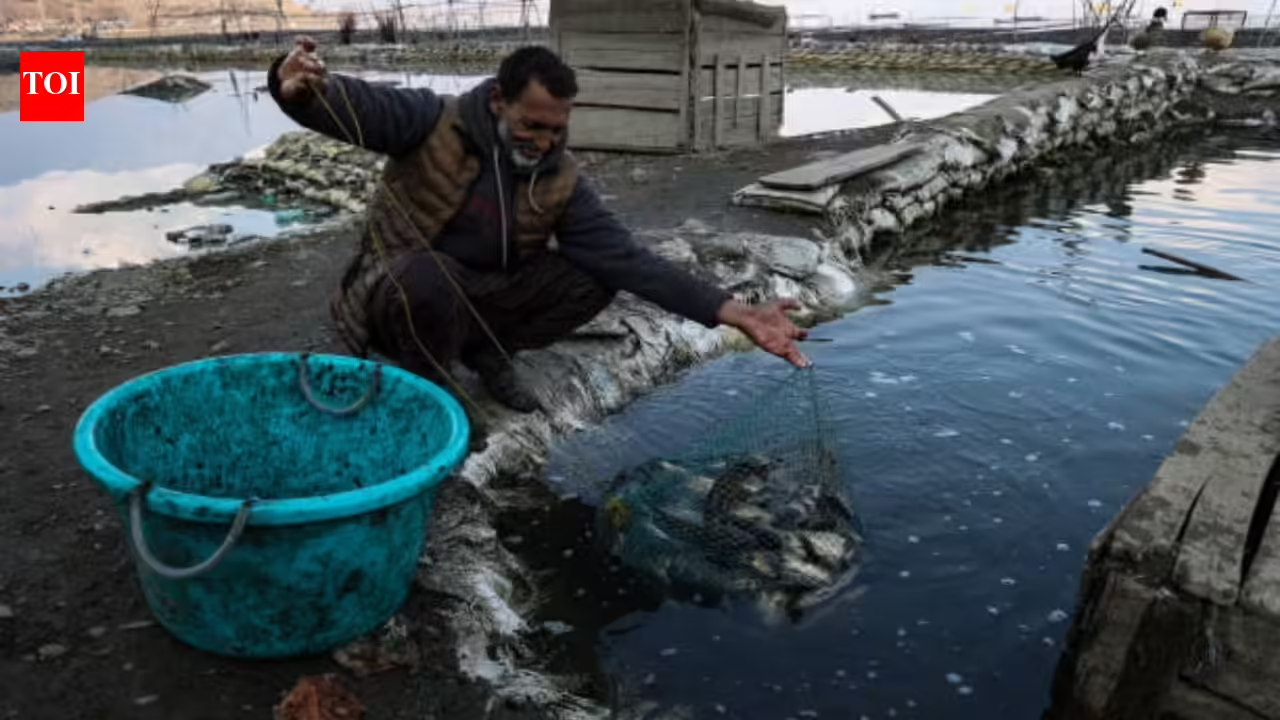
The valleys of Kashmir are nature's own way of boasting just how pretty its creations can be. Crystal-clear glacial streams rush down through the lush-green pine-lined valleys making an ecosystem worth millions of rupees and billions of taste buds.Among those who eat trout, a small freshwater fish, a belief is common across the nation. There is trout and then there is Kashmiri trout. Pulled at altitudes above 1,500 metres, the region's signature fish carries with a distinctive taste, texture and story that keeps food lovers coming for more.Slow-cooked in a wazwan-style gravy or fried in mustard oil, the fish is said to have a taste that no freshwater fish from the plains can compete with. Locals call it the 'Silver Queen of Kashmiri Rivers' and it is said that one bite makes everyone understand why the title stands undisputed.Kashmir has been the national trout capital for centuries. However, these sparkling fishies were not always present in Kashmir's rustling rivers. They are a colonial-era gift that still keeps giving.A British era importAs India came under British rule, colonial officers began the task of making it look like the familiar landscapes back home in England and Scotland. From Shimla to Ooty, they built hill stations to conjure the feeling of home. However, the Indian rivers lacked the fish of their memories.For officers used to angling and fly-fishing as a pastime, this posed a large problem. While there were native fishes like the Mahseer, a large Asian carp, locally known as the 'tiger of the rivers', they were too powerful for the British to win over. Thus, like many things, they decided to import European fish, especially salmon and trout.Trout was introduced to Kashmir in 1899 when the first batch of 10,000 trout ova eggs arrived from the UK with the courtesy of the Duke of Bedford, to whom the Kashmir Maharaja presented an excellent Kashmir Stag trophy through Sir Adelbert Talbot, British Resident at Srinagar. However, this batch perished en route due to the lack of quick air transport.The second shipment arrived from Scotland in December 1900 through Mr. J.S. Macdonall which included 1800 fry. Out of this 1000 fry were transferred to Panzagam Dachigam (Harwan) about 24km from Srinagar, and the rest of the 800 fry were reared in the premises of a private carpet factory owner, Frank Mitchell in Baghi Dilawar Khan in the heart of city near Khank~l Moulla. This is when two varieties of the species, rainbow trout and brown trout began to grow in the valleys.“Later after floods, the temporary ponds at Panzgam were destroyed and the little trout flowed in Aru stream. “ These washed-out trout grew so quickly in virgin streams that it was possible for the region to present a 12 ½ pound trout to Lord Minot then Viceroy in 1906. Mitchell’s contribution in the field got him the title Father of Kashmir Trout Fisheries,” said Dr NA Jan former Commissioner of Fisheries.The arrival of trout initially unsettled Himalayan food cultures. For centuries, rivers were populated with native fish that sustained local diets. However, when the British reserved stretches of water for their own, they excluded Kashmiri locals from traditional fishing grounds.After independence, however, state hatcheries and tourism helped reshape trout in their minds. It transformed from a colonial delicacy to a local dish served in dhabas and homestays. Over the years, it became one of the driving forces of the region's economy.A booming marketToday, Jammu and Kashmir is India's largest trout-producing region with around 3,010 tonnes produced in 2024-25, supported by the Kokernag hatchery and over 2,000 private trout units, as per data released by the Ministry of Fisheries, Animal Husbandry, and Dairying in June 2026.From 2015-16, the production in the union territory has surged more than tenfold, as per Manzoor Ahmad Samoon, deputy director of the union territory's central fisheries department. It's production accounts for more than half of the country's annual trout output, followed by Himachal Pradesh and Uttarakhand.While fresh rainbow trout sells locally at Rs500-550 per kilogram, when shipped to Delhi, Bengaluru and other states, it brings in Rs1300-1500 per kilogram.Currently, the key habitats of the trout in Kashmir include Lidder River, Sindh River, Bringi River, Bringi Nullah and the Doodhganga River and high-altitude lakes such as Gangabal, Tarsar and Marsar.The fish is not only a delicacy but also a health source. Compared to the farmed salmon flown in from Norway, the local trout is way better at ensuring nutrition. It carries about 26-28 g of protein, 1.5-2 g of omega-3 fatty acids, Vitamin D, Vitamin B12, selenium and phosphorus.Moreover, not just business and food, trout also forms another key aspect of Kashmir's system, tourism. Sport fishing for trout in Kashmir is allowed with a fishing permit. While there are bag limits and limited locations, for those interested in the activity and visiting the union territory, it forms as an exciting prospective adventure.
Kashmir struggled with fish for years, until a British duke shipped 10,000 trout ova making it a national capital
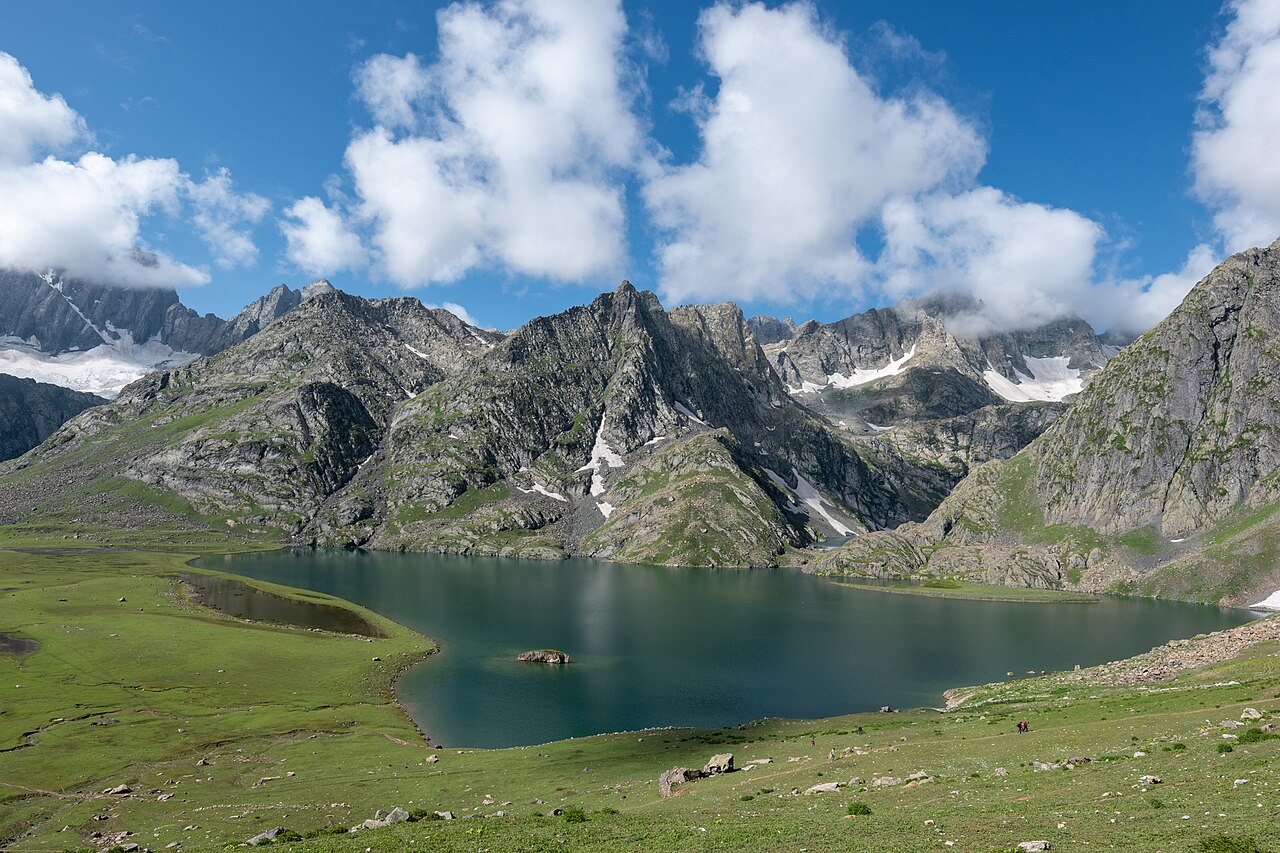
The valleys of Kashmir are nature's own way of boasting just how pretty its creations can be. Crystal-clear glacial streams rush down through the lush-green pine-lined valleys making an ecosystem worth millions of rupees and billions of taste buds.
813 words~4 min read