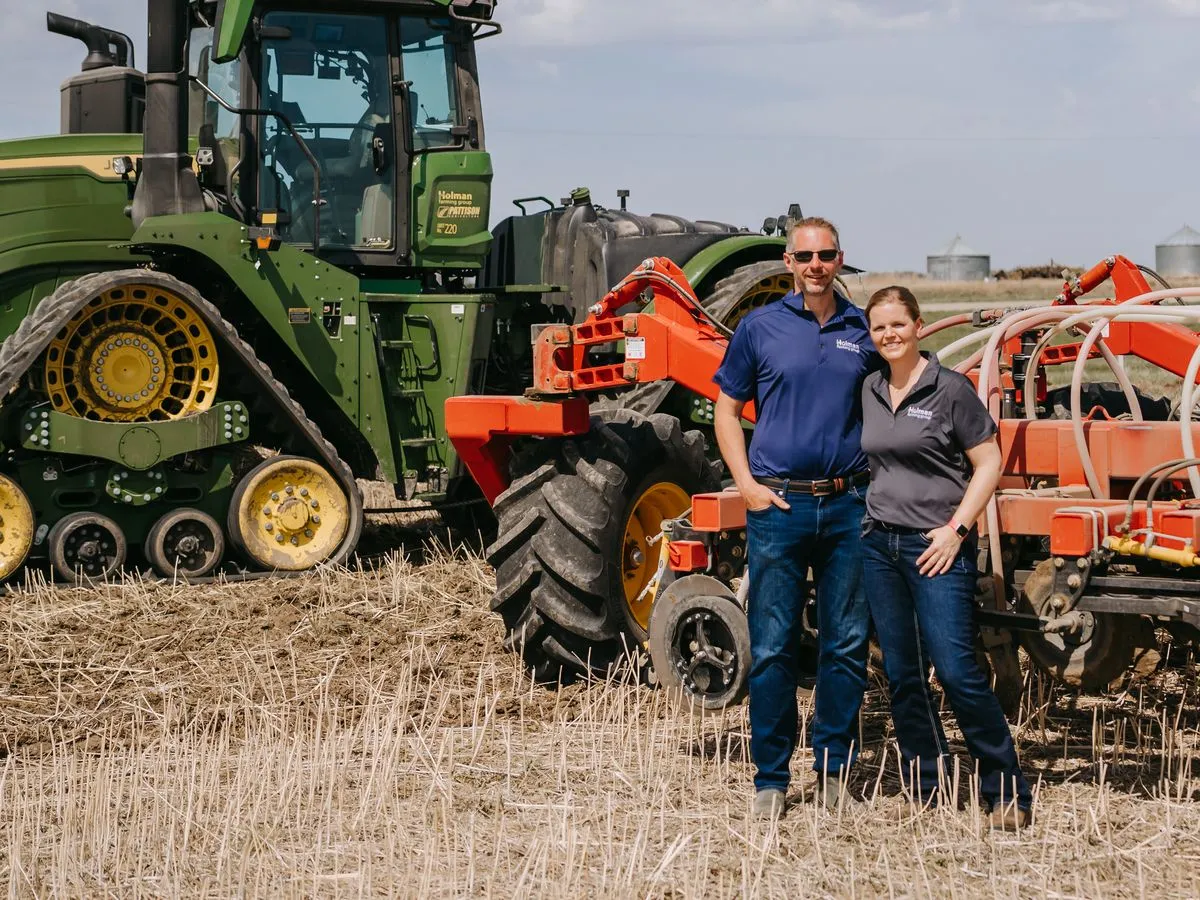
Skip to Content News Archives Economy Energy Oil & Gas Renewables Electric Vehicles Mining Commodities Agriculture Real Estate Mortgages Mortgage Rates Finance Banking Insurance Fintech Cryptocurrency Work Wealth Smart Money Wealth Management Investor Personal Finance Family Finance Retirement Taxes High Net Worth FP Comment Executive Women Puzzmo Newsletters Financial Times Business Essentials More Innovation Information Technology FP500 Podcasts Small Business Lives Told Tails Told Shopping Financial Post Store Obituaries Place a Notice Advertising Advertising With Us Advertising Solutions Postmedia Ad Manager Sponsorship Requests Classifieds Place a Classifieds ad Working Profile Settings My Subscriptions Saved Articles My Offers Newsletters Customer Service FAQ News Economy Energy Mining Real Estate Finance Work Wealth Investor FP Comment Executive Women Puzzmo Newsletters Financial Times Business Essentials HomeAgricultureU.S. agriculture giant Cargill could become Canada's fourth-biggest grain handler with new dealJust four companies already control 67% of the grain-handling pie. The deal would increase their slice even moreLast updated 1 hour ago You can save this article by registering for free here. Or sign-in if you have an account.Dan and Stacey Holman, who operate Holman Farming Group, stand in front of an air drill seeding machine on their farm near Unity, Sask. The resale of a nearby grain elevator is expected to keep grain prices competitive for farmers. Photo by Photo by This Little Light PhotoCargill Ltd.’s influence over Canadian agriculture is set to grow under a proposed takeover of grain-handling assets in the prairies.Subscribe now to read the latest news in your city and across Canada.Exclusive articles from Barbara Shecter, Joe O'Connor, Gabriel Friedman, and others.Daily content from Financial Times, the world's leading global business publication.Unlimited online access to read articles from Financial Post, National Post and 15 news sites across Canada with one account.National Post ePaper, an electronic replica of the print edition to view on any device, share and comment on.Daily puzzles, including the New York Times Crossword.Subscribe now to read the latest news in your city and across Canada.Exclusive articles from Barbara Shecter, Joe O'Connor, Gabriel Friedman and others.Daily content from Financial Times, the world's leading global business publication.Unlimited online access to read articles from Financial Post, National Post and 15 news sites across Canada with one account.National Post ePaper, an electronic replica of the print edition to view on any device, share and comment on.Daily puzzles, including the New York Times Crossword.Create an account or sign in to continue with your reading experience.Access articles from across Canada with one account.Share your thoughts and join the conversation in the comments.Enjoy additional articles per month.Get email updates from your favourite authors.Create an account or sign in to continue with your reading experience.Access articles from across Canada with one accountShare your thoughts and join the conversation in the commentsEnjoy additional articles per monthGet email updates from your favourite authorsSign In or Create an AccountorThe Minnesota-headquartered agribusiness wants to buy three grain elevators and a 50 per cent stake in a British Columbia port terminal from a competitor, giving it more control over supply chains.“If you concentrate access to both the processing and the export supply chain, there’s a real chance of market power being used,” said Richard Grey, the Canada research chair in grain policy.“Both consumers and producers lose,” he said.Get the latest headlines, breaking news and columns.By signing up you consent to receive the above newsletter from Postmedia Network Inc.A welcome email is on its way. If you don't see it, please check your junk folder.The next issue of Top Stories will soon be in your inbox.We encountered an issue signing you up. Please try againConsolidation in the agriculture sector has been an ongoing trend with bigger firms dominating supply chains since the Canadian Wheat Board was privatized in 2015.Cargill could become the country’s fourth-biggest grain dealer if Canada’s competition watchdog approves its latest asset purchase.The deal traces back to another takeover in the industry. Parrish and Heimbecker Ltd., one of Canada’s top grain operators, wanted to buy four grain elevators and take full ownership of a port terminal in a $150-million deal with supply chain company GrainsConnect Canada Operations Inc.The Competition Bureau stepped in last month, demanding that Parrish and Heimbecker resell one high-capacity inland terminal. The watchdog had flagged that transaction for impacting competitive grain prices since the Winnipeg-based company owned a nearby grain storage facility.That grain storage and loading facility in southwest Saskatchewan is near the Holman Farming Group’s 20,000-acre operation. Farmer Dan Holman welcomes Cargill’s potential purchase since it gives local farmers more competition on prices.“I’m glad to see it get sold. I think P and H owning it was not great for the area,” he said.Holman likened the location of grain elevators to car dealership districts where competitors are situated in a cluster, which ideally results in fairer prices for consumers. Grain elevators are no different. Holman said he’s looking forward to Cargill taking over the facility since the company doesn’t have another elevator within 150 kilometres.“It’ll be just a good thing overall.”Parrish and Heimbecker closed its deal with GrainsConnect on June 19. It’s required, under a binding agreement with the Competition Bureau, to run the facility in Reford, Sask., until it finds a new owner.Instead of just selling off the one asset flagged by the bureau, Parrish and Heimbecker plans to sell three elevators to Cargill, along with half of the ownership rights to an export grain terminal near Surrey, B.C.The business didn’t respond to questions on why it chose to sell off nearly everything it had just acquired. A company spokesperson did, however, confirm that it will retain a grain elevator in Maymont, Sask., from the original deal.For its part, Cargill said the deal is pending a review from the Competition Bureau.The independent federal agency declined to comment when asked if it has concerns with the newly announced deal with Cargill, citing “confidential” aspects to its processes and investigations.James Nolan, who studies transportation economics at the University of Saskatchewan, said the Competition Bureau typically intervenes if the top four players in a given sector control more than 40 per cent of their market.In this case, the top four companies command a 67 per cent share of the grain-handling pie, and the latest deal would increase their slice by even more.There’s money to be made selling grains, which is why companies are stepping in, said Nolan.“Yields are up,” he said. “The pie is getting bigger in some sense.”Parrish and Heimbecker, one of Canada’s largest agribusinesses, has 28 licensed and operational elevators with a total capacity to store just over one million tonnes of grain.The company solidified its place as having the third-biggest market share in Canada’s grain handling business — making up almost 13 per cent — after buying up parts of GrainsConnect.If Cargill gets the regulatory green-light to buy GrainsConnect assets from Parrish and Heimbecker, its slice of the market would rise from eight per cent to nearly 10 per cent.Cargill — an agricultural giant that also owns beef and poultry processing plants — would then control 28 grain elevators. It would eke ahead of its Winnipeg-based competitor, G3 Canada Ltd., which bought up a majority of the Canadian Wheat Board’s assets from the federal government more than a decade ago.The wheat board was a federal agency that marketed prairie-grown wheat and barley to pool the supply and secure better returns for farmers.Farmers were mandated to sell their harvested crops directly to that single desk until the government ended its monopoly on supply chains in 2012 as the evolving sector no longer relied upon price stabilization policies.In the ashes of the Canadian Wheat Board, there’s been a concentration of big firms at the top over the past decade, said Cathy Holtslander, the director of policy and research at the National Farmers Union, a membership organization for farmers.“Once that wheat board was dismantled, it opened the door for companies,” said Holtslander. “There was this building spree that happened.”The most notable case of consolidation came last year when Missouri-based Bunge Global SA merged with Regina’s Viterra Ltd. for US$8.2 billion.The competition watchdog intervened before the deal went through, imposing some concessions to cushion the impact.Nolan said the massive deal, which allowed Bunge to own a quarter of grain elevator capacity in Canada, spurred others to make moves in an effort to compete.“We’re going to see more and more of this,” Nolan said.Cargill president Jeff Vassart declined to comment on the company’s gains in the market and referred to its announcement of the deal with Parrish and Heimbecker.“These facilities strengthen our ability to serve farmers and customers while supporting the long-term growth of Canadian agriculture,” Vassart said in a prepared statement.But Grey, an agriculture professor at the University of Saskatchewan, said for the canola sector there are possible concerns with the transaction.It would allow Cargill to buy canola seed directly from farmers, bypassing other grain handlers. The company could potentially then move that seed to its own crush facilities, instead of having to compete for the grain, Grey said.Grey has researched agriculture supply chains since the end of the wheat board. High canola crush margins are a sign of a “lack of competition” as processors, such as Cargill and Bunge, reap most of the gains from a booming industry, he said.A rough measure of this income, called canola board crush margin, has risen threefold in just a year, from $117 per tonne last year to $360 for July contracts, according to commodity derivatives service Intercontinental Exchange.“They get $300 more (per) tonne in revenue from selling the products of the crushed canola than it’s costing them in seed,” said Grey.Large canola processors in Canada can buy the seed before it ever reaches international markets — and all the additional competition that would come with it — by buying directly from farmers, he said.But Holman, the grain farmer, takes no issue with that.From his perspective, players along the entire supply chain should make money, including farmers.Companies typically reinvest in agricultural infrastructure anyway, he says, pointing to recent upgrades by fellow canola processor Richardson International Ltd. at one of his local terminals.“I don’t have an issue with companies making a profit off of farmers.”The Saskatoon Star Phoenix has created an Afternoon Headlines newsletter that can be delivered daily to your inbox so you are up to date with the most vital news of the day. Click here to subscribe. With some online platforms blocking access to the journalism upon which you depend, our website is your destination for up-to-the-minute news, so make sure to bookmark thestarphoenix.com and sign up for our newsletters so we can keep you informed. Click here to subscribe. Join the Conversation This website uses cookies to personalize your content (including ads), and allows us to analyze our traffic. Read more about cookies here. By continuing to use our site, you agree to our Terms of Use and Privacy Policy.
U.S. agriculture giant Cargill could become Canada's fourth-biggest grain handler with new deal
Cargill Ltd.'s influence over Canadian agriculture is set to grow under a proposed takeover of grain-handling assets in the West. Read on
1,800 words~8 min read