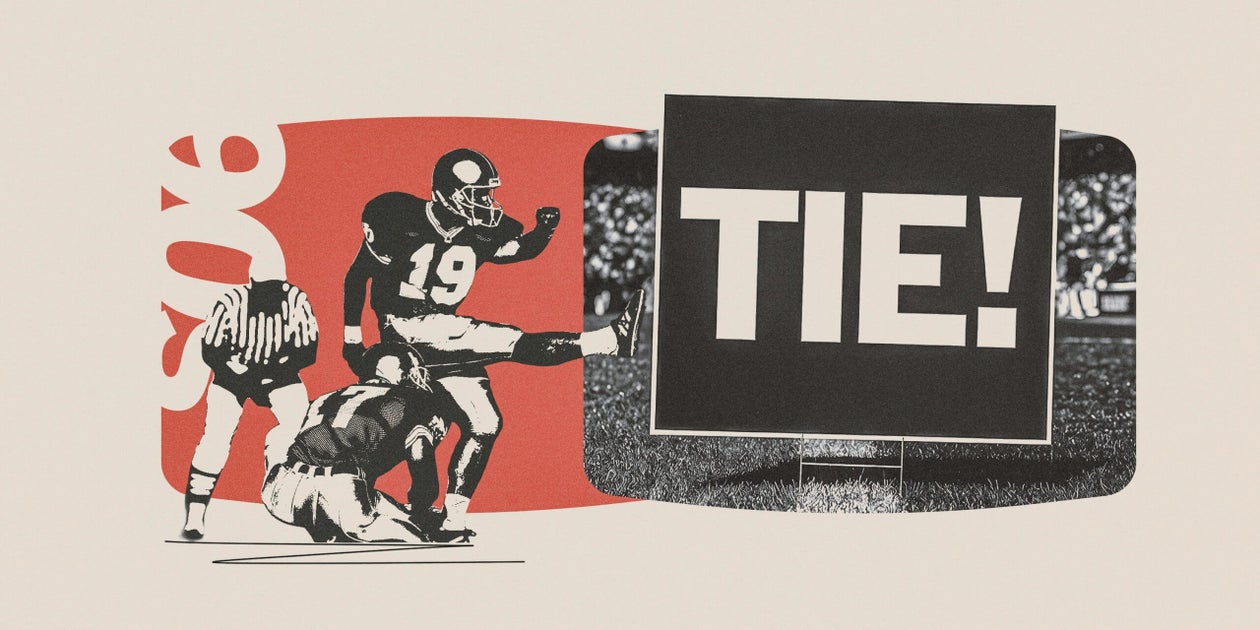
Editor’s note: As the World Cup continues in the United States for the first time since 1994, The Athletic is looking back at college sports in the 1990s and how much has changed since then.Iowa’s 1988 football season started with lofty expectations and a No. 9 ranking, but after playing to a draw for the third time that year, coach Hayden Fry had pretty much had it with fans and reporters questioning his end-game strategy.“They paid their 16 bucks, and they can react any way they want to,” Fry told reporters after the Hawkeyes kicked a 40-yard field goal with 16 seconds left to tie Ohio State at 24 instead of trying to get in the end zone.“We took a chance with the onside kick to win the game (with 16 seconds left). There wasn’t any question in my mind what to do. We were still trying to win the game. We were just trying to do it different than the people who don’t know much about football realize. A damn tie is better than a loss. Tell that to your friends. It wasn’t a damn loss, it was a tie.”Friends, college football needs to bring back ties. These ambiguous and at times confusing results have gotten a bad rap. They are not a scourge to be eradicated — as they were by major college football in the mid-1990s — but an anomaly to be embraced. Their mere existence unlocks a whole new level of strategy and analysis while upping the potential for chaos.Why wouldn’t we want this?As college football goes through what feels like a light-speed transformation, with $13 million coaches, $4 million quarterbacks and a postseason tournament that could soon feature more teams than the NFL playoffs, many of us are longing for the way things used to be.This is one remnant of the past that can be dusted off and actually fit well into the modern game. Even better than it did back in the day.When the NCAA instituted overtime, the reasoning was sound. Human nature leads us to crave clearly defined resolutions in life. Especially in sports.Ties were always problematic in college football. In 1990, Colorado and Georgia Tech “shared” the national title in part because both teams recorded a tie during the regular season. The Buffaloes’ 31-31 tie with Tennessee to start the season was, as it turns out, not even close to their strangest result that year.But for decades, nobody did anything about it. Ties were just accepted. And thank goodness. The ensuing debate they spawned was a feature, not a bug, of the outcome. The possibility of a game ending in a tie also created some of college football’s most memorable results.The 1966 Game of the Century between No. 1 Notre Dame and No. 2 Michigan State ended 10-10, and there are still those aghast that the late great Fighting Irish coach Ara Parseghian played it safe on the game’s final possession.“The game ended in a tie,” Parseghian told ESPN 50 years later. “We didn’t play for a tie.”On the flip side, Nebraska coach Tom Osborne is to this day lauded for going for two and the win against Miami in the 1984 Orange Bowl, even though the failed conversion cost the Cornhuskers a national championship and launched The U.“I don’t necessarily view it as a negative in our program,” Osborne told Bleacher Report 30 years later. “You play to win.”The modern major college football record for ties in a season is four, and the last of 13 teams to do it was the 1991 Central Michigan Chippewas. The last team to finish with three ties in a season came four years after Fry’s 1988 Iowa team turned a Big Ten double play and went 6-4-3: Michigan finished 9-0-3, No. 5 in the country, and won the Big Ten in 1992.
In college football, tie games have been dead for 30 years. It’s time to bring them back
These ambiguous and at times confusing results have gotten a bad rap. Their mere presence unlocks a whole new level of strategy (and chaos).
1,756 words~8 min read