GUWAHATI Odisha’s Satkosia Tiger Reserve has been a tough lesson for the National Tiger Conservation Authority’s (NTCA) big cat conservation programme across 12 tiger reserves in less than two decades.In collaboration with the Wildlife Institute of India (WII), the NTCA released a publication titled “Reintroduction & Population Recovery of Tigers in India: Field Experiences & Key Learnings” in New Delhi on Sunday (June 28, 2026).Editorial | Out of the fortress: On protecting India‘s tigersA comparative chart conveys that the current population of tigers, estimated at 288 across the 12 tiger reserves analysed, is almost 658% more than the 38 recorded over 16 years of the reintroduction programme.
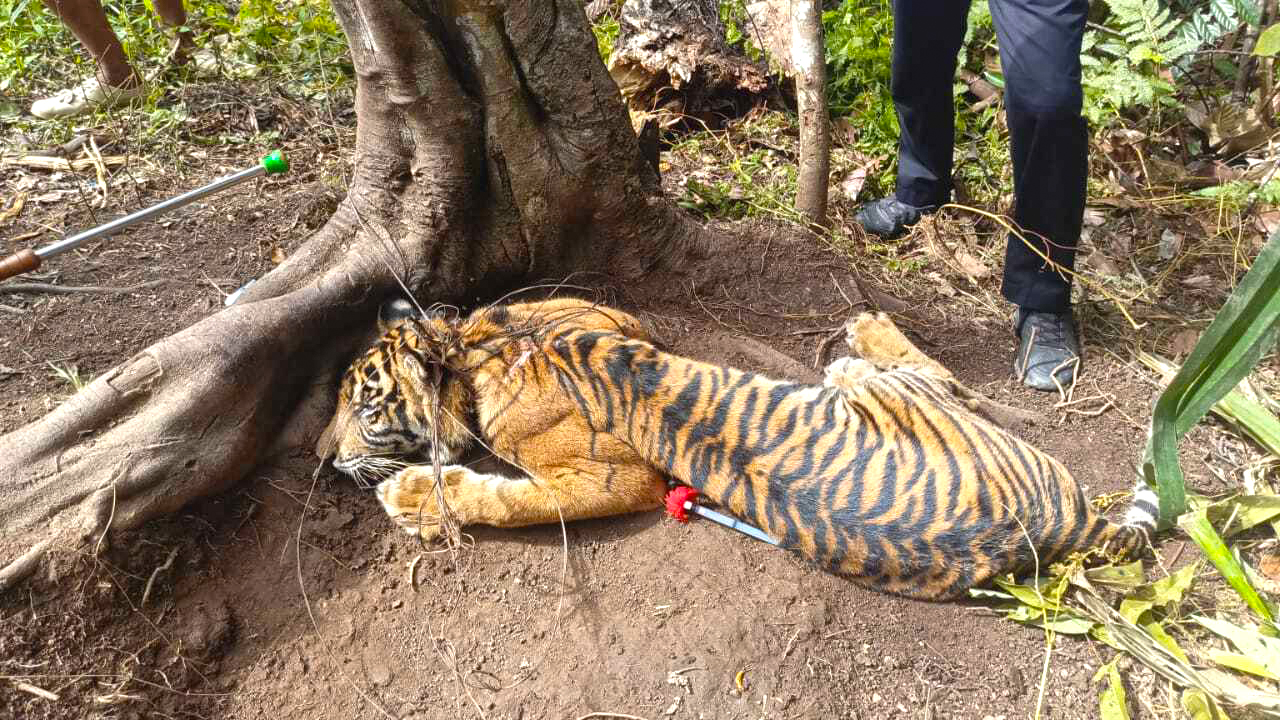
Odisha’s Satkosia Tiger Reserve provides valuable lessons for future tiger recovery initiatives. Photo: Special Arrangement
The first such exercise was the reintroduction of two female and a male tiger from Rajasthan’s 1,334 sq. km Ranthambore Tiger Reserve to the 1,203.33 sq. km Sariska Tiger Reserve in the same State in 2008. The last exercise was in 2024, when 2 female tigers were reintroduced from Maharashtra’s 578 sq. km Tadoba-Andhari Tiger Reserve in Odisha’s 2,750 sq. km Simlipal Tiger Reserve in 2024.The success of the reintroduction programme, however, has not been uniform across the 12 tiger reserves. While the number of tigers in Simlipal doubled from 15 to 32 in about two years, the striped cat population in Sariska took almost 18 years to record 56 from nought.The two-female-one-male experiment has been more successful in Madhya Pradesh’s 1,598 sq. km Panna Tiger Reserve, where the current tiger population is 88. Panna had no tigers when the reintroduction programme began in 2009 with a feline each from the State’s Kanha, Bandhavgarh, and Pench Tiger Reserves.Tiger restoration challengesAccording to the NTCA-WII assessment, the 963.87 sq. km Satkosia represents one of the most important case studies highlighting the complexities and challenges associated with tiger restoration in India.“Satkosia was identified as a potential tiger recovery site due to its extensive forest cover, relatively large protected area, and historical presence of tigers. However, by the early 2000s, the tiger population declined significantly due to habitat degradation, prey depletion, and anthropogenic pressures,” the report said.