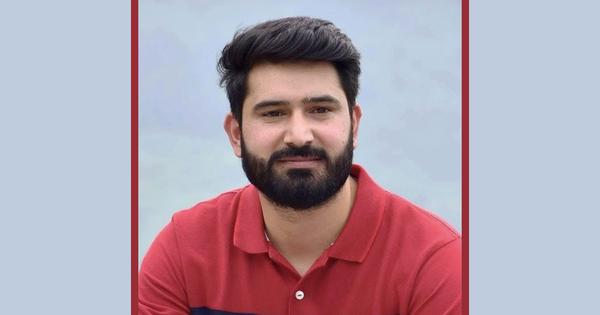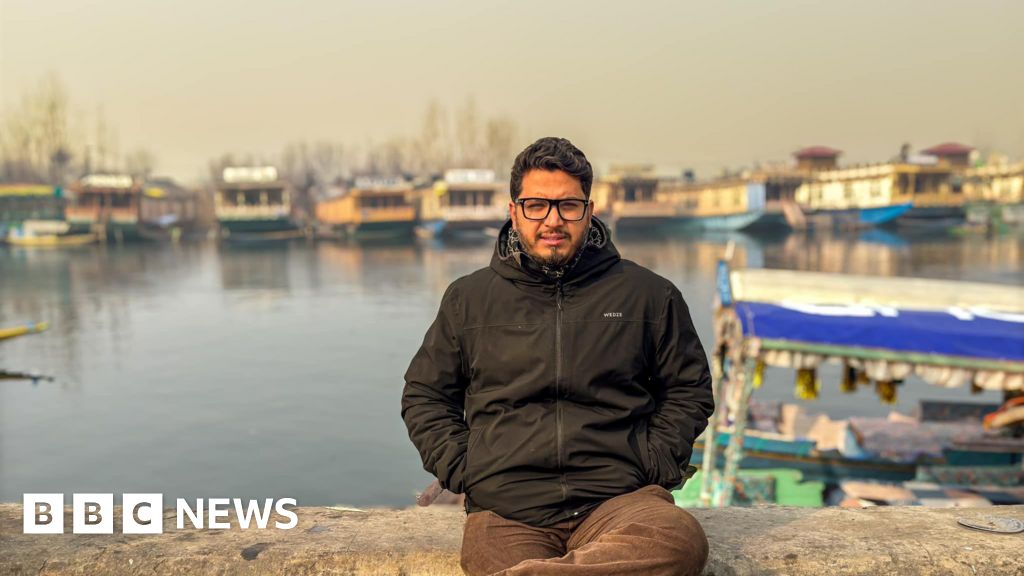
Akhtar Mohiuddin’s Jahanmuk Panun Panun Naar (To Each Their Own Hell) was written in 1975. But it was properly published only in 2002, a year after Mohiuddin’s death, and has never been formally translated. Your work-in-progress translation of the novel won the Armory Square Prize for South Asian Literature in Translation last year and is slated to be published next year. How did you decide to translate it? Translator Mehdi Khawaja (Courtesy the subject)Most of Kashmiri literature remains not only untranslated, but also vastly under read — even by Kashmiris themselves because many Kashmiris can’t read the script. The language was introduced in schools fairly recently. In fact, when I was in school, it wasn’t there. So, I didn’t learn the language in school. I had to teach myself.There were some attempts by some academics to translate another book by Akhtar, but it was, again, locally published. Maybe the translation was not good enough to be published by a mainstream publisher.My uncle, Meem Hai Zaffar, is a writer and his devotion to Kashmiri literature intrigued me such that I was always curious to get into it too. I came to this book along with my friend Zeeshan — we both come from artisan families in Srinagar where terms like “literature,” “reading” and “writing” are foreign. But we were hell-bent on teaching ourselves to write. We learnt early that the only way to do that was to read extensively. So, at 17, we started scouting for “serious” literature from across the world. It was during this time that we made a list of a few Kashmiri books and Jahanmuk was the first we read in 2016. We started translating it but failed miserably and dropped the idea.But I came back to it in 2024. It had still not been translated by anyone else. So, I started doing it. It’s a slim book and will be published in the US in 2027.How did you teach yourself to read in Kashmiri?The script is, to a large extent, the same as Urdu. There are some additions and some things which are different. For example, there are more than 15 vowels in Kashmiri, which makes it difficult to speak and read the language.That might be why we couldn’t translate it back in 2016 – our introduction to the language was very new. We spoke the language at home but were reading it for the first time.I taught myself Kashmiri by reading books in it. This book was the first one I read in Kashmiri. I read it again and again. I learned the language by reading this book.Gabriel García Márquez used to recite Pedro Páramo [by Juan Rulfo] from memory because he had read it so many times. It’s somewhat similar for me with this book. Now, I’ve read it so many times, I can recite the first chapter from memory. It’s almost muscle memory to translate it because even while I was not working on it, I was always thinking about this particular phrase or that particular word. So, in a way, I was always translating in my head.To Each Their Own Hell is about a married couple — Mr and Mrs X — who run a sex trafficking operation. The novel explores layers of exploitation and deceit in a society ruled by a diabolical Supreme Leader. Mohiuddin was writing this novel when Kashmir was on a precipice of turmoil: the Kashmir Accord was signed between Indira Gandhi and Sheikh Abdullah in 1975; Abdullah had dropped his demand for the right to self-determination for Kashmiris, which was seen as a betrayal. And this is a novel about corruption, moral decay and betrayal. What was the political landscape that informed this work?The fact that Mohiuddin chose to write the novel in an anonymized manner — to a degree that he gave the characters alphabetical letters for names and never locates the setting geographically — is not out of a stylistic choice but as a measure to evade political vengeance. This made the novel more universally relevant — so that a reader from a remote European country would swear on their life that the author is talking about their own country.But a Kashmiri — or a reader who is well aware of Kashmir’s history and politics — will be able to see Kashmir in every sentence and every word of the book. There’s the omnipresent yet never-seen character called the Supreme Leader, who sends his rogue son abroad – who eventually returns with a foreign wife.Similarly, there’s a journalist called Sheen, whose parallels are many in our time, but who was fashioned after a certain journalist working during that time. I think the idea of translating the book also came because it really resonated with our present. It almost seems like this was written yesterday.The dedication of the book says it is for that young person who will fire the first gunshot to cleanse this society. So that dedication, that intisaab, tells us more about what Mohiuddin is pointing at. It feels like a prophecy of sorts.In 2016, Hilal Mir wrote an essay about Jahanmuk Panun Panun Naar in the Hindustan Times. He had found it not in any bookshop but in a photocopying shop run by Mohiuddin’s son. It was, he wrote, the only Kashmiri novel available in the market, and that altogether there are only 12 or 13 novels written in Kashmiri. That is true. But there’s a context to that information. Kashmiri literature has, for centuries, has been full of poetry and more so because of the Sufi influence. Most of the poetry is Sufi poetry, devotional poetry or oral traditions written by Habba Khatoon and Lal Ded and others.Prose came to Kashmiri literature fairly recently. It was developed in the 1950s by writers like Akhtar Mohiuddin, Hari Krishna Kaul, Amin Kamil who were writing mostly short stories. As a whole, I don’t think there are more than 200 short stories in the literature corpus. Many of these up until the 1970s, at least, were not political stories. They are either social commentaries or more philosophical works, because Russian literature has been a very big influence on Kashmiri writers. So, these questions about the human condition, it was something that really bothered them.I think the first novel was written by Mohiuddin in 1956. How do you get introduced to a language? By studying it, of course. But the Kashmiri language was removed from the school syllabus in 1953, so an entire generation or two of Kashmiris did not study Kashmiri. They did not learn it. Kashmiris were writing in Urdu because they had been disenfranchised, they were not given access to their language. And this was true, even before 1947. Before 1947, there was the Dogra rule, and they prioritized other languages, mostly Urdu, not Kashmiri.I’ve heard about two or three young writers writing Kashmiri fiction. I hope they continue. Writing itself is a very isolating act. And writing in a language like Kashmiri where nobody even reads you is a depressing endeavour.Saudamini Jain is an independent journalist. She lives in New Delhi.
Mehdi Khawaja: “A generation or two of Kashmiris did not study Kashmiri”
The writer, whose award-winning translation of Akhtar Mohiuddin’s Jahanmuk Panun Panun Naar (1975) will be published next year, on teaching himself to read his mother tongue and turning the focus on a literary work that continues to be relevant
1,180 words~5 min read