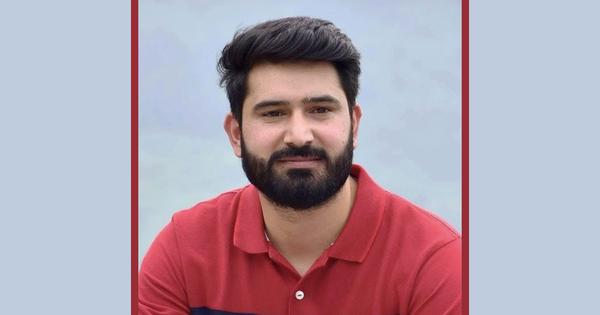
For decades, fiction from Kashmir has struggled with a rather burdensome and perhaps impossible task of representing the Valley. Under the burden of macro-political maps of wars and geopolitical relations, the human story seems to have faded into the shadows. However, newer books are turning their focus to the “micro” story of the domestic life – the rattle of a home’s copper pots, the sad melody of a song sung in sleepless nights, and the cold and suffocating silence of the harsh winter months.Umair Ahmed Khan’s debut novel, The Valley of Unfinished Songs, is one such attempt at interior writing. In this novel, a father’s death in Dal Lake and his son Kabir’s isolation in Mumbai are entwined. The story is set across Srinagar, Lahore, and Mumbai, telling stories of those who have found kinship after surviving violence.The geology of griefThe novel’s deepest preoccupation lies in what I call the “geology of grief” – how grief doesn’t simply disappear but builds up layer after layer until the ground below one’s feet itself starts to feel unstable. The protagonist of the novel, Kabir, experiences the death of his wife and unborn child before the events of the narrative begin. Soon after, he meets Armaan, a child at an orphanage.Nevertheless, the novel takes care not to reduce grief to simple sentimentalism, for in this context it also represents a political phenomenon. For instance, Iravati’s suffering can only be understood in the context of the chaos of the 1990s. Similarly, Aariz’s shame is linked to that of an entire generation forced into ideological commitment. Forgiveness, when it arrives, is not cathartic but earned with difficulty, most vividly represented by Iravati’s solitary return to Srinagar, a woman coming back to the place where she haunts herself.The place where the novel triumphs is in its resistance to facile resolution. The courtroom segment set in Srinagar is handled with real aplomb – an instance where law and morality collide within a tiny space and where the return of Aariz seems well-earned rather than artificial. The Kabir-Armaan dynamic is another success, written with true empathy. Armaan does not stand for Kashmiri suffering, but tests Kabir’s willingness to love without any obligations.Despite these triumphs, the novel faces some growing pains. Specifically, Kanval and Daarji often feel more like narrative devices than lived-in presences. Kanval’s shift from a “naive student” to a “voice of courage” occurs largely off-page, leaving her internal evolution feeling secondary to the plot’s needs, while Daarji remains a looming archetype used primarily to facilitate the Lahore backstory without developing a distinct emotional arc of his own. Sometimes the plotting relies on coincidence with a certainty that isn’t justified by the themes themselves.Growing painsKhan’s style of writing possesses a distinct rhythm as a result of his work in the field of radio. He knows how sound can have a visceral effect and how grief has a certain cadence when it is spoken. For instance, during a scene of urban unrest, Khan writes: “The heat surrounded her, in the air, in the city and within her mind.” The triple-phrased structure mirrors the rhythmic delivery of a live report, building an atmospheric intensity that emphasises the totalising nature of the crisis. The prose excels in its interior moments – the brass pots arranged in Iravati’s kitchen, the samovar filled in midwinter while slogans echo outside. These details do the emotional heavy lifting.However, in some instances, the author gets too caught up in making things happen to the characters through coincidence and typecasting rather than allowing the natural flow of emotions. This is particularly apparent in the chapters dealing with the scrapping of Article 370, where the prose shifts from the characters’ interiority to what feels like a verbatim broadcast report. Instead of allowing the reader to feel the tension through domestic silence, the narrative provides dense summaries of legal and logistical changes – mentioning the “ambiguity over the protest” and the “media backlash” in a manner more suited to a news bulletin than a novel.In the same way, even though Kanval is portrayed as the bearer of change, at times, her dialogues become a means through which socio-economic theories are explained. While describing her experience in college, she employs academic jargon like “rational thought,” “neo-liberalism,” and “capitalism.” The use of such words kills the spontaneity of the scene, and it seems as if she is lecturing her brother instead of having a conversation with him.The Valley of Unfinished Songs fulfils its ambitions far more often than not. In this debut, Khan proves himself a writer who finds history not only on the streets but also in the weight of a samovar, the mispronunciation of an Urdu word, and the lullabies sung by children. In his search for stories within the Valley’s history that has never stopped wounding, Khan has written something quietly necessary – a novel that listens where others have only mourned.The Valley of Unfinished Songs, Umair Ahmed Khan, Rupa Publications.
‘The Valley of Unfinished Songs’: An uneven novel about the interior life of the Kashmiri people
Umair Ahmed Khan’s debut novel fulfils its ambitions more often than not.
824 words~4 min read