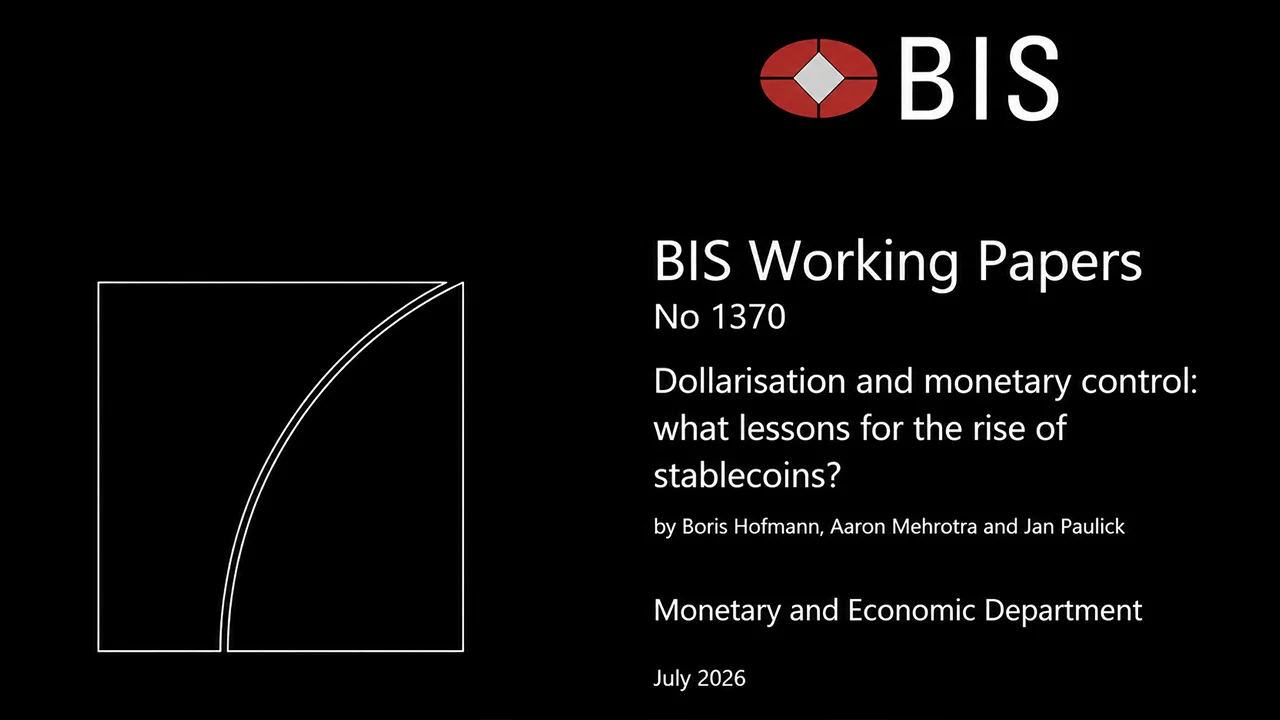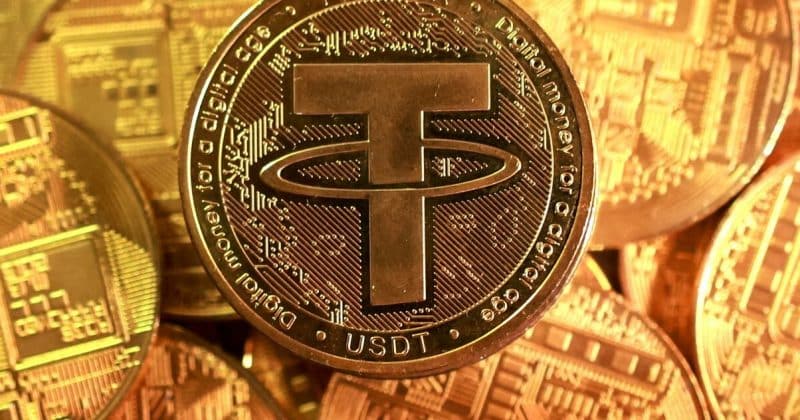
The Bank for International Settlements, in its Annual Economic Report released June 23, warned that dollar-pegged stablecoins like Tether’s USDT and Circle’s USDC are accelerating what it calls “stablecoin dollarization.” When financial stress hits emerging markets, people rush into these tokens as a fast lane to US dollar exposure. The result isn’t a new monetary paradigm. It’s the old one, turbocharged.
A $320 billion reinforcement of the status quo
Over 99% of the roughly $320 billion stablecoin market, as of end-May 2026, is tied to the US dollar. USDT and USDC dominate that figure. An earlier BIS research paper from May 5 pegged dollar dominance in stablecoin value at approximately 98%.
The BIS report doesn’t frame this as a neutral observation. It frames it as a structural risk, particularly for emerging market and developing economies. When residents of those countries can swap local currency for dollar-denominated stablecoins in seconds, it creates what amounts to a digital bank run on their own monetary systems during moments of stress.
The report also took a swipe at the fundamental design of stablecoins themselves. The BIS argued they fail to meet what it considers core monetary properties: singleness (one dollar should always equal one dollar, regardless of who issued the token), elasticity (the money supply should expand and contract with economic needs), interoperability (different forms of money should work seamlessly together), and integrity (resistance to fraud and illicit use).