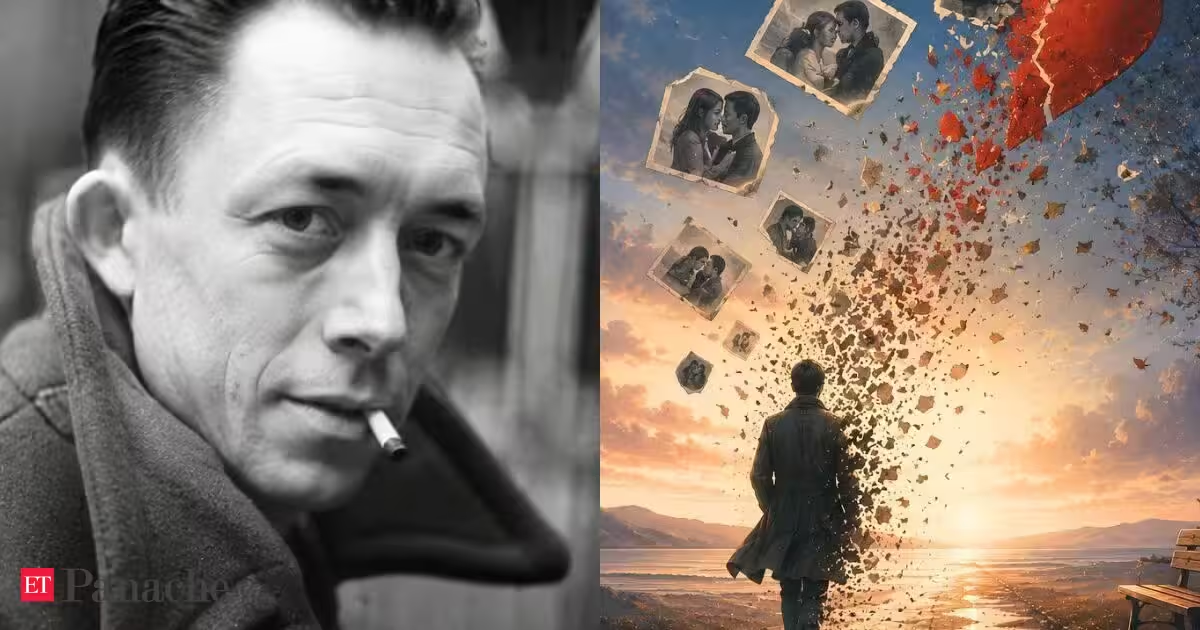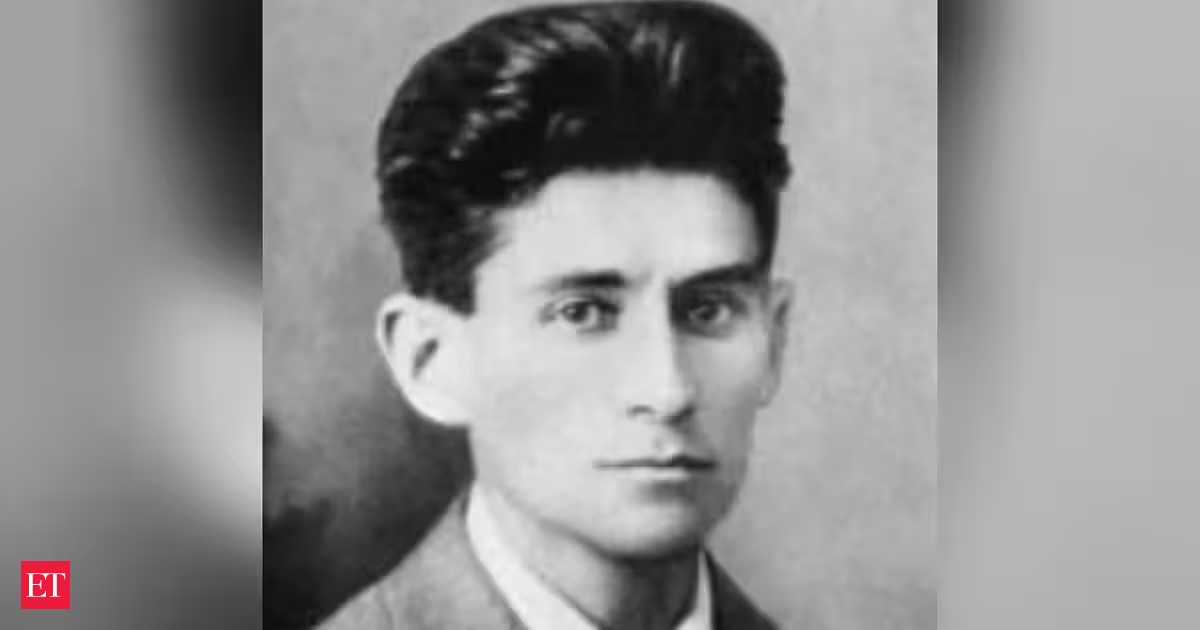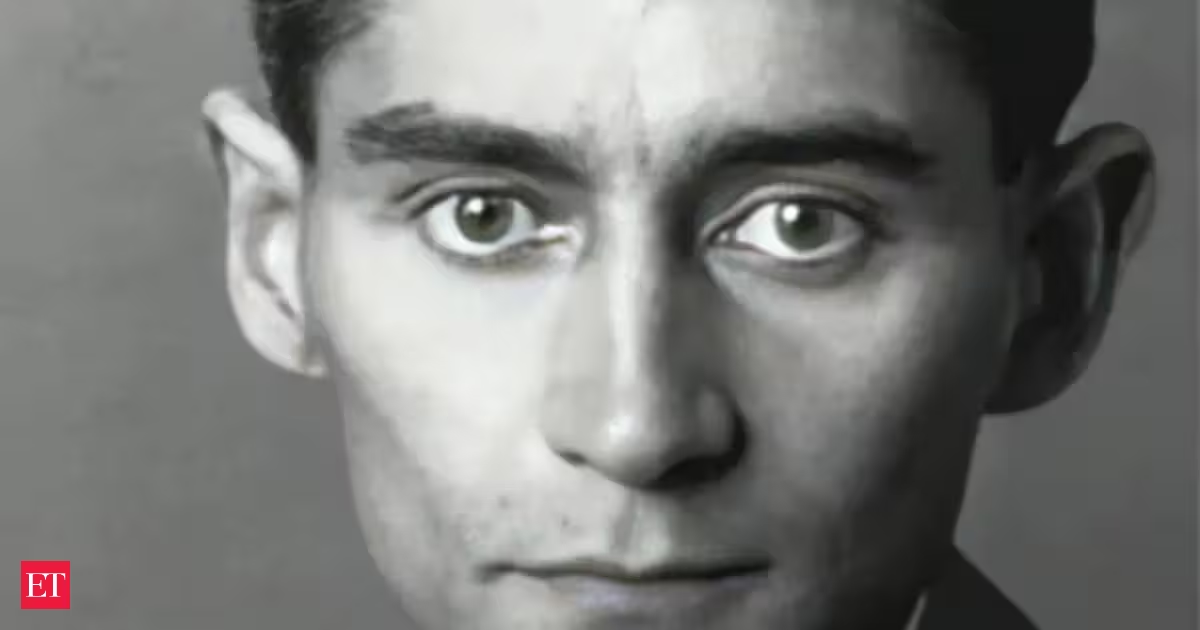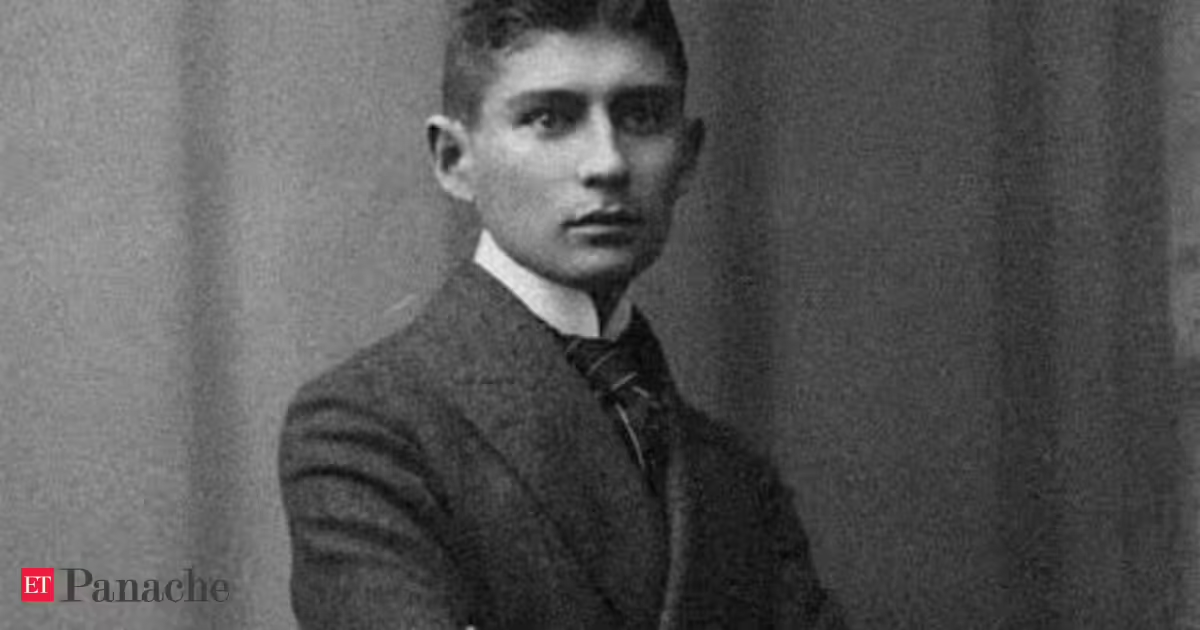
Have you ever looked back at an old photograph, revisited a favourite place, or thought about someone who is no longer part of your life? Almost everyone has experienced the pain of losing something they once loved. That is why this quote, widely attributed to Franz Kafka, continues to feel relatable to readers. It acknowledges the heartbreak of letting go while gently reminding us that love has a way of returning when we least expect it.The quote of the day is: "Everything that you love, you will eventually lose, but in the end, love will return in a different form."What does the quote mean?The quote suggests that nothing we love lasts forever in its original form. People change, relationships end, loved ones pass away and even places or moments that once meant everything eventually become memories.However, the message does not end with loss. It offers hope by saying that love itself never truly disappears. Instead, it changes. The affection we once gave to a person may later become gratitude for the memories they left behind. The love we lose in one relationship may return through another person, a close friendship, family, a meaningful purpose or even self-love.Rather than promising that we will get back what we lost, the quote encourages us to believe that our ability to love survives every heartbreak.Why so many people relate to itAlmost everyone has experienced some form of loss. It could be the end of a relationship, the death of a loved one, losing a pet, moving away from home or leaving behind an important stage of life.During those moments, it often feels impossible to imagine being happy again. Yet, with time, many people discover that joy slowly returns. Sometimes it comes through new friendships. Sometimes, through work, family, children, creative passions, or simply learning to appreciate life differently.That is why the quote continues to resonate with readers across generations. It reflects a universal experience, grief followed by healing.It also reminds us that moving forward does not mean forgetting someone. Instead, it means allowing love to take on a new shape while honouring what once existed.The lesson behind the wordsOne of the biggest ideas behind the quote is accepting impermanence. Life constantly changes, and trying to hold on to every moment forever often leads to disappointment. Instead, the quote encourages emotional resilience. It suggests that while we cannot prevent loss, we can remain open to the possibility of happiness returning.The message is not that grief is easy or temporary. Rather, it acknowledges that healing happens gradually. Love may not return in the form we expected, but it often arrives when we least anticipate it.For many readers, this makes the quote comforting during difficult times because it replaces hopelessness with quiet optimism.Who was Franz Kafka?According to DW, Franz Kafka was born in Prague in 1883 and belonged to the city's German-speaking Jewish minority. Feeling like an outsider shaped much of his life and later influenced his writing.Kafka reportedly had a difficult relationship with his father, who wanted him to pursue business instead of literature. Since writing alone could not support him financially, Kafka worked as an insurance clerk before joining the Workers' Accident Insurance Institute for the Kingdom of Bohemia in 1908, where he stayed for almost a decade despite finding the work unfulfilling.Outside work, Kafka devoted much of his free time to writing. He described the process almost like a form of prayer. According to published accounts, he also enjoyed travelling, watching films and exploring different cultures. His interest in Jewish identity deepened after watching performances by a Yiddish theatre troupe in 1911.Love, insecurity and the stories he createdKafka's personal life was often marked by emotional uncertainty. Biographical accounts describe him as someone who struggled with anxiety and low self-esteem despite being regarded by friends as intelligent, kind and possessing a sharp sense of humour.His most significant relationship was with Felice Bauer, whom he met in 1912. Their relationship unfolded largely through letters and inspired one of the most productive periods of his literary career. During these years, Kafka wrote several of his best-known works, including The Judgment, The Metamorphosis and Amerika.Although Kafka and Bauer became engaged twice, both engagements eventually ended. Their correspondence, later published as Letters to Felice, reveals both his deep affection and his recurring fears about intimacy and commitment.Kafka's health also deteriorated over time. He developed tuberculosis, which reportedly claimed his life in 1924 at the age of 40.Why the quote still matters todayWhether or not Franz Kafka actually wrote these exact words, a point that scholars have questioned, the sentiment has found a lasting place in popular culture because it expresses something many people have experienced.Life inevitably brings endings. Relationships change, loved ones leave, and familiar chapters close. Yet human beings continue to find new reasons to care, connect and hope.That is perhaps why this quote continues to circulate so widely. It reminds us that while we cannot escape loss, we also should not underestimate our capacity to heal.
Quote of the day by Franz Kafka: 'Everything that you love, you will eventually lose, but in the end, love will return in a different form' - A timeless reminder that love never truly disappears by Jewish novelist
Life changes, people leave, and relationships end, but love doesn't disappear forever. A quote widely attributed to Franz Kafka reminds us that although loss is a part of life, love finds its way back in unexpected forms, through new people, cherished memories, self-love or fresh purpose, offering hope and healing after heartbreak. Read on to know why it feels relatable even after so many decades.
829 words~4 min read