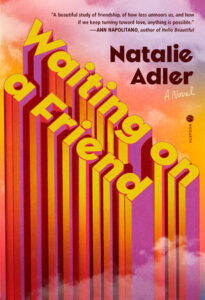
Natalie took my class in The Ethics of Public Biography at the CUNY Grad Center while she was getting her MFA at Brooklyn College. It was a deep dive into the ACT UP Oral History Project (www.actuporalhistory.org) so I knew she had some background. But when I read WAITING ON A FRIEND, I understood, immediately, that she had read everything, and also that she had done internal research to reach certain emotional conclusions that are not apparent on the surface.Article continues after advertisement
*
Sarah Schulman: It is clear to me, from reading Waiting on a Friend, that you did an enormous amount of thinking and feeling about AIDS—not just reading everything you could get your hands on, but internalizing—as best as one can—the AIDS experience. Did you have personal experience of AIDS? And if not what attracted you to this realm? I ask this especially wondering how you felt knowing that people who experienced the epicenter of AIDS and who created its representation would be among your readers?
Natalie Adler: Thank you for sensing that I read everything I could to write this novel. It was my responsibility to do so, especially knowing that there have been so many false or misleading or incomplete narratives of the AIDS crisis. There’s the question of the “beginning” of AIDS (marking the start of the crisis when cases occurred in a certain class of people); all the misinformation, fair confusion, and lies about transmission and etiology; the Hollywood angle where a few brave individual men stood up and changed the world; and the insidious one that you credit as prompting you to do the ACT UP Oral History Project, that there once was prejudice against a scary disease, but then people came around. As if the arc of history just naturally bends towards justice without aggrieved people putting pressure on it.