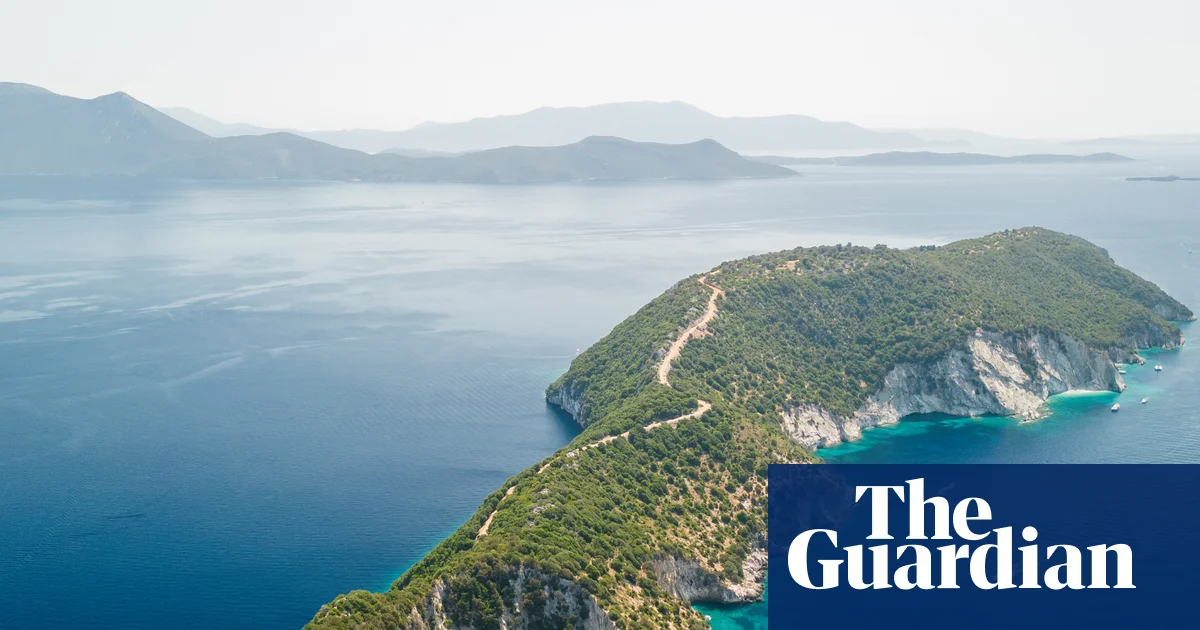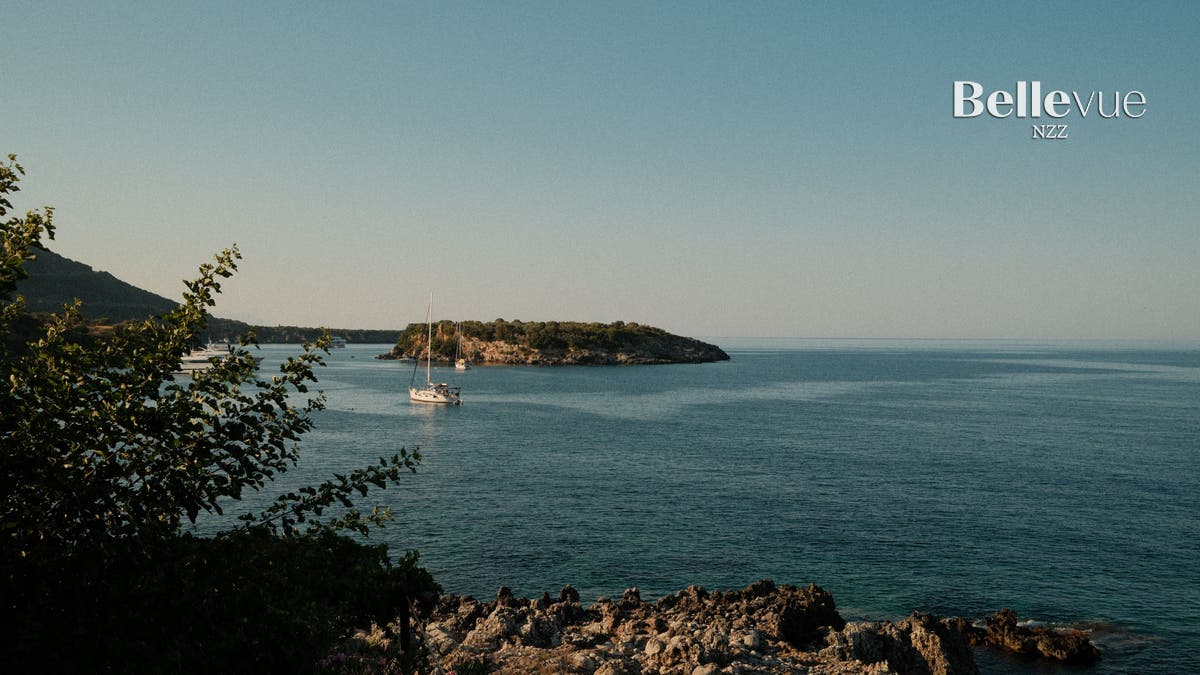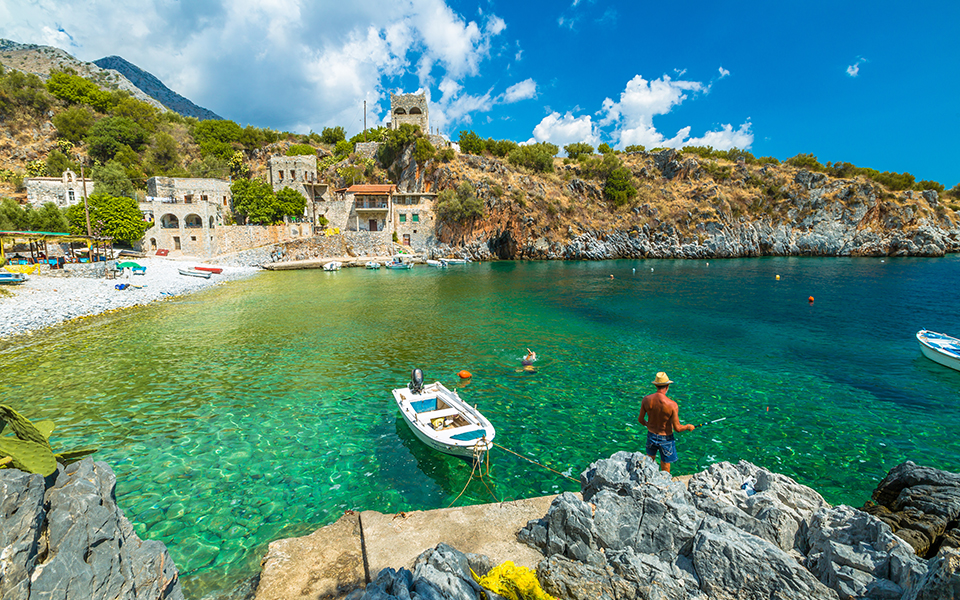
As the road leaves Gythio behind and winds south into East Mani, the landscape gradually begins to change. The long sandy beaches of the Laconian Gulf give way to small pebble coves. Vegetation grows sparse until only hardy shrubs cling to the dry-stone walls. Stone tower houses, silent sentinels of another era, begin to dominate the horizon, and tiny settlements – often little more than a cluster of stone homes – seem suspended between past and present.
On the east side of Inner Mani, the landscape has been shaped by stone and light for centuries. Life in this rugged corner of the Peloponnese has always been demanding, and the people of Mani learned long ago to adapt to, and live in harmony with, their surroundings. Today, nearly all of the villages have been designated traditional protected settlements, preserving their distinctive architectural character.
From Kotronas to the Skopa peninsula
At the point where lush Laconia gradually gives way to Mani’s rugged terrain lies the village of Kotronas. Even its name reflects the element that has shaped the area’s architecture and history: stone.
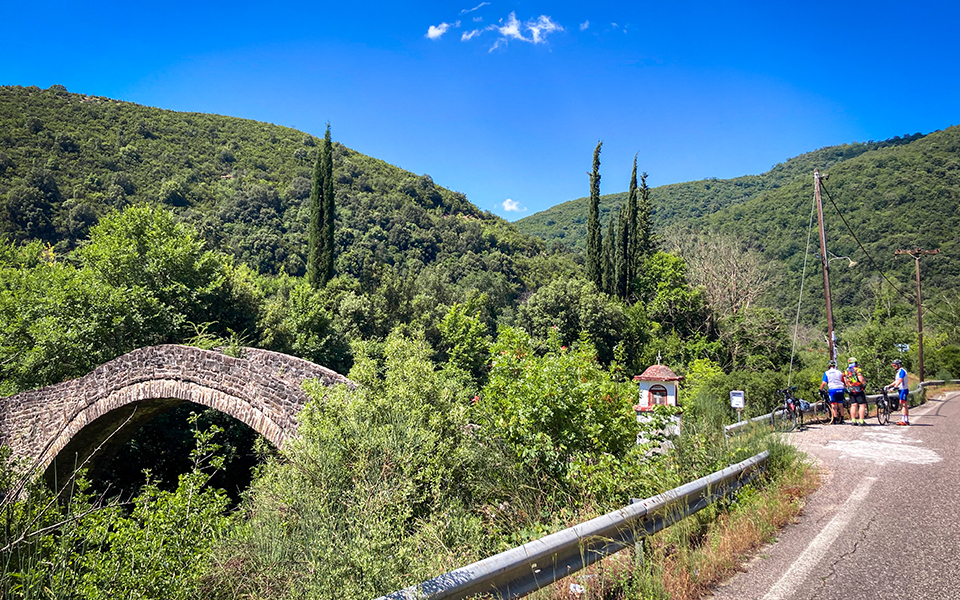
The word kotrones refers to the large rocks that abound here and have long served as the region’s primary building material. They were used not only for Mani’s iconic tower houses and countless centuries-old churches, but also for roads, boundary walls, and even the area’s modern bridges.