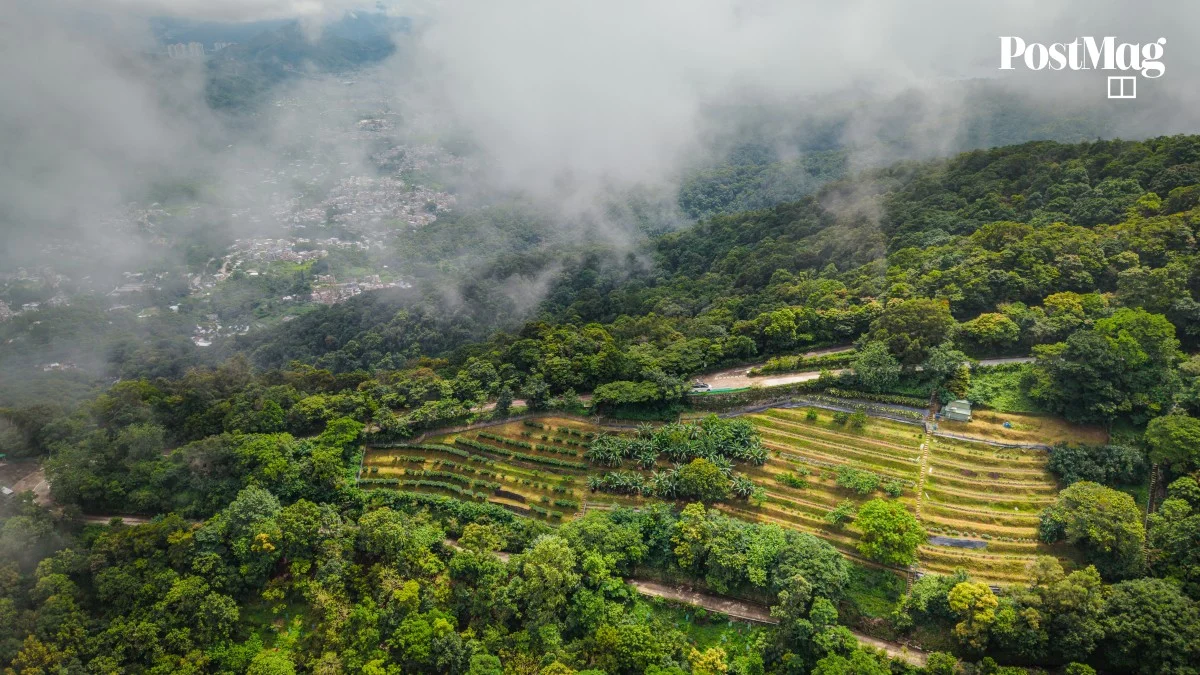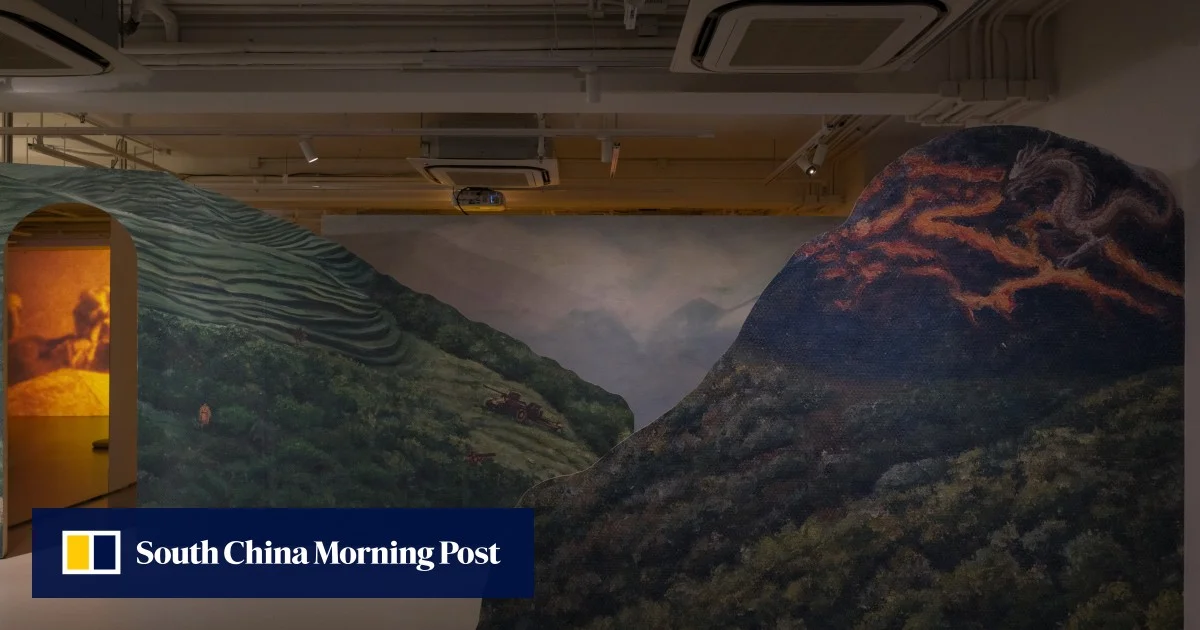
On a steep slope humming with wind and quiet birdsong, a group of hikers gaze at a place where the past and present converge.Abandoned tea terraces, first recorded in 1688, jut out of the landscape before them. Their broken-down walls form a herringbone pattern across the upper slopes of Tai Mo Shan, Hong Kong’s highest peak, visible from afar as tiny scars on the land.Usually, the terraces are entirely concealed by thick vegetation, but they reappear each time deforestation or fires strip the mountain bare – most recently, after a hill fire in 2004.No one knows their precise history, though many believe that tea was first planted in the area during the 17th century.For ecologist Coskun Guclu and artist Pun Tsz-wai, the terraces’ reappearance is a powerful metaphor – and one they highlight in a new exhibition at the non-profit cultural platform WMA. They describe the terraces as “silent witnesses” to the many timelines coexisting upon this land, human and non-human alike.Today, the site is part of a forest restoration project led by Kadoorie Farm and Botanic Garden. New saplings are appearing among the old stones, and Pun and Guclu are leading a walk through the ancient plantation to illustrate how new life can be built around scars of the past.
Ecology, meet art: the history of Tai Mo Shan unearthed in new exhibition
Tai Mo Shan’s hidden tea terraces are examined in ‘Bones of Our Land’, an exhibition blending ecology and art to explore history and restoration.
211 words~1 min read