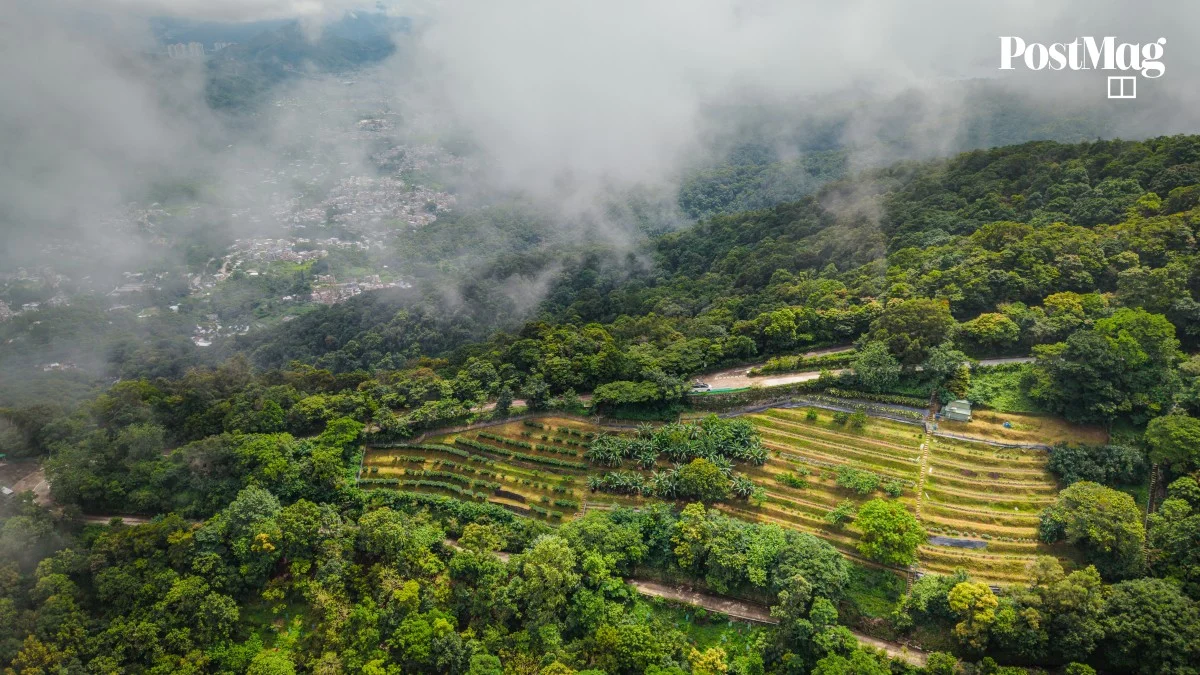
Ask a Hongkonger where the city’s tea story begins, and they will probably point to the British – the colonial traders who funnelled Chinese leaves through Victoria Harbour to the world.Only, they would be off by about eight centuries.Most Hongkongers today don’t know the city ever had its own tea plantations, let alone that tea had been growing here long before the British arrived in the mid-19th century. Li In, a co-founder of the Hong Kong Tea Production Institute (HKTPI) who has practised the art of tea-making for more than a decade, found out in 2017 – in a London classroom, at the UK Tea Academy.“I was born and raised in Hong Kong and it took a British instructor, Jane Pettigrew, mentioning tea gardens in Lantau for me to first hear about [Hong Kong’s tea heritage],” she says.Li In, co-founder of the Hong Kong Tea Production Institute, pours tea at Mau Tso Ngam village. Photo: Alexander MakNgong Ping Tea Garden, the plantation in question, on Lantau Island, was founded in 1948 by Brook Bernacchi, a British lawyer and politician who arrived in Hong Kong as a marine with the World War II liberation forces in 1945. He built a life on the plateau near the Po Lin Monastery. His Lotus Brand was marketed as “the only Hong Kong tea”.By the early 1980s, unable to compete with mass production, the tea plantation area was downsized. After cycling through different hands and functions – a recreational space, a restaurant – the site was eventually abandoned in 2014, its remnants still sitting beneath a pine tree, on a trail south of the Big Buddha – a colonial relic.
Hong Kong’s 800-year-old tea heritage is being rediscovered and rehabilitated
Discover Hong Kong’s hidden tea legacy, predating British influence, as local enthusiasts revive ancient cultivation and traditions.
275 words~1 min read